
*This post may contain affiliate links. As an Amazon Associate we earn from qualifying purchases.
Today it seems that basically everything that is made by the same company is all interconnected. Well, a lot of people are wondering if that is true of the Nintendo company as well.
So are all Nintendo games in the same Universe?
According to an official statement by Nintendo, All of the Nintendo franchises and games take place in the exact same universe. Not only that, but characters ( like Star Fox) even evolve from Pokémon.
When you stop and think about this it really does make a lot of sense as some master hand seems to always be guiding all of the characters in the Nintendo Universe and all of the games and characters seem to intertwine in some way.
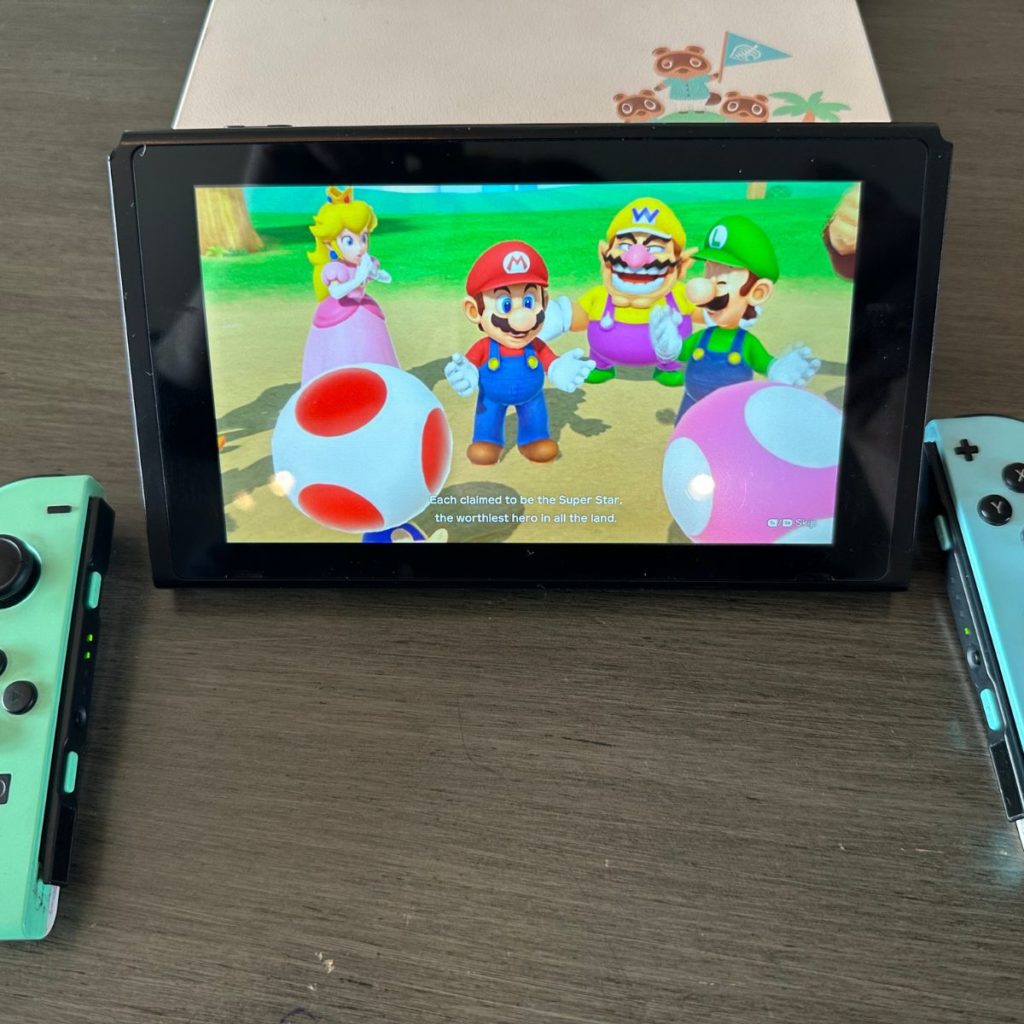
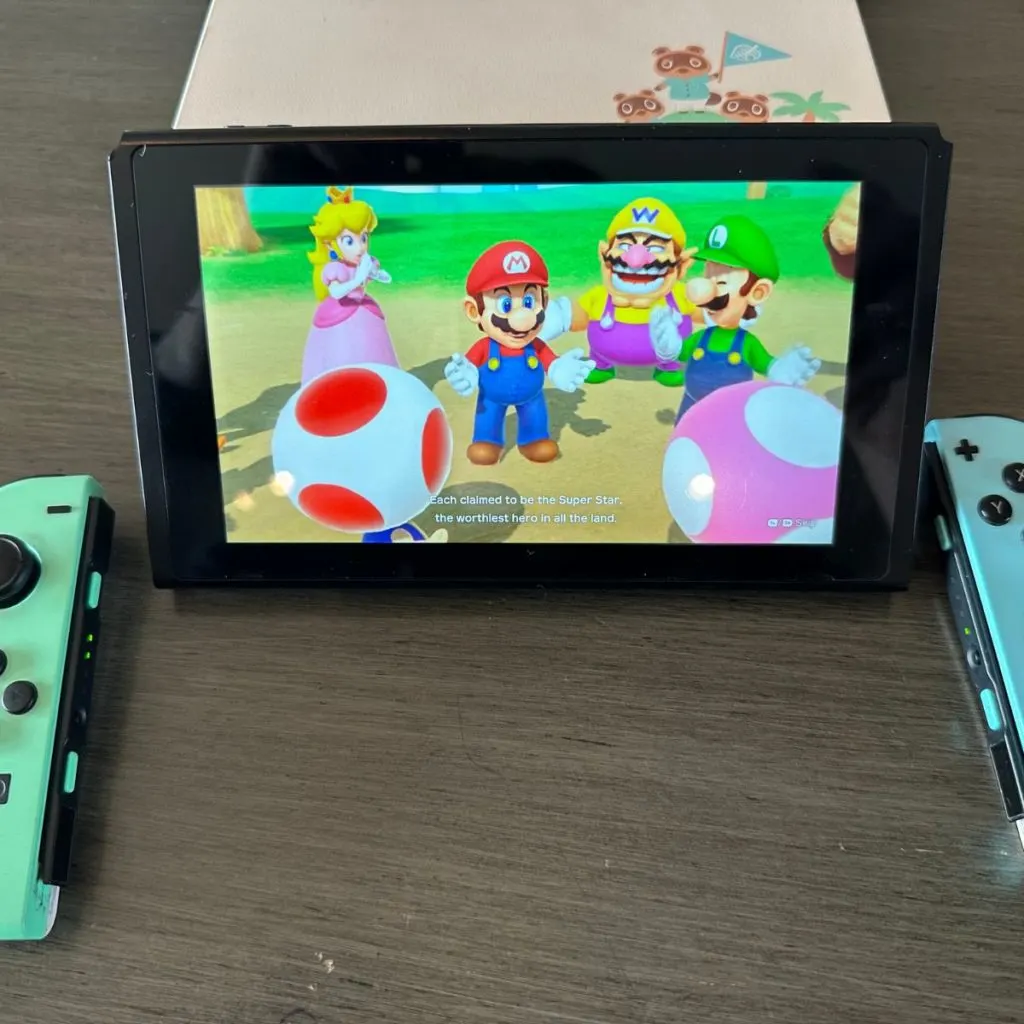
All of the characters in the Mario series (like the Mario brothers, Princess Peach, Bowser, etc.) can almost all be found fighting against characters like Samus Aran in Super Smash Bros. How could all of the characters from the Mario franchise get together and fight with those from Donkey Kong Country if these games weren’t in the same universe?
If you want to learn more, you can continue to read the article, or you can check out this video that explains the entire thing!
Want to take your Nintendo Switch to the next level? Then check out this Nintendo Switch accessory bundle by clicking here.

Do you love your Switch but want to stand out from everyone else with the same model? Then look no further than this custom Joy-Con grip.
This Joy-Con grip will make your Switch console look amazing and you can even choose the one that fits your style the best!
A few decades ago Mario and Sonic would have never been thought of together. Since Sega and Nintendo were competitors both in terms of console makers and game series it never would have been considered that they were together or in the same universe.
However, in recent years that has changed.
Not only does Sega no longer make regular consoles but classic Sega Genesis games can even be played using a Switch Online membership! So that leads us to the question, are Mario and Sonic from the same universe?
Although Mario and Sonic both came out at the same time and can even be played together on Super Smash Bros they are not considered to be from the same universe. This is because they both were designed and made by different companies.
If Sonic and Mario had both been originally made by Nintendo or both been made by Sega then it would make sense that they both existed in the same universe, however, since they were both from different companies it is generally thought they are from separate universes.
Different Aspects Of The Nintendo Universe Theory
There are many shades to this theory. It’s sufficiently simple to make associations between the Zelda universe and the Mario Universe, as a few Zelda games contain representations of Mario characters and Link shows up in Super Mario RPG.
From that point, things get somewhat odd when Samus shows up in Kirby’s Dream Land 3, and animals fundamentally the same as matroids show up in Kid Icarus.
Most Nintendo characters can’t be a part of the same universe just because it would be really weird!
This is just the tip of the iceberg, as this theory can go much further. In the Mother series, Giygas permeates growths, plants, and creatures with consciousness. On the off chance that they hold their forces past the finish of the game, enchantment creatures and plants could without much of a stretch drain directly into Pokémon.
On top of that, if conscious creatures continue developing, Animal Crossing is certifiably not a long sensible jump away. Also, if their knowledge continues developing, what’s to prevent the advanced Pokémon from going to space as Star Fox?
Without a doubt, it’s a tangled web that many might even call wild speculations from the fans if you carry out this theory to all Nintendo games. If you are thinking about the presence of Super Smash Brothers though, either a bunch of loved characters is fit for interdimensional travel or there has to be some continuity in the Nintendo universe.
Either that or all of the Nintendo characters decided that they wanted to go to war against each other in a multiverse-type scenario and that is how Pokemon and other characters all came together to battle in the Super Smash Bro video game.
Nintendo Seems To Keep Their Game Franchises Separate (Not Connected)
Nintendo is seemingly the most well-known game organization on the planet. The best part is that it earned it by developing a bunch of amazing places with so many major characters that are known by all and loved by everyone who has ever picked up a controller.
These characters are so well known that even people who do not play games know who they are and what they do! Some people have even compared Nintendo to today’s Marvel or Disney, but of the video game universe.
A lot of people think that it is long past the time that Nintendo should have taken a page from Marvel/Disney’s playbook. You see, Disney characters connect with one another in kid’s shows and films regularly.
Marvel, in TV shows, motion pictures, and particularly in the funnies, shows every one of their properties as one monster universe where any event that happens, could hypothetically happen where anybody can meet whenever. Is Daredevil ever going to meet Starlord? Even though this may sound like a long shot, it actually is a possibility.
That is the thing that the Smash Bros. arrangement is. No matter what you think, it is sort of astounding and stunning that almost everything Nintendo has done could all be connected.
Of course in Mario Kart 8, they highlighted different characters from other Nintendo establishments, but this is the organization only barely dipping its toes in the water when given its rich library of characters.
If Nintendo wanted to, they could simply be cannonballing into the pool.
If you look at the Nintendo Switch, Mario Tennis Aces is a prime example. Nintendo really makes a lot of fun games. However, none of these components have any characters that aren’t from a Mario game.
Baseball, soccer, basketball, it doesn’t make a difference; all you get is characters that occupy the Mushroom Kingdom.
Why would only the characters from the mushroom kingdom play in these matches? Are the characters from Metroid and Zelda not as amazing as those from the mushroom kingdom?
Will Kirby just do 2D platformers and that’s it? Once more, this is unmistakably not the case since all of the games clearly point to each other. Much like a battling game, for all intents and purposes, any games game gives an entirely ideal reason for these characters to associate together in an enjoyable way where the “legend” and “group” doesn’t make a difference that much.
Don’t you need to see King Dedede and Waluigi collaborate on the tennis courts? There’s actually no explanation this can’t and shouldn’t occur. Furthermore, if we consider Mario Tennis Aces has an extremely encouraging-looking single-player mode, it would be incredible if characters from different establishments were fused into it.
Have Ridley as a chief, and play doubles with Peach and Zelda. This appears to be so mind-numbingly evident it’s sort of a no-brainer.
This doesn’t need to be restricted to sports or battling games. Capcom is essentially the ruler of the entirety of this. In addition to the fact that they have all these battling game hybrids with different characters from their games as well as different organizations, however, they even have a strategic turn-based methodology arrangement called Project X-Zone that has completely worked around this thought.
I’m not saying this is something that should necessarily happen all at once, but it definitely should happen. I think that a single game a year appears to be pretty easily obtainable. A platformer with Donkey Kong and Kirby.
An extreme hybrid RPG including a large portion of Nintendo’s characters. Mario dropping by in Animal Crossing. A Musou game featuring characters from the Mushroom Kingdom, Hyrule, and others, any of these future astonishing thoughts fans would go crazy over.
Nintendo has gone through decades making all these paramount characters and locations. It seems like a waste that they haven’t created a game where all of the characters can come together and people can create their own world with any characters and obstacles they want.
Are All Mario Games In The Same Universe?
It is a commonly debated topic among fans whether all Mario games exist in the same universe. While there are some inconsistencies and contradictions within the various games, it is generally accepted that they all take place within the same world.
One argument in favor of this is the consistent use of recurring characters and locations. Mario, Luigi, Bowser, and Princess Peach are among the characters that appear in multiple games, as do locations such as the Mushroom Kingdom and Bowser’s Castle. Additionally, the games often reference each other, such as Bowser Jr. mentioning his father’s defeat in a previous game.
However, there are also instances where the games contradict each other. For example, the timeline of events within the games is not always clear, with some games appearing to take place before or after others despite conflicting information. Additionally, the abilities and powers of characters can vary from game to game, such as Mario’s ability to fly in some games but not in others.
Despite these inconsistencies, it is ultimately up to individual interpretation whether all Mario games exist within the same universe. While some may choose to ignore the contradictions and view them as a cohesive world, others may believe that each game exists within its own separate universe.
Are Mario & Zelda In The Same Universe?
Trying to determine whether Mario and Zelda are in the same universe can be a bit difficult however, in general, most Nintendo super fans believe that both Mario and Zelda are in the same universe.
One piece of evidence for this is the occasional Easter egg or reference to the other series in each franchise. For example, in the game, The Legend of Zelda: Link’s Awakening, a character named Bow Wow resembles the enemy Chain Chomp from the Mario series.
Another potential connection is the fact that both franchises were created by the same company, Nintendo. This suggests that the creators of both series may have had some knowledge of each other’s work and intentionally included references to each other’s characters and worlds.
However, it is also possible that these references are simply nods to the popularity of the other series and are not intended to imply a shared universe. Additionally, the vastly different settings and storylines of the two franchises make it difficult to imagine how they could coexist within the same universe.
Is Donkey Kong & Mario In The Same Universe?
Donkey Kong and Mario are almost always considered to be in the same universe. This is evident in the numerous references and connections between the two characters and their respective games.
In the original Donkey Kong game, Mario was known as Jumpman and was tasked with rescuing Pauline from the titular character. This established a clear connection between the two characters and set the stage for their future interactions.
In later games, such as Super Mario Bros. and Donkey Kong Jr., Mario and Donkey Kong continued to cross paths and interact with each other. In these games, Mario is portrayed as a hero and Donkey Kong as a villain, further solidifying their connection in the same universe.
Additionally, other characters from the Mario universe, such as Luigi and Princess Peach, have also made appearances in Donkey Kong games. This further supports the idea that the two universes are intertwined.
Overall, the numerous references and connections between Mario and Donkey Kong, as well as the shared universe of other characters, strongly suggest that they exist in the same universe.
Conclusion
Even though Nintendo acknowledges that the characters are all part of one world, we do not see this type of game happening anytime in the near future. No matter if you refuse to believe the truth behind the games, I am sure there will be a day when Nintendo makes it clear that all they want is for every single one of their characters to come together and enjoy playing a game.
Even though some people believe that this might happen with the release of a new console by Nintendo, I believe that Nintendo has already thought about it, and does not need a new system to accomplish this task.
Nintendo has dipped into the world of virtual reality, and there will soon be a day when you will be able to play as any Nintendo character you like while playing any game from any Nintendo console ever created. The only limit that you would have in this game would be your mind.