
*This post may contain affiliate links. As an Amazon Associate we earn from qualifying purchases.
If you are a fan of jukeboxes, you probably have fond memories of jamming out to the tunes of your favorite artists on the records in the jukebox at your local diner or bar. But have you ever stopped to wonder if those shiny vinyl records are worth anything beyond their sentimental value?
Well, wonder no more because we’re about to dive into the world of record album collecting and find out if all those quarters you pumped into the jukebox were a worthwhile investment.
Most jukebox records aren’t worth a whole lot with values of under $1 per jukebox record being pretty normal. However, specific records can be worth a small fortune if you find the right one.
For example, recently a “Meet The Beetles” record album from a jukebox sold for $1,700 on eBay! So if you find the right record it can sell for a great price.
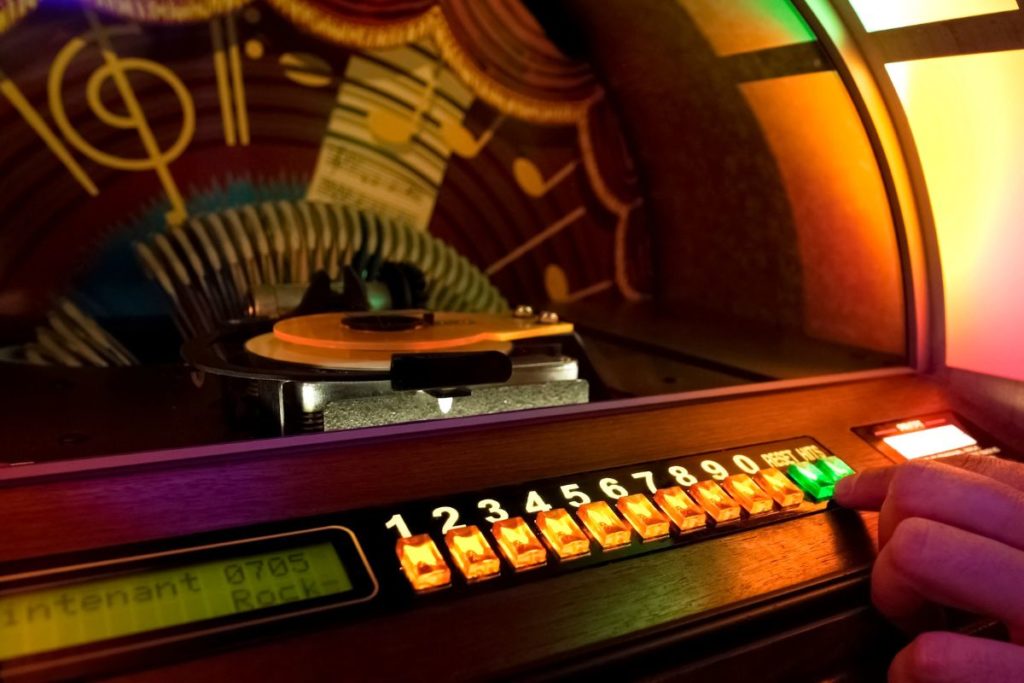
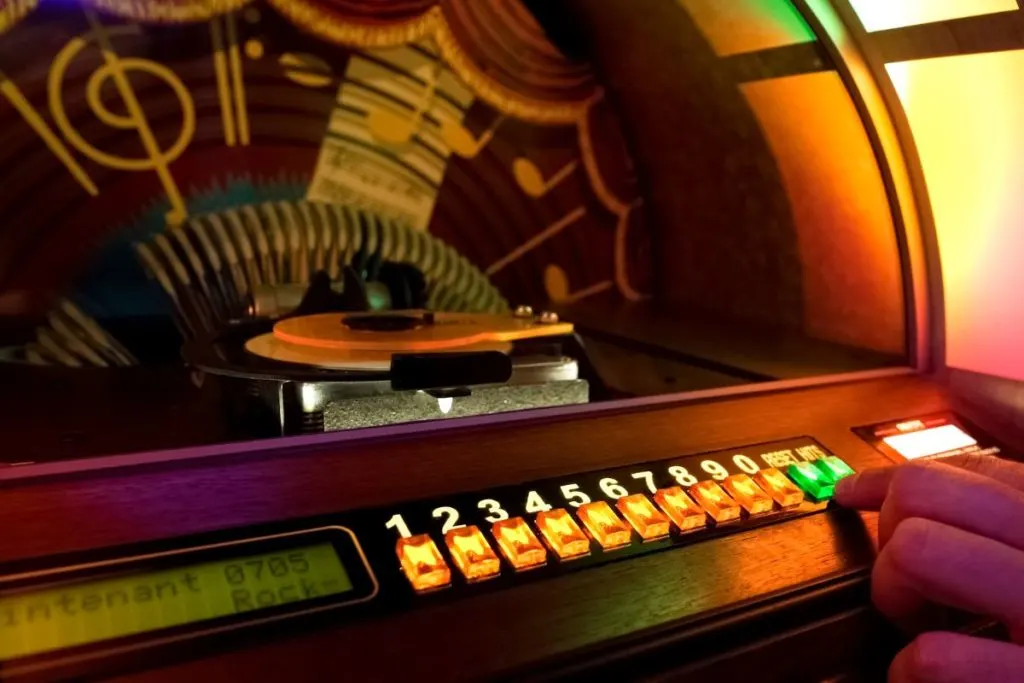
First things first, let’s define what we mean by a “jukebox record.” These are records specifically pressed for use in jukeboxes, which were once a common sight in restaurants, bars, and other public places. Jukeboxes allowed patrons to select and play their favorite songs by inserting coins and making their selections on a touch screen or dial.
The heyday of jukeboxes was in the 1950s and 1960s, but they remained popular through the 1970s and into the 1980s before being largely replaced by other forms of music playback (that was much better than records).
Nowadays, the sight of a jukebox is a rare one, and they have become a symbol of a bygone era. But the nostalgia they evoke has sparked a resurgence in interest in records, which has led some collectors to wonder if these records are worth anything.
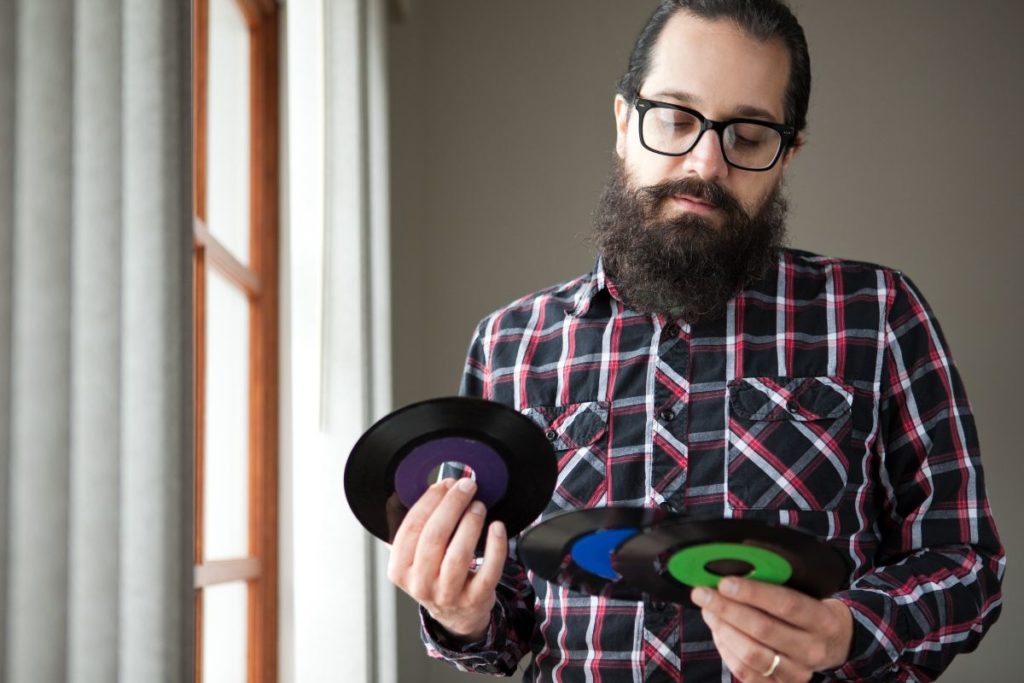
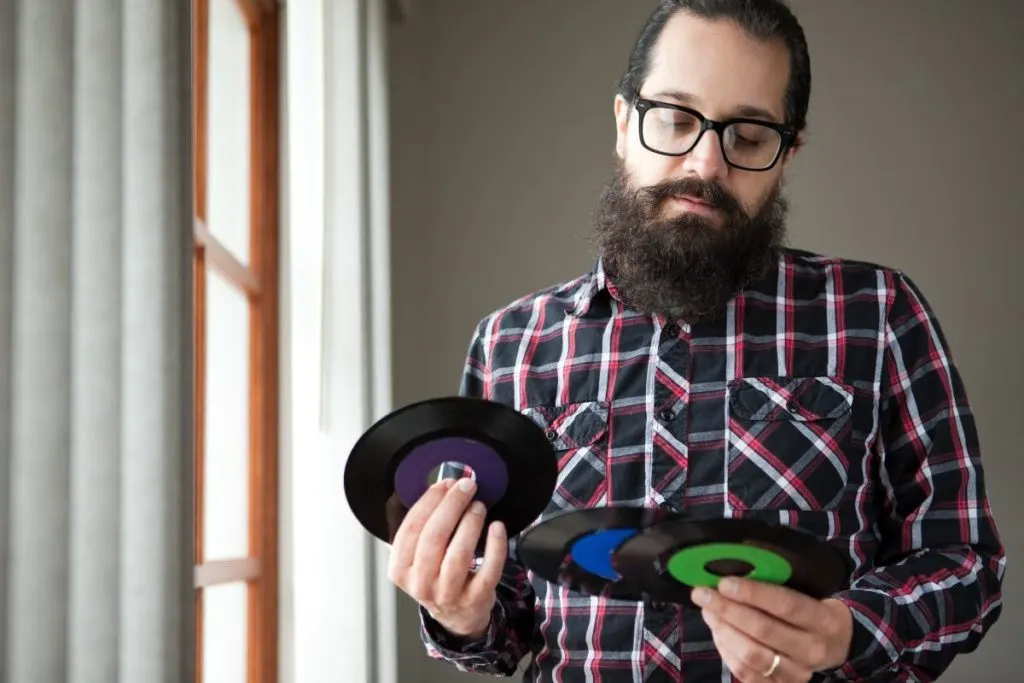
What determines the value of jukebox vinyl records?
The value of record albums from a jukebox can be determined by a variety of factors. Some of the most important factors that determine a record’s value include:
- Rarity: As with any collectible, the rarity of the record albums can significantly impact how much money it is worth. Records that were produced in small quantities or were only released in certain regions are often more sought after and therefore more valuable.
- Condition: The condition of the record albums is also an important factor in determining its final price. Records that are well-preserved and have minimal wear and tear are generally more valuable than those that are heavily scratched or damaged.
- Artist and song popularity: It’s no surprise that records featuring popular artists or hit songs are typically more valuable than those by lesser-known artists or more obscure tracks. The demand for records by household names like Elvis Presley, The Beatles, and Chuck Berry is higher, which can drive up their value.
- Age: The age of a record can also play a role in its value. Older records, especially those from the 1950s and 1960s, are often more valuable due to their historical significance and the nostalgia they evoke.
How to determine the value of your jukebox vinyl records
If you have record albums from a jukebox that you’re wondering if it’s worth anything, there are a few steps you can take to find out.
First, try researching similar records on online marketplaces like eBay or Discogs. Look for records with similar artists, labels, and release dates and see what they are selling for.
Keep in mind that the prices of records on these sites may not reflect the true value of the record, but they can give you a rough idea of what you might be able to expect.
Next, consider consulting with a record dealer or expert. These professionals can often give you a more accurate assessment of the value of your record based on their knowledge and experience in the field.
Finally, you might want to consider having the record albums graded by a professional grading service like Record Grading or Goldmine. These services will evaluate the condition of the record and assign it a grade based on a standardized scale. This can provide a more reliable estimate of the record’s value.
Examples of valuable jukebox records (How Much Money They Sell For)
Some examples of valuable records include:
- Elvis Presley’s “Hound Dog”: This classic rock and roll tune was a huge hit for Presley, reaching the top of the charts in 1956. Records of “Hound Dog” are highly sought after by collectors, and pristine copies have been known to sell for hundreds of dollars.
- The Beatles’ “I Want to Hold Your Hand”: The Beatles’ breakout hit was a mainstay in jukeboxes during the group’s heyday in the 1960s. Records of “I Want to Hold Your Hand” can command high prices, especially if they are in good condition and feature the original label.
- Chuck Berry’s “Johnny B. Goode”: Another rock and roll classic, “Johnny B. Goode” was a hit for Chuck Berry in 1958. Records of this song are highly collectible, and well-preserved copies can sell for hundreds of dollars.
Tips for collecting a rare jukebox record
If you’re interested in collecting record albums, here are a few tips to keep in mind:
- Buy record albums in the best condition possible: As mentioned earlier, the condition of a record is a major factor in its value. To get the highest record values, look for records that are well-preserved and have minimal wear and tear.
- Look for rare and obscure records: In addition to records by popular artists, collectors should also keep an eye out for more obscure records that may be rare and hard to find. You can find records worth far more money if they are something that record collectors can’t get ahold of.
- Be wary of buying reissues or reproductions: There are many reproductions and reissues of records on the market, and it’s important to be aware of these if you’re collecting. These records may not be worth as much as original pressings, so be sure to do your research before making a purchase.
Where to find a rare jukebox record
There are a few places you can look for records if you’re interested in starting a collection:
- Record store: Many record stores, especially those that specialize in vintage and collectible records, may carry records for jukeboxes. These can be a good place to start your search, but be prepared to pay a premium for the convenience when buying from a local “record guy”.
- Online marketplaces: There are many online marketplaces where you can find records, including eBay, Discogs, and even Facebook marketplace. These sites can be a good place to find a wide variety of records at various price points, but be sure to do your due diligence to ensure that you’re getting a genuine record.
- Estate sales and flea markets: Estate sales and flea markets can be a great place to find hidden treasures, including records. Keep an eye out for these events in your area and be prepared to do some digging to find what you’re looking for.
What Are Shellac Records?
Oh boy, where do I start with shellac records? They’re like the granddaddy of all records, the OG of the vinyl game. Basically, a shellac record is an old-fashioned vinyl record that was made from a mixture of shellac and other materials. The shellac gave the record its stiffness and helped it to hold the grooves that the needle would play.
Now, I know what you’re thinking: “But ChatGPT, I thought vinyl records were made from plastic?” Well, you’re not wrong. But before plastic records came around, shellac was the go-to material for making records. They were first introduced in the late 1800s and remained popular until the 1950s when plastic records took over.
One thing you should know about shellac records is that they’re fragile. Like, really fragile. You can’t just throw them around like you would with a modern vinyl record. No, no, no. These babies need to be handled with care, otherwise, you’ll end up with a bunch of scratches and a skipping needle. But, if you’re willing to put in the extra effort to take care of them, you’ll be rewarded with some of the best sound quality out there.
But let’s be real, unless you’re a collector or a serious audiophile, you’re probably not going to be buying any shellac records anytime soon. They’re not exactly easy to come by and they can be quite expensive. But, if you ever get the chance to listen to one, I highly recommend it. It’s like taking a step back in time and experiencing music in a whole new way.
In short, shellac records are ancient relics of the music industry, and you’ll have to be a true music lover to appreciate their sound and fragility. But If you’re ready to take the journey, you’ll be rewarded with some of the best sound quality and a great conversation starter.
What Is The Most Valuable Record Of All Time?
The most valuable record of all time, you say? Well, let me tell you, it’s not just some random album from some random band. No, no, no. It’s a little piece of music history that will make your wallet cry just thinking about it.
Are you ready for this? Drum roll please…
The highest-priced record of all time is none other than a brand new recording of the legendary “Blowin’ in the Wind” by Bob Dylan that was auctioned off in 2022. The only people who have ever heard this version were the bidders at the auction and the highest bid was a whopping 1.77 million dollars!
This makes this record by far the most valuable one ever produced or sold. However, since it was a one-off that makes a lot of sense since there is only one in existence.
Some of the other records that are extremely valuable include:
- John Lennon and Yoko Ono: ‘Double Fantasy’
- The Beatles’ (‘White Album’)
- The Quarrymen: ‘That’ll Be the Day’/’In Spite of All the Danger’
- Elvis Presley: ‘My Happiness’
- The Beatles: ‘Sgt. Pepper’s Lonely Hearts Club Band’
- The Beatles: ‘Yesterday and Today’
- Frank Wilson: ‘Do I Love You (Indeed I Do)’
As you can see the Beatles records are always valued pretty highly so if you have some of their records (even if they aren’t these) it might be a good idea to hold into them for a decade or two. Afterall, who knows what records will become even more valuable in the future!
Final Thoughts
So, are records from jukeboxes worth anything? The answer is that it depends. Some records can be worth hundreds or even thousands of dollars, while others may not be worth the price of the vinyl they are on.
The key is to do your research and be knowledgeable about the factors that determine the value of a jukebox record.
Whether you’re collecting records for the nostalgia factor or for the potential financial value (what the price might be in the future), there’s no denying that these shiny vinyl discs are a fascinating piece of history. So, next time you come across a jukebox record, don’t hesitate to give it a spin and see where the music takes you.