
*This post may contain affiliate links. As an Amazon Associate we earn from qualifying purchases.
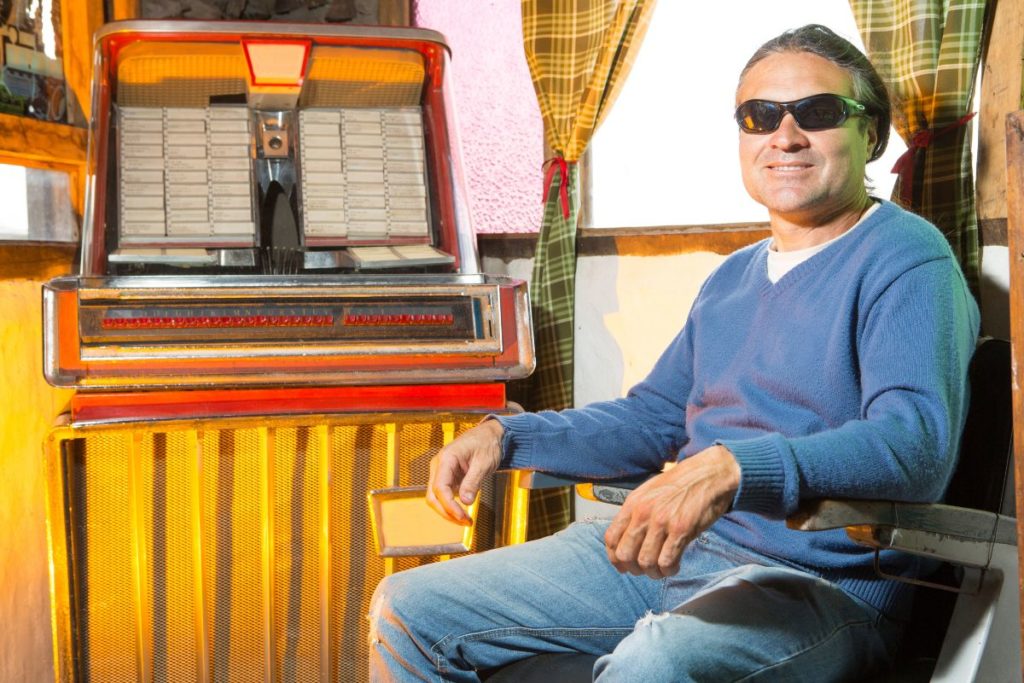
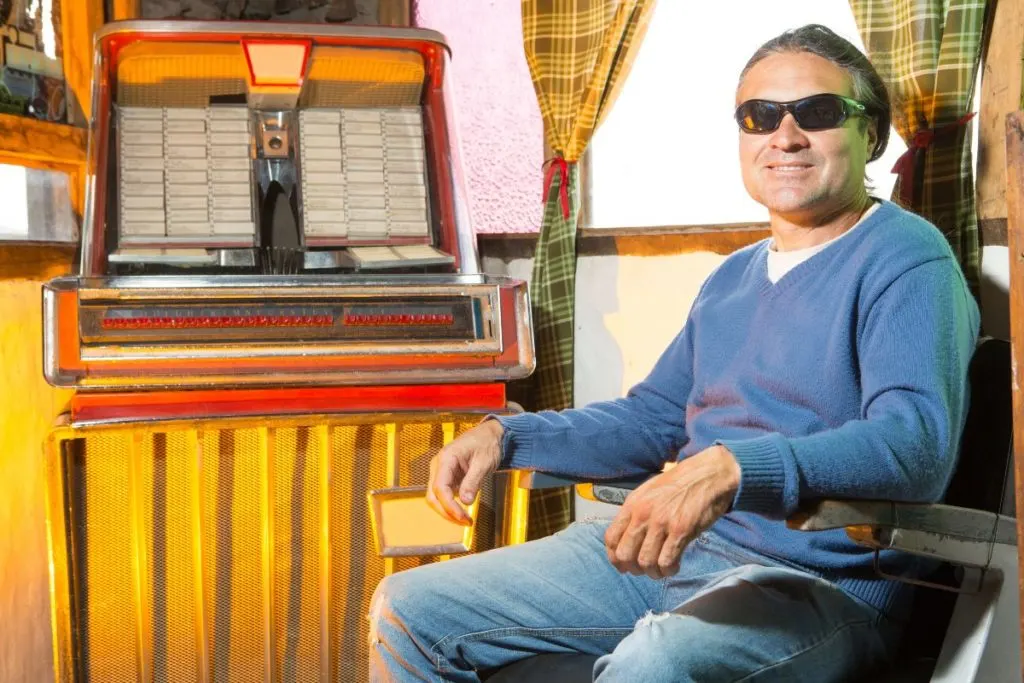
If you’ve ever stumbled upon an old jukebox in a thrift store or at a garage sale, you may have thought to yourself, “Wow, I bet this thing is worth a fortune!”
But before you go digging through your basement to unearth that dusty old jukebox you inherited from your grandpa, let’s take a closer look at whether these retro machines are actually worth anything.
Although some old jukeboxes will be worth a few hundred dollars that will only be if they are in working condition. An old jukebox that no longer works will be worth very little unless you know a collector who wants it for sentimental reasons.
As with any antique or collectible, the value of an old jukebox depends on a variety of factors. Let’s dive into some of the things that can affect how much a jukebox is worth.
Jukeboxes have certainly had their moments in the sun. They were all the rage in the 1950s and 60s, with everyone from Elvis to the Beatles gracing their playlists.
But with the rise of digital music, jukeboxes have mostly gone the way of the dinosaurs. You’re much more likely to find a vintage jukebox at a retro-themed bar than you are to see one in everyday use.
The History of Vintage Jukeboxes
Before we get into the nitty-gritty of jukebox value, let’s take a quick trip down memory lane and look at the history of these funky machines.
Jukeboxes as we know them today have their roots in the early 20th century. The first jukebox was created in 1906 by the Packard Motor Company, and it was called the “Nickel-in-the-Slot” phonograph.
It was a pretty simple machine: you inserted a nickel, and it would play one of four songs on a cylinder record.
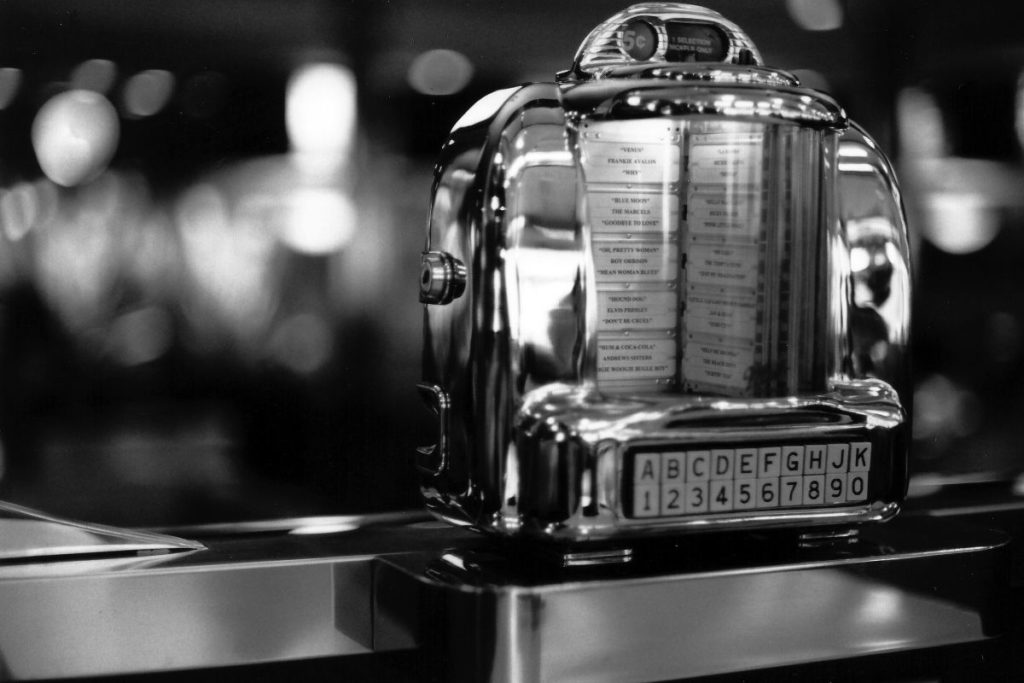
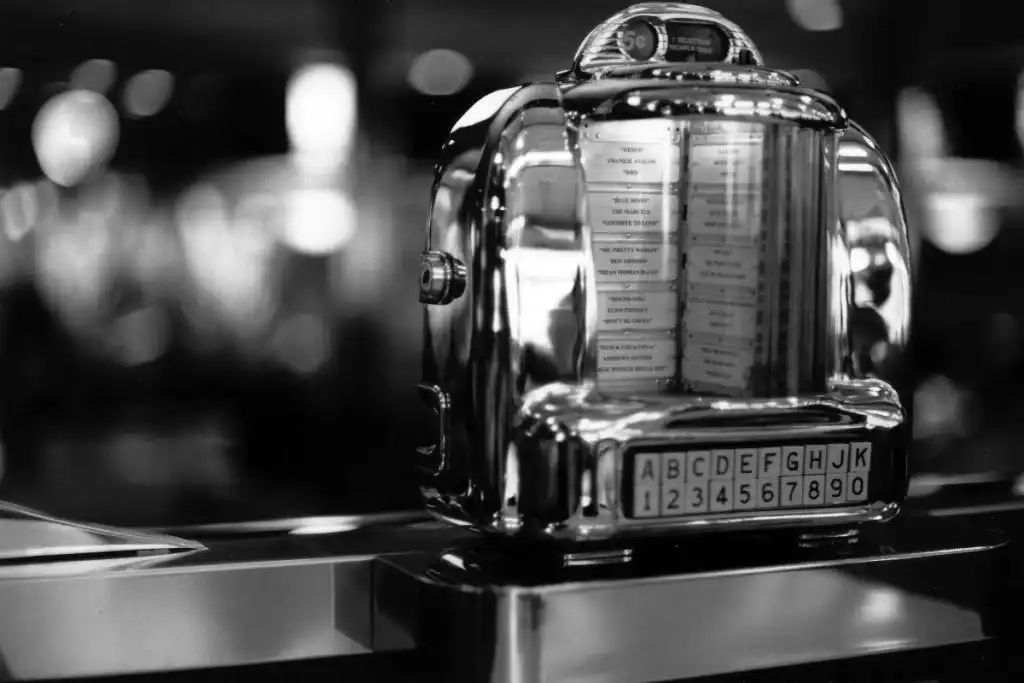
Jukeboxes started to gain widespread popularity in the 1950s, when they began to be made with 45 RPM records instead of cylinders. This made it easier to change out the records and offer a wider selection of tunes.
The 1950s and 60s were the heyday of the jukebox, with every self-respecting diner and pizza parlor having one on the premises.
But as the decades wore on and technology progressed, jukeboxes started to fall out of favor. With the rise of digital music and streaming services, there was less and less demand for physical media and coin-operated music machines.
Today, you’re much more likely to see a digital jukebox or a DJ at a bar than you are to see a classic jukebox.
Factors That Affect the Value of a Vintage Jukebox
Now that we’ve established some context for old jukeboxes, let’s talk about what can affect their value. Here are a few key factors to consider:
- Age and rarity: As with any antique or collectible, the age of a jukebox can be a major factor in its value. Generally speaking, the older the jukebox, the more valuable it may be. However, this isn’t always the case. Some newer models may be rare or sought after by collectors, which can also increase their value.
- Condition: The condition of a jukebox is important, as it can affect how well the machine works and how aesthetically pleasing it is. A jukebox in excellent condition is likely to be worth more than one that is heavily damaged or in poor working order.
- Brand and model: Some brands and models of jukeboxes are more valuable than others. For example, a Wurlitzer jukebox from the 1950s may be worth more than a more obscure brand or model from the same time period. It’s worth doing some research to find out which jukeboxes are more sought after by collectors.
- Demand: As with any product, the demand for a particular jukebox can affect its value. If there are a lot of people looking for a certain brand or model of jukebox, it may be worth more than one that isn’t as popular.
How to Determine the Value of an Old Jukebox
So, how do you figure out how much vintage jukeboxes are worth? Here are a few steps you can take:
- Research the market value of similar jukeboxes: One of the best ways to get an idea of how much your jukebox is worth is to look at the market value of similar jukeboxes. You can do this by searching online marketplaces or auction sites, or by consulting with an expert or antique dealer.
- Consult with an expert or antique dealer: If you’re not sure where to start with your research, an expert or antique dealer may be able to give you a rough estimate of your jukebox’s value. Keep in mind that these estimates are often just that – estimates – and the actual value of your jukebox may be different.
- Look up the jukebox on online marketplaces or auction sites: If you have a specific brand or model of jukebox, you may be able to find it for sale on an online marketplace or auction site. This can give you an idea of how much people are currently asking for similar jukeboxes.
Restoring an Old Jukebox
If your antique jukeboxes are looking a little worse for wear (or just don’t work anymore), you may be considering restoring them to their former glory. But is it worth the time and effort? Here are a few things to consider when deciding whether to restore an old jukebox:
- Benefits of restoring an old jukebox: There are a few potential benefits to restoring an old jukebox. For one, it can bring back the nostalgiciac charm of the machine and make it a conversation piece in your home. Additionally, if you’re able to restore the jukebox to good working order, you may be able to use it to play music and entertain guests.
- Potential cost of restoring a jukebox: Restoring an old jukebox can be a time-consuming and expensive process. You’ll need to factor in the cost of any necessary parts, as well as the cost of hiring a professional to do the restoration. It’s worth doing some research to get an idea of how much the restoration process might cost before you commit to it.
- Finding a professional to do the restoration: If you don’t have the skills or knowledge to restore a jukebox yourself, you’ll need to find a professional to do it for you. Look for someone with experience restoring jukeboxes, as they’ll be better equipped to handle the job.
- Considering whether the restoration process is worth it financially: Ultimately, the decision of whether to restore an old jukebox comes down to whether it’s worth it financially. If you think you’ll be able to sell the jukebox for more after it’s been restored, then it may be worth the investment. However, if the restoration process is going to cost more than the jukebox is worth, it may not be a wise financial decision.
Selling Old Jukeboxes
If you’ve determined that your old jukebox is worth selling, you’ll need to find potential buyers and determine the asking price. Here are a few things to consider when selling an old jukebox:
- Finding potential buyers: There are a few places you can look to find potential buyers for your old jukebox. You can try posting the jukebox for sale on online marketplaces or auction sites, or you can try reaching out to antique dealers or collectors who may be interested in the jukebox.
- Determining the asking price: To determine the asking price for your old jukebox, you’ll need to consider the factors that affect its value (such as age, condition, brand, and demand). It’s also a good idea to do some research to see how much similar jukeboxes are being sold for. You’ll want to strike a balance between pricing the jukebox competitively and getting a fair price for it.
- Negotiating with buyers: Once you’ve found a potential buyer for your jukebox, you’ll need to negotiate the price and terms of the sale. Be prepared to haggle a bit, as buyers may try to lowball you. It’s important to have a clear idea of what you’re willing to accept for the jukebox before you start negotiating.
- Closing the sale and ensuring a smooth transaction: Once you’ve agreed on a price with the buyer, it’s important to ensure that the transaction goes smoothly. Be clear about any terms or conditions of the sale, and make sure to get payment (in the form of cash or check) before handing over the jukebox.
Vintage Wurlitzer Jukebox Values
Oh boy, where do I start with vintage Wurlitzer values? Well, first of all, let me just say that if you’re looking for a quick and easy way to become a millionaire, buying a Wurlitzer is not the way to go. These vintage beauties may hold sentimental value for some, but in terms of monetary value, they’re not exactly setting the world on fire.
Now, don’t get me wrong, a Wurlitzer can be a pretty cool addition to any home or business. They’re definitely a conversation starter and will make you the envy of all your friends and neighbors.
But when it comes to actual dollars and cents, you’re not going to see a huge return on your investment.
Depending on the model, condition, and rarity, Wurlitzers can fetch anywhere from a couple hundred bucks to a few thousand. Most of the time, you’re looking at a couple hundred dollars max if it is not in working condition to several thousand if it is working.
For example, a 1946 Wurlitzer jukebox that had been completely restored recently sold for $7,500 on eBay. But unless you have an original Wurlitzer that has been restored you shouldn’t expect to get anywhere close to this (or pay anywhere close to this).
So if someone tells you they’ve got a Wurlitzer that’s worth tens of thousands of dollars, they’re probably trying to pull a fast one on you.
In summary, Wurlitzer jukeboxes are cool, but they’re not going to make you rich. You can expect to pay (or get) a couple hundred dollars to a few thousand dollars depending on the model, condition, and rarity. So, if you’re buying one, do it for love, not for money.
Vintage Rowe Ami Jukebox Values
First off, let’s talk about the condition of the Rowe Ami jukebox. If it’s in mint condition, you can expect to pay around $5,000 to $7,000. That’s right, you heard me correctly, five to seven grand. But, if it’s in rough shape, you can expect to pay closer to $2,000 to $3,000.
Still not cheap, but hey, you’re getting a piece of history.
Now, let’s talk about the model. The Rowe Ami Jukeboxes come in a variety of models and some are more sought after than others. For example, the Rowe Ami R-92 is considered a classic and can fetch upwards of $8,000. On the other hand, the Rowe Ami R-85 is not as popular and can go for around $3,500. So, if you’re looking for a true collector’s item, go for the R-92.
In conclusion, Vintage Rowe Ami Jukeboxes are worth a pretty penny. But let’s be real, who needs money when you have a piece of nostalgia that will make all your friends and family envious? So, if you’re in the market for a Vintage Rowe Ami Jukebox, be prepared to empty your pockets, but trust me, it’s worth it.
Final Thoughts
So, are old jukebox machines worth anything? If you are looking to buy or sell a vintage jukebox exactly how much it is worth is hard to say for sure, as the value of an old jukebox can vary widely depending on a variety of factors.
Some older jukeboxes may be worth quite a bit, while others may not be worth much at all. Most modern jukeboxes won’t be worth nearly as much as vintage models but even those can have a wide price range.
If you have an old jukebox that you’re thinking about selling or restoring, it’s important to do your research and evaluate whether it’s worth the time and effort. Look into the age, condition, brand, and demand for the jukebox, and consult with experts or antique dealers if you’re unsure of its value.
Ultimately, the value of an old jukebox may be more sentimental than financial. If you have a strong emotional attachment to your jukebox, it may be worth keeping it around even if it’s not worth much in terms of market value.