
*This post may contain affiliate links. As an Amazon Associate we earn from qualifying purchases.
Visible wobble may be normal for garbage record player turntables but you’ll find that zero wobbles is the industry standard for quality machines. Too many people when their record wobbles don’t seem to understand where the problem comes from.
Some of the most common reasons for it happening are the record player could be poorly made or the spindle is warped.
Are record player turntables supposed to wobble?
Record players are not designed to have any wobbling in the turntable at all. However, in real life most every player will have some amount of wobbling in it. As long as the movement isn’t causing your vinyl records to jump or skip, the wobble really isn’t anything to worry about.
Obviously, we would like a 0 mm variance (a perfectly flat platter) when it comes to a turntable, but some studies suggest a perfectly flat platter is not very common, regardless if it has a .1 mm wobble or a 1+ mm wobble. Each individual will have their own level of wobble tolerance.
A turntable wobble of 5 mm, could be fine for most people whereas someone who is very particular wouldn’t like that amount at all. In general, as long as the turntable wobble isn’t causing the stylus to jump a little bit of wobble won’t hurt the audio quality or the records themselves.
To learn more about record players wobbling you can keep reading.
You can also watch the video below if you prefer instead of reading it.
Do you love playing your vinyl records but your record player has seen better days? Well, you are in luck! There are tons of great record players that not only have great sound quality but also won’t break the bank. You can find them by clicking here.
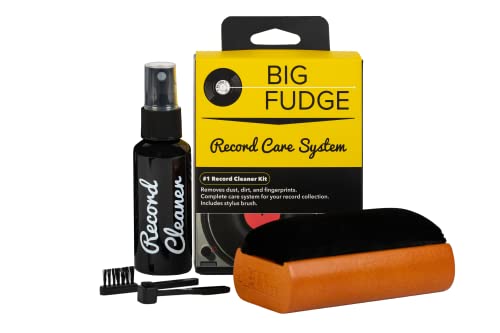
If you love records and record players, you must get a record-cleaning kit like this one. It is designed to ensure that your records stay in excellent condition to last you for decades.
Get this cleaning set and keep your vinyl records in perfect condition!
Why Do Record Players Wobble?
Most records players will have some small amount of wobble in them. There are some technical reasons for that but the simplest reason is that getting something perfect is virtually impossible.
If you buy a brand new car with brand new tires you will find the majority of the time that one of the tires will wear slightly unevenly. This is not necessarily an issue with the car or the tire and probably won’t be an issue at all but the tire is just slightly out of balance so it wears a little differently.
The majority of record players can be like that with a wobble. As the turntable spins it could have a minuscule variance in the production process that causes the platter to move slightly every time that it turns around.
The collar of the platter could be shaped slightly differently or the platter mount might have a slight variation. Sometimes a tiny amount of debris can even cause the turntable to wobble a tiny bit.
This wobble probably won’t hurt anything including the record or the player but it is still there.
Rega sub-platters are subject to some slight variation in how the resin part of the sub-platter fits on the spindle or perhaps the flatness of the resin after it fully cures. A machined sub-platter like on the higher models or the Groove Tracer upgrade probably does not have a wobble of 5mm, but due to the sub-platter/bearing design, some players may wobble a little.
Causes Of Turntable Wobbling
Ideally, no one wants to have their turntable platter wobble but, common mistakes could be putting on a record that is a bit thicker on one side or is slightly warped. These things won’t hurt the record or the player probably but they can cause it to wobble slightly.
Still, if it is stressing the cartridge and if a dip or rise corresponds to an area in the record groove where your needle has a hard time tracking, you might have some issues.
Another way to test where the wobbles come from and an easy test solution is to turn a spoon upside down and place it on the deck and nudge it up under the platter. If the deck drops, you will hear it scrape the bottom of the spoon.
While some experts say a 5mm wobble is fine, some music fans do not accept that at all. Many music collectors even say that they can hear the wobble by carefully listening to the record play.
Other experts believe that wobbling is an issue and they say that a wobbly platter will introduce imbalance and “wowing”. They say this will beat up the main bearing much faster and it will only get worse with time.
The platter and spindle should run true to each other, and then you only have the slop between the spindle and bearing; this should be around +- .001 inches.
Another thing that can cause the turntable to wobble a bit is if your machine has an old belt that turns it. If your player uses belts to turn then getting replacement belts could solve the issue with the turntable not moving smoothly or other related issues.
Leveling Your Record Player Platter
If your player wobbles too much and is causing issues with playing your records then you will probably want to level your turntable. The easiest way to explain how to do that is for you to watch the video below.
Sometimes, the wobble problem is not with the record player but with the records themselves. It is so important to keep an eye out for broken or damaged records. If you aren’t careful with your collection they can get dirty or damaged when you handle them.
Some proper handling techniques can be found below.
Proper Record Handling Techniques
First, don’t put your records on a shelf with too many records leaning on one unfortunate record at the end. On an overflowing shelf that lacks support dividers, the weight of each record adds up quickly, and you don’t want the records on one end to be supporting the weight of your entire collection.
That’s why specially designed shelves are a good idea. They’re the perfect balance of shelf space and divider support.
If you store your records incorrectly it could lead to a warped Zeppelin record!
Similarly, don’t stack your records like a deck of cards. If you stack them horizontally, the records on the top will be okay (probably), but on a stack too large (or left too long) you will inevitably add excessive pressure on your records that are near the bottom.
Because some of your sleeves will have things like drop cards, 7-inch bonus records, album art books, or the protruding zipper from your copy of Sticky Fingers, the unevenness of the packaging will introduce disproportionate weight and pressure to the stack, further exacerbating the warping.
Sure, go ahead and tastefully stack them for a picture, but stand them back up right away. Simply said, it’s bad for your vinyl if you leave them stacked like pancakes.
Don’t do it!
Finally, don’t leave your records in excessive heat. You’ll see below that re-introducing heat will potentially help you to fix a warped record, but don’t leave your records in a hot car or have them delivered to a sun-scorched doorstep in Las Vegas where you might accidentally leave them for a week while on vacation.
For short periods of time (like when your vinyl is on the delivery truck) you’re probably fine, but direct heat and sunlight over any extended amount of time is detrimental to the life of your vinyl.
Not only can it cause your records to warp but it can also damage your record’s grooves over time if they are regularly exposed to heat. The vinyl could become soft so when the tiny diamond tip on the stylus runs through the groove your record could become damaged.
Fixing A Warped Record
Now that we have addressed the basics of how your records can get warped in the first place, next we’ll go over a few of the generally accepted ways to remedy the problems.
One common way is to leave the warped record between two books for a long time with the hope of fixing it. Constant pressure should flatten your LP into submission but be careful you aren’t doing something more destructive in the process, like adding a ton of weight to a dirty record and grinding a grain of sand into the chorus of “Don’t Stop Believin.”
Clean your record first and consider leaving the record in the inner sleeve when putting it between your books — that should help prevent dust from building up on any part left uncovered.
Some other websites advise fixing a warped record by putting it between two large sheets of glass and putting it in the oven, but attention has to be stressed here.
Be careful that you don’t ever leave your record too long or at too hot of a temperature.
Too much heat on your records could introduce groove distortion; it might give the appearance of a flatter record, all the while masking the reality of a record that is even more damaged than before you tried to flatten it.
If you are interested in learning more about how to fix your warped records you can read another article that I wrote about it by clicking here.
Conclusion
How much wobble you are comfortable with on your player is ultimately a personal decision. Most record players will have some wobble in them but it shouldn’t be so much that your record skips or has other issues playing.
Some people try to get their players to have no wobble at all but for most record players, there will always be a slight variance. Even if you are able to perfectly level your platter there are many records that are slightly thicker on one side than the other so they will cause your turntable to wobble as well.