
*This post may contain affiliate links. As an Amazon Associate we earn from qualifying purchases.
Have you ever been playing Monopoly, but you weren’t sure about the best strategy in the game? Maybe you heard someone say that owning the utility companies in Monopoly is the best strategy, while others say, that they are a waste of money. Well, in this article we will go over everything you need to know about owning the utilities in Monopoly and if you should do it or not.
So are utilities good in Monopoly?
Even though everyone has a different strategy, it can come down to money when you are talking about owning a property. Even though they are small, in terms of money, owning the utilities can bring in extra money, and money is money. Even though it may not be a lot, the Utilities can bring in steady income.
If you want to know more about owning utilities in Monopoly, you will want to keep reading this article. You can also watch this short video to learn about some basic Monopoly rules.
If you love board or card games then you have to check out the game called Throw Throw Burrito! It is a fun fast-paced game where you throw squishy burritos at other people you are playing with! You can learn more by clicking here.
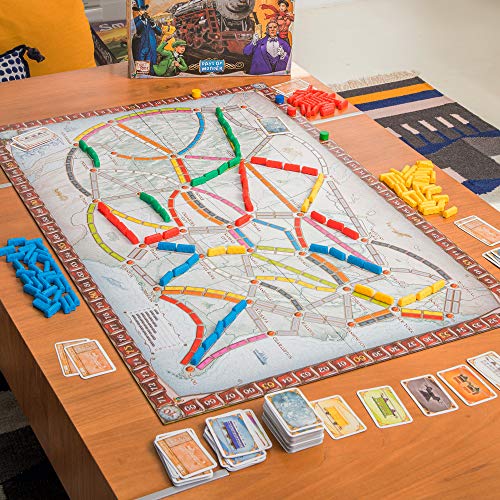
If you love games then you have to check out Ticket To Ride! This fast-paced board game will give you hours of fun with family and friends as you gather train cars and try to take over the board!
Ticket To Ride has many different variations as well so you can play across a variety of different maps.
What should I know about Monopoly utilities?
To understand the usefulness of utilities in the monopoly game, It is important to get to know what services are in the monopoly game. Utilities are properties that do not have a fixed or strict rent tag. The rent on utilities depends on the outcome of the dice spin that put the token on the property.
Now, are utilities of any use or good in monopoly? Yes they are. Services are a good take when it comes to monopoly. This is because they make your properties have more value and give them a x4 or x10 effect. Though the utilities do not have a skyrocketing growth and profit, they do not allow you to go bankrupt, in the sense that they give you a steady profit, even though not massive. It is importantly great to get these utilities at an early stage in the game.
How can you make good use of utilities in Monopoly?
You will want to watch out for the time when an opponent would roll on one to be in a rent debt. What is involved? The rent is four times the number of the dice spun. This is a situation if the player owns one utility. What happens if you own two services? The rent would then be ten times the amount spun! So, you see that with utilities in monopoly, you can not go bankrupt, even though you may not make an incredibly enormous profit.
There are two types of utilities in monopoly. They are the electric company and waterworks. Let us now examine landing when it comes to monopoly, as it is through this process that utilities work.
How does someone make money when playing Monopoly?
How does it win in a situation where a player lands on a site? On the off chance that you land on a Site that has recently been purchased by another player, you might be required to pay rent for landing there. The player who claims this Site must approach you for rent before the player that is next rolls the dice for their turn. The sum payable is appeared on the Title Deed for that site and will shift as per the number of structures on it. On the off chance that all Sites inside a shading bunch are possessed by a player, the lease payable is multiplied by two.
What happens when you land on a utility?
Landing on one of these allows you to purchase the Utility if it isn’t already owned. Likewise, with the other Property spaces, address the bank, the cost expressed in that space. If the Utility is as of now claimed, you might be requested to pay lease to the owner as per the dice that got you to that spot. If the owner has just one of the Utilities, the lease will be four times the amount that you rolled. If one player owns both of the two Utilities, you should pay ten times the amount that you rolled to land on that space. If you choose not to purchase, the Banker auctions the Utility available to be purchased to the highest bidder. You may participate in the bidding as well.
What happens when you land on a regular land?
On the off chance that you are the first to land here, you have the chance to purchase the land. If you do not purchase the item, the bank will then put the property up for auction. If you want, you may also bid on the item in order to win the property if you choose. If another player has already landed on that property, and they own it, when you land on it, you will need to pay the rent to the owner of the property if they realize that you landed on a property that they own. If they happen to own all three of the properties or the entire set, then the rent becomes double. If they have houses on the property, or a hotel, you will need to pay the amount listed on the property card.
What happens when you land on chance or community chest?
Arriving on one of these spaces implies you should take the top card from the deck. These cards may ask you to: move your token, pay cash, get cash, go to Jail, Get out of jail free, and many others. You should adhere to the guidelines on the card and act right away before restoring the card to the bottom of the deck. If you pick a “Get Out of Jail Free” card, you may keep it until you wish to use it or sell it to make some money or trade it for a property.
Note: a card may tell you to move your token to another space. If you pass “GO” in transit, gather $200. You don’t pass “GO” at the point when you are sent to Jail, or if you are sent back to a location.
What happens when you land on income tax spaces?
At the point when you fall on these, basically all there is to do is to pay the fees. Most people just do the cash amount as it is cheaper than the value of what they own.
What happens when you land on free parking?
If you land on this space, you basically rest here until your next turn. There is no punishment for arriving here. Most of the time, there will be money in the middle of the board from people who have had to pay into the game, and you will in turn win this money. Some rules also place $500 into the middle of the game as soon as free parking is taken.
Conclusion
We have seen how important utilities are especially at the beginning of the game, even though they do not produce an exponential profit growth. Now that you know about some people’s strategy to win byy buying the utilities, you can decide if you should own them, or if you should let them go to auction. Every person has their own strategy to win the game, and you must decide for yourself what strategy you are going to use to win the game.