
*This post may contain affiliate links. As an Amazon Associate we earn from qualifying purchases.
In the past decade, vinyl records have made a roaring comeback. When everyone thought, we have moved on to the digital formats of music; vinyl records witnessed a groundbreaking record of 16 million sales in the year 2018 alone. The last time Vinyl records were this popular was in 1991.
Of course with the recent increase in popularity there are many people that are concerned about whether a giant record collection could pose a fire hazard.
So, are vinyl records flammable? Vinyl records do melt and burn in fire but if you held a match to a record it wouldn’t ignite. They don’t pose a significant fire hazard just sitting on your shelf as the only thing that is extremely flammable are the cardboard sleeves that hold the records. For most people their closets are a much bigger fire hazard than their record collection.
Vinyl records will begin melting at temperatures above 212 degrees Fahrenheit so they aren’t an issue being stored in your house since if you have temperatures that high you will likely already have a fire. Your hand sanitizer, nail polish remover, rubbing alcohol, and flour (yes, flour) are far more flammable than records are.
Even if you are driving through a desert and leave your records in your hot car for a while, they would only possibly begin to melt since the melting point is at 140 degrees Fahrenheit. They won’t spontaneously combust in your hot car or catch on fire because of a stray spark.
Do you love playing your vinyl records but your record player has seen better days? Well, you are in luck! There are tons of great record players that not only have great sound quality but also won’t break the bank. You can find them by clicking here.
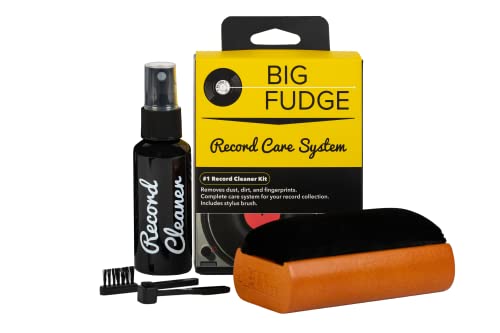
If you love records and record players, you must get a record-cleaning kit like this one. It is designed to ensure that your records stay in excellent condition to last you for decades.
Get this cleaning set and keep your vinyl records in perfect condition!
What happens when a vinyl record gets hot?
If you have a record that sits in a hot car or in the sun for a long time it can certainly warp but it won’t burst into flames! Check out this video below of what happens to a record when it is exposed to heat.
Despite vinyl records not being flammable and bad for the safety in your home they are not very safe for our planet.
Vinyl records are made from fossil fuels, plastics, chemicals, and other harmful materials. Although vinyl records are meant to last for decades, not all vinyl records have the same fate. Whenever something is wrong with vinyl records, they will normally end up in the landfill where they will take over 1,000 years to deteriorate!
What makes vinyl records bad for the environment?
Even though streaming music doesn’t give you the same vibrant and nostalgic feeling as an old record player could it is far better for the environment.
If you look at the numbers, in the past decade when vinyl records were in their “golden age”; millions of vinyl records were sold every year. However, as the vinyl records got older many of them were disposed of in the landfill.
Experts say that plastic products take up over 79% of all the trash in landfills. Of course records are not all of that but they certainly don’t help the situation.
The production of records is also not friendly towards the environment. Between the fuel burned and the pollution pumped into the atmosphere, records quite simply hurt our planet.
The surface of the vinyl records are made from PVC and it is rather difficult to recycle that. Some newer records are recyclable but there is no mandate to force record companies to use more environmentally friendly methods of production.
Is there a method to create environmentally friendly vinyl records?
In Denmark, eight companies have come together to create environmentally friendly vinyl records. They have proposed a much cheaper and sustainable alternative that utilizes the injection moulding technique.
Vintage vinyl records were manufactured by using steam boilers that use a lot of energy to press the record. . However, with the help of injection moulding techniques it requires 65% less energy to press the vinyl records.Because of this, it creates less waste and those vinyl records are 100% recyclable. Not only that but it also creates a much more durable product that produces much greater audio quality as compared to the vintage vinyl records.
There are a number of vinyl manufacturers out there that are still using the same technology from the 1960s to create vinyl records. It raises many concerns for the environmentalists that are trying to introduce new methods to those factories. The problem is the old technology is much cheaper to create, so, vinyl record manufacturers are doing what generates the most profit.
There is no need to be alarmed though, as new vinyl records have become a trend once again in pop culture, they only account for 1% of PVC in the entire world.
Are vinyl records dangerous to keep inside your home?
Even though some insurance companies have labeled vinyl records as a fire hazards, other insurance companies do not mind. Records show that if you keep vinyl records inside the home, it is not as much of a fire hazard as other items in your home such as the furnace, hot water heater, or even the stove.
There is no doubt that vinyl records emit toxins when they burn that are extremely harmful to any living thing, and it’s rather difficult to put the fire out once they do begin to burn.
The same is true for many items in your home however as many of our modern electronics and appliances emit toxins when they are being burned.
You will probably want to avoid keeping your vinyl records in a place that has high temperatures. The general rule of thumb is that if the heat is too unbearable for you then it is not viable to keep your vinyl records there.
They could easily begin to melt if the temperature rises above 140 degrees. So be sure and keep them out of direct sunlight and store them
In case, your vinyl records get warped and there is nothing you could do to fix it then you shouldn’t just throw them out in the garbage can. You will need to make sure you recycle them through the proper means.
Whenever you buy a new vinyl record; you should make sure that you are buying from an environmentally friendly manufacturer, as the vintage vinyl records are cheaper to get, but they bring in additional harm with them.
If you are not sure where to get environmentally friendly vinyl records then you can always search on the internet, as there are a number of online stores that can deliver your favorite vinyl records to your doorstep.
Conclusion
No matter if you own one vinyl record, or on hundred, you do not need to worry about them randomly catching on fire. If you are an avid collector, you will definitely want to keep them at room temperature though and make sure they do not get too hot as this can melt and warp the vinyl and ruin the records.
You will also want to make sure that you store the records standing up, and not stacked on top of each other as the weight of the vinyl on top of the other vinyl will cause the groves to flatten.
Here is the storage container that holds my personal vinyl in to ensure it is safe all the time. No matter if you are a collector or not, everyone can appreciate the sound given off by vinyl and the durability of the records.