
*This post may contain affiliate links. As an Amazon Associate we earn from qualifying purchases.
Vinyl is an old technology that has lived through decades. Years later, they continue to attract new fans looking to find better sound quality and to relive the “good old days”. Many people enjoy listening to records but for those who are new to them knowing how hard they are to break can be tough to figure out.
In this article we will help you learn how fragile records really are and how hard it is to break them.
Are vinyl records fragile? Records are surprisingly tough. For something that is basically a thin sheet of plastic you would expect them to be quite brittle but they really aren’t. To break a record you have to either try to break it or put a lot of weight on top of it.
Of course just because records are hard to break into pieces, that doesn’t mean they are hard to damage. Records can get damaged by leaving them in direct sunlight, putting too much weight on top of them, or even by scratching the top of the record.
Records should always be handled with care to ensure they last as long as possible.
Do you love playing your vinyl records but your record player has seen better days? Well, you are in luck! There are tons of great record players that not only have great sound quality but also won’t break the bank. You can find them by clicking here.
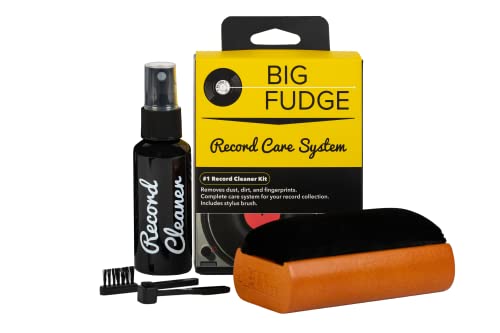
If you love records and record players, you must get a record-cleaning kit like this one. It is designed to ensure that your records stay in excellent condition to last you for decades.
Get this cleaning set and keep your vinyl records in perfect condition!
How fragile are vinyl records?
Vinyl records don’t break easily but damaging them is quite easy. A minor error on your part can cause the record to get damaged and render the record unusable. As fragile as they are, if thrown, a record can often survive the impact. That is especially true if they hit something on their edge.
The video below shows some people intentionally breaking records (don’t watch this if you can’t stand people destroying nostalgic items). If you pay careful attention there are many times where they have difficulty getting the records to even break. There are multiple times where the guy on the right attempts to break a record over his knee and the record bends but doesn’t break.
As you can see they are much more durable than people believe.
Just because records are hard to break in half doesn’t mean that they are hard to make unworkable. You can often make a record not work properly by storing it improperly or by scratching the surface where it plays the music.
How to take care of your records.
Taking care of your records involves a few different steps to ensure you don’t accidentally damage them. We will discuss those in detail below.
Handling
As obvious as it sounds, you need to be careful with your vinyl records. Don’t touch the surface of the record with your bare hands as the oil from your skin can cause the record to gather dust.
It is also a good idea to keep your fingernails trimmed when you are regularly handling records to prevent you from accidentally scratching it with your nails.
Another thing to keep in mind when it comes to handling is to make sure that you put away each record after you use it. Yes, that seems quite basic but most records are damaged inadvertently by knocking them off the player or knocking the stack over onto the floor.
Putting your records away is especially important if they are in a room with a hard floor. If they are in a carpeted room then a fall onto the carpet probably won’t destroy them, however a drop onto concrete or tile could cause them to shatter or crack.
It is also important to clean your records before every use. Over time records can get dusty or dirty and that dirt can scratch the record if it gets caught on the stylus.
Be sure to use a carbon fiber brush to clean any dust and dirt off the surface before and after playing. It would also be better if you had a turntable with a lid to protect your record while you are playing it. This to minimize the risk of airborne dust reaching the record’s surface.
Proper storage
Proper storage of your precious record collection is the first step to keeping them in good shape for decades to some. So, where is your vinyl going to be stored? What are the best ways to store your records?
First, always store your records vertically in a cool, dry place. Extreme temperature and humidity can cause your records to warp. Warping is fixable in most cases but depending on the severity it might destroy your record entirely.
Never lay your records on top of each other as this causes warping over time. Stacking up your records can also cause some of the records on the bottom to crack if the weight is too heavy.
Always store all your records vertically. Cover them with plastic outer sleeves for an extra outer layer of protection. This will reduce the time that your record is exposed to airborne dust and dirt and will make the prep time before playing much less as well.
As your collection grows, get a special unit or storage rack that is made for vinyl storage.
Many people choose to use record boxes to make sure that their records are kept safe. A nice storage box from Snap N Store can be found on Amazon here.
Inner Sleeves
The third way to help keep your records safe from damage is the inner sleeves. These sleeves hold your record inside the cover to help keep them safe. Keeping your records in their sleeves is an excellent way to keep them from scratching each other as well as keeping them clean.
You don’t want your records banging around inside the jacket and inner sleeves will help prevent this from happening.
Cleaning vinyl records
So what do you do if despite your best efforts your records get dirty? What is the best way to clean your records without damaging them?
Vinyl record cleaning is a necessary task in maintaining the quality of your collection but you don’t want to just grab the nearest wash cloth and start scrubbing. There are some specific methods that you should use to clean your records.
The best methods for cleaning your records are:
· Dry cleaning
Use a carbon fiber brush to clean the record before and after every play. This works best to remove built up dust and dirt. Carbon strands reduce the static charge on the record that attracts more dust.
This method of cleaning is the best for preventative measures.
· Wet cleaning
This method is the best for deep cleaning. Using a mixture of record cleaning fluid and distilled water clean the record using a wet microfiber cloth and dry with a separate cloth.
· Cleaning machines
To clean an extensive collection of vinyl records, you need a vacuum cleaning attachment. Use a cleaning solution and then vacuum the cleaning fluid off.
Other methods
There are of course many other methods for cleaning your records than just the three I mentioned above. Depending on how dirty your record is, you will have to determine how much cleaning you have to do.
Some additional cleaning methods and instructions can be found in the videos below.
Conclusion
Vinyl records are not incredibly fragile to break into pieces however, they are quite easy to damage. Make sure to take proper care of your records by handling and storing them carefully as well as cleaning them on a regular basis.
As you continue with your journey of collecting records, you will find a wide variety of ways to “best” take care of them. Of course all of these methods can’t be the “best” so it is up to you to test each one and see which works better for you and your collection.