
*This post may contain affiliate links. As an Amazon Associate we earn from qualifying purchases.
The Nintendo Wii was the first in its class gaming console that allows you to do so much more than just sit on the couch and play games. The Wii is the first ever motion activated gaming console ever invented.
When the Nintendo Wii was originally released, it received some bad reviews from critics due to the motion sensors and having to hold them in your hands. Even with those critics, the Nintendo Wii was still extremely popular. Everyone wanted a change of pace from the Xbox and PlayStation where you just sat on the couch and played the games.
When you go to play games on the Nintendo Wii you have a controller with sensors that you hold in your hand that makes the character on the screen move. This means that if you want to play a game of baseball you would hold the remote in your hands as you would a bat and swing from your living room. You would want to swing the exact same as if you were playing the actual game as the sensors can tell exactly how hard you hit it and when you hit it.
Because the games for the Nintendo Wii were based on motion, there was a big move to get people active and using the Nintendo Wii to do it. Because many people wanted to exercise while using the Nintendo Wii Nintendo released the motion Wii Fit scale.
The scale worked similar to the controller that had built-in sensors and you would follow along with the instructors on the screen while using the scale for exercising. It would keep track of your motions as well as how many calories you burned during the work out.
Because you would be using the Wii Fit scale for stepping on and off of the Wii would be able to tell where you are in the workout and what exactly movements you are doing. This allowed people to not only exercise from home but track how many calories they burned right through the Wii Fit scale.
Because the Wii is still a gaming console, many people wondered if the calories that it said you burned during an exercise were truly accurate. Some people believed that the scale told you that you burned a bunch of calories even though you didn’t so you would keep coming back and using it.
The truth is though that the Nintendo Wii Fit scale is extremely accurate at counting your calories that you burned during a workout. It is also accurate to keep track of your weight if it is on a hard surface and not carpet. Nintendo put a lot of technology into the Wii Fit scale to make sure that the calories that it said you burned were extremely accurate to give you the best user experience.
Are you a huge Nintendo fan? Then you have to check out the Mario and Nintendo gear that you can get. Whether you want a Mario wallet, a Nintendo sweatshirt, or a classic NES hat there are plenty of choices to choose from. You can find them all by clicking here.
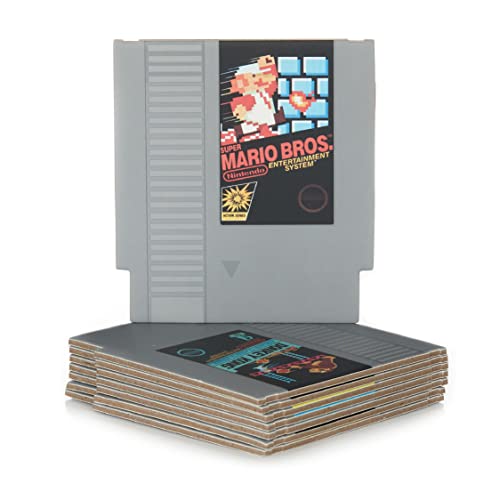
Do you love Nintendo? Then you have to check out this amazon NES cartridge drink coaster set!
This set includes 8 double sides drink coasters that look just like the classic NES cartridges.
This set is a perfect gift for the gamer in your life!
Can Wii Fit actually help you lose weight?
Now that you know about the Wii Fit and its ability to count your calories you may be wondering if it is a good tool to help you lose weight. Before you go and spend money on a Wii Fit, you want to make sure that it will actually hope you accomplish your goals and not just be another piece of exercise equipment that doesn’t work.
Nintendo put a lot of effort into making the Wii Fit and ensuring that it is accurate. Not only is it accurate, but the programs that are included will easily help you lose weight if you actually complete them on a regular basis.
The reason people do not lose weight with the Wii Fit is if they are cutting corners or not fully doing the workout. The Wii Fit workouts will burn calories and easily help you lose weight if you put in the work.
There are a variety of Wii Fit exercises that you can do with the Wii Fit. Nintendo wanted to make sure that you had plenty of options when you went to work out so you could choose the one that best fit your exercise style.
Does playing Wii sports count as exercise?
If you’re on a Nintendo Wii and you want to exercise but you do not like the exercise programs, you probably want to know if Wii sports counts as exercise. This is a very popular question especially during the winter months in many states when people are stuck inside.
Being able to play Wii sports inside during the winter months in the states where it is cold and snowy allows you to continue to exercise even though you cannot go outside. The real question is; does it actually count as exercise?
Although you do not burn as many calories playing Wii sports as you would if you were playing the actual sport, it would count as exercise as you will still be playing the sport. Boxing and tennis are the two Wii sports that burn the most calories while you play them. So if you want to exercise and have some fun at the same time, playing Wii sports is the way to go.
So the next time someone tries to tell you that you are not exercising or that Wii sports do not really count, you can be sure to ask them how many calories they burned sitting on the couch.
How many calories do you burn playing Wii sports?
If you own a Wii and you’re playing Wii sports in order to exercise and lose weight, you probably want to know how many calories you burn playing all the different games. If you’re really trying to keep track of your calorie burn and fitness levels you definitely want to make sure that you know exactly how many calories you’re burning when you play the Wii.
Although playing Wii sports does not burn as many calories as playing the actual sports you still do burn a good number of calories. Although boxing is the most intensive calorie burn game for Wii sports, just playing any regular Wii sports game leisurely burns 10-100 calories an hour. Boxing though will burn over 360 calories and hour and tennis will burn over 340!
There is a big difference in burning 350 calories an hour and 10 calories an hour. This is why you can’t expect to burn the same calories in bowling as you would in boxing or tennis.
Conclusion
Now that you know that the Wii Fit calories are accurate, you can see exactly why so many people love the Wii Fit and Wii sports games. Being able to play these games and have some fun while you burn calories is what some people might call living the dream.
While some people do not consider playing the Wii sports games as exercise, you now know that they are and you can burn quite a few calories while playing them. The Wii Fit motion will keep track of all of these calories that you burn as well which can be upwards of 300 calories an hour for boxing and tennis.
If you’re looking to lose a few extra pounds or to keep up on your workouts but you do not like going to the gym or any home workout programs, you can use the Wii Fit motion. Using this will help keep track of your calories as well as help you exercise as it is fun to play, and easy to forget that you are exercising and burning calories.
If you do not own a Nintendo Wii motion board you can find one by clicking here. Because some people do not use the motion board they just prefer to play the Wii sports games, you can find the Wii sports gaming package by clicking here.