
*This post may contain affiliate links. As an Amazon Associate we earn from qualifying purchases.
If you own some records or are just curious about their durability then you are in the right place. Records might seem to be indestructible and many of them have been around for many decades and haven’t been damaged.
So, can vinyl records even be broken?
Yes, vinyl records are breakable. They are made from styrene and this means they must be handled with care. Even though records should be handled with care they are far less fragile than many people think. You can drop a record many times without damaging it as long as it isn’t onto a hard surface and it doesn’t hit something weird.
One reason why records have lasted decades is because they are more durable than many of the other music mediums over the last century.
Tapes were easily destroyed by getting tangled or destroyed by players and how many of us could never forget having to fix and rewind the ribbon back into the tape manually with a pencil.
CDs are easily scratched which can cause skipping and they are fragile and can easily crack if they are dropped as well. Even if you drop them on to a soft surface they will often get scratched by a single drop.
Do you love playing your vinyl records but your record player has seen better days? Well, you are in luck! There are tons of great record players that not only have great sound quality but also won’t break the bank. You can find them by clicking here.
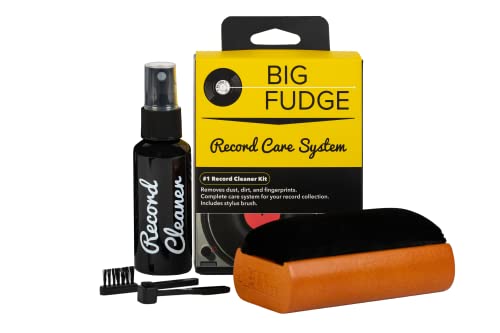
If you love records and record players, you must get a record-cleaning kit like this one. It is designed to ensure that your records stay in excellent condition to last you for decades.
Get this cleaning set and keep your vinyl records in perfect condition!
How hard is it to break a record?
Vinyl records can be broken but it is harder than most people think. For example in the video below two… young people (I wanted to say something else but I won’t) recorded themselves breaking a bunch of vinyl records.
Obviously that is a waste of good vinyl but the reason I’m posting it is because the difficulty that they had breaking the records even when they were trying! The first guy has to slam the record against his head 3 times before it will break and the second guy throws it at the wall where instead of shattering it sticks in the wall!
Be warned if people doing stupid things upsets you don’t watch this mess!
As you can see, records are far less fragile than most people would expect! There are multiple times where a record was slammed into a wall and it DIDN’T BREAK!
Now obviously you shouldn’t be that careless with records but that should help you get an idea of how much abuse records can endure without breaking.
How do you keep your record from breaking?
One of the best ways to keep your record from getting broken is to put it away after every use. Records will normally get damaged or broken because they are left out and then they get knocked over or moved and broken in the process.
Keeping your records put up will help protect them from being scratched too so its just a good habit to get into of always putting your record away after use.
Another way to keep your records from getting broken is to store them properly. Many people store records stacked flat on top of each other. The problem with that is the records on the bottom will be carrying a lot of weight and can get broken or warped quite easily.
When you store your records only store them standing on end and in their sleeve. That will keep them from getting damaged during storage.
The last way to keep your record from breaking that I will mention is keep them out of the hands of children. I have 3 kids and they are all quite destructive, even when they aren’t trying to be!
My wife and I always say that we can’t have nice things because we have kids instead!
Children normally won’t intentionally break things but they are curious and often their curiosity will mean that they damage things while they are playing with it or looking through it.
Are vinyl record storage boxes a must have?
Having storage cubes or even furniture that is specifically designed to house your records can be a good idea especially if your collection is quite valuable. For most people it is overkill but having a special place and furniture for storage can certainly help your records stay safe.
If you put your records in too small of containers the constant pressure on the record could warp it or make it more likely to break if weight is put on it.
For most people buying some storage cubes that fit their records is all you need to do.
What happens if I store vinyl records by a vent?
So this doesn’t directly relate to breaking your records but it will certainly damage them. If where you store them is directly under or over a heat vent the warm/hot air could severely damage your records.
This is especially true if you live in a home that has vents on the floor rather than on the ceiling.
Growing up I lived in a house that had heat grates on the floor. Those grates got extremely hot when the heat was on in the winter often becoming so hot you couldn’t touch them without getting burnt (yeah it wasn’t safe).
If you have your records near a vent that is putting out that much heat you will certainly warp your records. The problem with warped records is not only won’t they plus but they are also much more susceptible to breaking in the spots where they have become warped.
When you are trying to fix a warped record they are also much more likely to break than if the warp never happened in the first place.
If I don’t store my vinyl records properly, what will happen to them?
If you aren’t careful when storing your records they can get damaged in a variety of ways. Your record could get damaged by:
- Warping
- Mold
- Dust
- Dirt
- Breaking
- Bending
- Sleeve stuck to them
All of these and more are possible issues if you aren’t careful when you put away your records. Records should be stored in temperatures where you would be comfortable.
That means they shouldn’t be stored in a shed or garage.
Where you store your records is just as important as how you store them. If you allow your records to be in the cold and heat you will quickly damage or entirely destroy your entire collection.
Other ways to protect your records from breaking
A few other ways to protect your records are
- Buy protective sleeves or storage solutions
- Handle them with care
- Don’t store them where they could easily be knocked off or over
- Only have them out when in use
- Avoid using them over hard surfaces. If at all possible have a soft rug or carpet so if you drop one it won’t break
There are of course many other ways to damage or break your records but if you take some common sense steps as mentioned above you will greatly reduce the risk of damaging them.
But what do you do if you damage your records through mold, dirt, scratches,etc. ? We will cover that next.
How do I clean my vinyl records?
Cleaning your vinyl records regularly will reduce the risk of damaging them through dust, and dirt. Dirt and dust can leave scratches on the records which will make listening to them far less enjoyable.
If you happen to already have dirt or dust on your records or are just looking to clean them to make sure it doesn’t gather then read on.
This is how you should clean your vinyl records:
• Wipe your records with a clean carbon brush before and after every play. This should also be done before you give it a deep cleaning.
• Cover your index finger with a lint-free fabric and dip inside warm soapy water. Calmly rub your finger over the record, maintaining a circular motion and follow every groove of the record, beginning from the center of the record to the edge in a clockwise motion.
• When at the edge, begin to wipe the record counter-clockwise back to the record’s center.
• Rinse with distilled water to thoroughly remove any soap that is left over.
• If the record label gets wet, immediately pat dry with a clean lint-free towel
After cleaning what if you discover that your record was not only dirty but also scratched? How can you fix that damage?
Having a scratched record is annoying but not impossible to fix. If you find your favorite record is scratched or damaged and isn’t playing properly you can try this easy fix by following the video below.
Conclusion
Records are definitely breakable but they are far less fragile than most people think. Just because they are not totally fragile doesn’t mean you shouldn’t be careful when storing or using them.
To make your records last as long as possible it is important to store them upright and in the proper conditions so they don’t get dirty, moldy, or warped.
If your record collection is important to you use each of the above tips to help them last a few more decades!