
*This post may contain affiliate links. As an Amazon Associate we earn from qualifying purchases.
Although many people love to play games on the Xbox, sometimes they want to play games that they did not purchase. In order to do that, some people get with their friends and do game sharing. If you have done this, you have probably heard about Xbox banning a lot of people recently and wanted to know if you could be one of the next ones.
So can you get banned for game sharing on the Xbox?
Although game sharing sounds like it is illegal and a good way for people to get banned, Microsoft said that they were not going to ban people for game sharing at this time. The only way someone could be banned for game sharing, is if the game they download from the other account was downloaded illegally and not from the Microsoft server.
If you are interested in learning more about this subject you can keep reading the rest of this article.
You can also check out the video below to learn more about this subject if you prefer.
Are you a huge Xbox fan? Then you have to check out this amazing Xbox gear and decor. Whether you want an Xbox-styled wallet, a sweatshirt, or a pair of Xbox socks there are plenty of choices to choose from. You can find them all by clicking here.
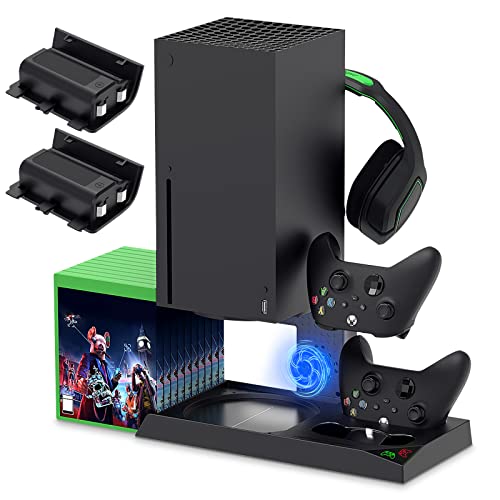
If you have an Xbox you need to get this cooling/charging stand for your console/controllers.
There is nothing worse than being ready for a long night of gaming only to realize your controllers are dead. With this stand that never has to happen again!
Owning an Xbox is a glorious thing for kids and teens and even adults to do. Most extreme gamers have an Xbox to quench their gaming thirst.
This video gaming brand is created and owned by Microsoft and the original Xbox was released on November 15, 2001 in North America. Since then, a number of consoles have been released with each console having more advanced features than the previous one.
The higher resolutions and better games and features are what keep people coming back for the latest and greatest Xbox console. One downside to every console is that the games are quite expensive, which is why many people try to do game sharing on the Xbox.
What is game sharing?
As an easy description, games sharing permits the access of your friend’s Xbox game library on your own system. Anyone who is signed into your Xbox account has the ability to access the entire library of digital games that are available on the console.
There is a particular setting on Xbox, known as “Home Xbox”, which makes one system as the primary console while others can play the games of that console by just signing in. They can switch the second Xbox to the home Xbox system to gain access to their friend’s library of games.
Is game sharing ok morally?
Game sharing in a healthy environment when you are with your friends would not do any harm. The purpose of the Home Xbox feature is to let you share your games conveniently with your friends and family. This is why there is nothing illegal and you wouldn’t be banned from sharing games using the home Xbox. There is nothing mentioned under Microsoft’s “term of service” that would predict that game sharing is against the company’s rules (as of now).
When you are with your friends just sign in to the home Xbox with your Microsoft account so that your friends can play along. Once the game is over, just remember to sign off.
You can also watch this video which will show you how to game share on the Xbox One or you can read the steps below.
- Find the trusted person with whom you would want to share the digital games. Get their Xbox Live login information to safely sign in.
- Next, you need to press the Xbox button on the controller, which will open the guide for you. Then you need to scroll over to the player icon and select the icon “add new”.
- You will get an option to fill in the credentials where you need to input your friend’s email address and password that he uses for his Xbox account.
- Now, scroll back to the account tab and sign in to your friend’s account if it doesn’t sign them in automatically.
- After logging in successfully open the guide again by pressing the Xbox button and move on to the gear tab to select the option of “settings”.
- Now follow this path. General>Personalization>My home Xbox, select “Make this my home Xbox.
- After this is done, you can visit “My games and apps” from your account and home screen and you will be able to view and access all the games that your friend’s console has. Switch over to the tab of “Ready to install” to download the games that you haven’t yet downloaded.
- Your friend should follow the same steps to access the games available on your account so that both of you can game share on Xbox using your own individual accounts.
Precautionary points that should be in your mind while game sharing
- When you are logging in with your Microsoft account to your friend’s Xbox, you are actually giving them access to the saved credentials of your credit cards. If the person is just a stranger, he could buy add-ons and games using your credit card and you would have a bunch of extra charges before you knew what they were from. One of the easy things that you can do is disable the auto-sign in a feature on your Xbox and never share your credentials with strangers online!
- By logging into your Microsoft account, your friends wouldn’t just have access to your games, but would also have access to all of your “home Xbox benefits”. Suppose you have Xbox Live Gold, you are actually sharing the benefits with your friends even if you don’t want to. So, just think before you start the game sharing process with your friends.
- The process of game sharing is possible only with digital games. If you prefer owning physical copies of the games, then, in that case, the game sharing process wouldn’t work. The physical games come in a disc and you would have to take those discs over to your friend’s house to share them that way.
- In the future Microsoft could block game sharing. Although game sharing is still allowed by Microsoft, that can change anytime they want. If you are going to purchase a game and one of your friends specifically wants it, you should split the cost of the game in case game sharing is ever banned. This makes sure that you and your friend are neither upset that one person always has to buy the games.
- Make sure you practice the process of game sharing with only the friends you trust. It also helps if you have known them for a very long time. Do not do it with anyone and everyone to try and get cheap games. It can put your account at risk and they might also abuse your account.
- If you are worried about the people you are sharing with stealing your information, you should do the signing in and back out on their console so they will not have access to your credit cards or accounts.
- You will also want to make sure you are signed out of your account after they have any of the games they want and you put your console back as the home console.
Conclusion
Now that you know it is allowed to game share on the Xbox, you can get with your friends and get some awesome new games. Although it is not a bannable offense now, Microsoft may change that in the future, so I would recommend paying attention to any rule changes that Microsoft makes in the future.
No matter if you game share or not, there is no denying all the fun games that there are for the Xbox platform. This platform has games that range from child friendly all the way to the top shooting games in the world! The Xbox community is great as well, and if you haven’t ever played on Xbox Live, it will revolutionize your world!