
*This post may contain affiliate links. As an Amazon Associate we earn from qualifying purchases.
Have you been playing on the PlayStation network for a while and have run across many people using a modded controller? Maybe you are considering playing with one, but you want to make sure you are not going to get banned.
Well if this is your question then you came to the right place.
So can you get banned from PSN for using a modded controller?
Since you do not actually hack anything or alter any gaming code, you are not violating any terms and conditions of PlayStation by using a modded controller. so, even if PlayStation finds a way to prove you are playing with one, (which they can’t) then you are still not breaking any of their rules.
However, there are some games that have specific rules about not allowing modded controllers. If you play those games on your Playstation while using one it is possible that you will be banned from those specific games.
If you want to know more about modded controllers on the PSN then you will want to keep reading this article.
You can also watch this video below if you prefer to learn that way as well.
If you love PlayStation you need to check out this amazing game room light decor. It looks just like the buttons on the PlayStation controller and the light reacts to the music that you are playing as well! You can check it out by clicking here.
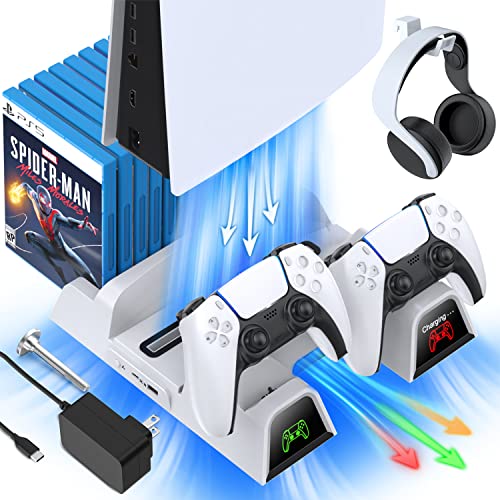
If you have a PlayStation console you should also have one of these stands. It makes it incredibly easy to organize your console and games as well as charge your controllers at the same time.
Plus it has a cooling fan to make sure your console doesn’t overheat when you have your weekend gaming marathons!
Are modded controllers illegal?
As a gamer, you might have heard the terms ‘modded controller’ and ‘modder.’ You might have also seen the endless debates on online forums about the usefulness and risks of using modded controllers.
Here we will try to understand what modded controllers are and how they give their users an edge (if any). Also, we will address the concerns of gamers such as whether it is legal to use modded controllers and whether you can get banned from the PlayStation Network for using one.
Today, the gaming community is largely divided on this matter. One group of gamers supports modded controllers for the supposed benefits they provide. On the other hand, some gamers feel that using modded controllers is in a way cheating, and modders spoil the fun of the game.
Once you have all the necessary information, you can decide for yourself if it is going to make you a better player and you can decide whether investing in a modded controller is beneficial for your gameplay or not.
No matter what a person or forum says, modded controllers are not illegal.
What is a modded controller?
The modded controller is the term used to describe a modified (or changed) controller. Around a decade ago, at the time of the PS3, certain companies tried to modify the controller in a way that enhances the player’s gaming experience. Modded controllers aim to provide users with options that can possibly help to improve their gameplay.
The pioneer in this field was the Rapid Fire mod. The introduction of Rapid Fire controllers significantly altered the way gamers saw controllers. It aimed to reduce the pressure on the user’s finger by automatically pressing and releasing the fire button to perform a shooting action.
The concept was a hit among the masses. Soon, there was a huge demand in the market for Rapid Fire controllers.
You should not confuse the functionality of the controller with hacking the game code. As a modder, you are still following the code of conduct. You cannot exceed the pre-set speed threshold for all the weapons. So, you cannot alter the fire rate of fully automatic weapons. However, modded controllers are suitable for single shot and semi-automatic weapons.
You can choose from a set of pre-programmed speeds. The user also has the option of setting up the number of shots per second.
Due to the perks they provide, modded controllers have quickly gained huge popularity. Today, companies provide 2 main types of perks – shooting and non-shooting features.
Shooting perks include allowing the user to customize their shots while the non-shooting features include allowing the user to drop and shoot simultaneously, fast reload, quick scope, and run constantly, as well as a few others.
The legality of modded controllers
A modified controller only helps the gamer to perform actions that would be difficult to do manually. There is no way that these controllers alter the game code or involve hacking.
Players can keep going strong after long hours of gameplay due to automatic actions that modded controllers perform. So even though third-party controllers are not recognized by Sony they are completely legal to use.
Can you get banned from PSN?
Since using a modified controller does not involve hacking or altering the game code, you are not breaking the rules of the PSN.
Therefore, you will not be banned for this.
There are some rumors in forums that if someone reports you and your gameplay is observed, you will be banned, but there is no solid proof of any account getting banned solely for the usage of a modded controller. So, if you are a newcomer, you can safely purchase a modded controller without the fear of getting banned.
Do modded controllers enhance your performance?
It is true that using a modded controller frees up your hands and provides certain perks, however you cannot depend on it alone to become a better gamer. You will still need to practice a lot, know the map well, be aware of the best hiding places, employ a good strategy, and more.
Just customizing your shots or using a scope will not enhance gameplay enough to make you win like hacking will.
Even though it doesn’t enhance it in all the ways, some gamers still hate modders because they feel that they have an unfair advantage over everybody else.
Opposers of modified controllers feel that although it is technically allowed, it is still a form of cheating. Whether you feel that it is a legitimate way of playing a game or not, do not expect your performance stats to shoot up just because you started using a modified controller.
Factors to look for, while buying a modded controller
Today, there are a variety of companies on the market that sell modded controllers with different features. Some companies even make unbelievable claims about how they help the users win with little human effort.
You will want to be cautious of these claims as not all of these claims may be true and if they are it is likely through hacking.
You should only buy controllers from reputable companies too. Popular companies provide superior quality controllers and equally good post-purchase customer support if you have any issues.
Just like the range of features, there are various controllers available at a range of prices – from simple to high-end models. Some controllers may be good but may not suit your gaming style or maneuvers. Also, an inexpensive model may not provide the best performance.
Here are a few factors to consider before making your purchase.
- The reputation of the company
Mod controller companies take the original controller and add a modchip inside it. The exterior is modified to suit the changes made.
The quality of the modchip determines the performance of the model. Reputable companies make good quality custom parts. However, an overload of custom parts is not recommended.
- LED indicators
Not all models come with an LED indicator. But if you are serious about gaming, this feature is a must-have. The LED indicator keeps you informed about which features are enabled and what are the custom values entered.
Without this feature, you may be completely unaware of the enabled features which may disturb your focus on the game.
- Reviews from verified buyers.
This is probably the biggest. The best way to know if a controller is good is to look at the reviews of the controller and purchase based on what others are saying about it.
A modded controller for the PS4 that has good reviews can be found here.
Conclusion
Now that you know that modded controllers are not against the rules of the PSN, you can play with one and enjoy every second of playing.
Although they are not against the rules, you should still not go around bragging to people you are playing with one as this will make the other players upset and not want to play with you and it could get you reported repeatedly to Playstation which means they will look at all of your behavior under a microscope.
No matter if you play with a modded controller or not, you have to admit that PlayStation has a lot of fun games, and playing online with other people is fun no matter if you win or lose.