
*This post may contain affiliate links. As an Amazon Associate we earn from qualifying purchases.
Have you ever been playing pool, but noticed other people in the world play Snooker? Maybe you thought about playing pool on a snooker table and wanted to find out if it was possible. In this article we will go over everything you need to know about pool and snooker.
So can you play pool on a snooker table?
Although it is possible, to play pool on a snooker table, you should always play pool on a pool table and snooker on a snooker table. This is because the table and cue balls are different sizes for the different games.
If you want to know more about playing pool on a snooker table, you will want to keep reading. You can also watch this short video about playing pool on a snooker table and what it will look like.
If you are looking to get better at playing pool one of the best ways to do that is by upgrading your pool cue. One of my favorite cues is the Viking Valhalla. It is available in a variety of colors and won’t break the bank. You can find it by clicking here.
What is the difference between pool and snooker?
Although pool was originally played by rich people, today it can be enjoyed by everyone. It is played by people all over the world. Pool and snooker are both a cue sport. Snooker originally started between British Army officers stationed in India.
It was the second half of the 19th century when snooker was created. To play snooker, you need a rectangular table that is covered with a green cloth. To play a pool game a rectangular table is also needed. Because the size of a snooker table is a lot bigger than a pool table, it will not seem very entertaining to play.
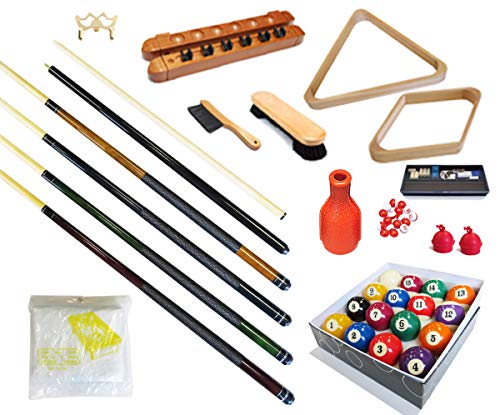
If you have a pool table then you need to get this accessory kit. It includes pool cues, extra pool balls, and all the gear you need to keep your pool table in tip-top shape.
If you are tired of your kids (or friends) ruining your good pool cue when they play then having these extra ones will keep that from happening (just be sure to hide your good one!).
What rules would need to change to play pool on a snooker table?
To play any cue sport, it is better to use suitable instruments that belong to the sport. That is why it is better to play pool games on the pool table and snooker game on a snooker table.
If anybody asks you to play a pool game on a snooker table, it is definitely possible to play as both of them are similar. In order for this to happen, you will need to change the way you play in order to make the game work.
Because pool balls are bigger than the snooker balls you will have problems making the pool balls in the pockets. This is because the pockets of a snooker table are narrower than on the pool table. Even though it is possible, it just simply should not be done.
Difference between the pool and snooker table
Both of the games, pool and snooker are loved by many different people. To play both of these games, you simply need a table with pockets. Below you will find the differences between pool and snooker and what sets them apart.
- Size
The size of the table is an important fact that tells us whether the table belongs to snooker or pool. Though only a few people have knowledge about this information, it gives us the right way to detect the differences.
Pool tables are actually smaller than snooker tables. You can see, the height of a pool table is bigger than the snooker table. It also has larger pockets and larger balls. If you look at a snooker table you can see, it is usually 10 feet long. This is the regular size of the snooker table. In Europe though, snooker tables are typically 12 feet long.
On the other hand, pool tables are 7 feet, 8 feet or 9 feet in regular sizes. This difference in sizes makes playing pool on a snooker table weird and extremely easy.
- Pockets
Pockets are an important part of a cue sport. It is also important in both pool and snooker games that the pockets are regulation size. If there are no pockets in a cue sports table, it will not be possible to hold the ball in a certain table. That’s why it is necessary to have pockets in a cue sports table. There are differences between the pool and snooker table pockets though.
If you look at the pool tables, you can see 6 pockets in total. There is one pocket in each corner of the table and one pocket in the middle of the lengthier sides. The size of the pockets in a pool table is slightly larger than the snooker pockets. They are bigger as the balls are bigger in size.
Synthetic rubber or synthetic leather are the materials that these pockets are made of. When it comes to the snooker table, you can see, there are also six pockets in a snooker table. That means there is no difference between the total number of pockets.
Even though they have the same number of pockets, their pockets themselves are different. The pockets of a snooker table are narrower than the pool tables pockets. This is because the balls in pool are smaller than the balls used in snooker. Snooker table pockets are also curvy from inside and pool table pockets are not.
- Height
There is also a difference in height between a pool table and a snooker table. By looking at the height you can easily tell the differences between a pool and snooker table. The height of a table also affects your playing style and movement.
When it comes to telling the height of pool tables, you can see they are a little higher than the snooker tables. Pool tables have a strong and well built frame structure. They have higher legs as well. On the other hand, a snooker table is lower to the ground and not as sturdy. The height of a snooker table is generally 2 feet and 9.5 inches or 2 feet and 10.5 inches from the ground. This is how they are easily noticed to be different from a pool table.
Conclusion
Although pool and snooker are similar in the major classifications, both of them are cue sports. Even though they are different in some ways, they are similar in a lot of ways as well. This is because both of the games come from the main category of games that are cue games.
If you have ever played Snooker, you know just exactly how important the rules of the game are. If you have never played snooker before, you may be curious exactly what snooker is. If you want to know what snooker is, you can watch this short video to learn exactly how to play snooker.
If you have never played pool before, and you are interested in learning how to play, then you will want to watch this short video.
No matter which game you prefer to play, if you follow the rules, you will be able to play and enjoy the games and have fun doing them.
Now that you know you can play pool on a snooker table, if one of your friends has a snooker table, and you like to play pool, you can still play the game and have fun. Even with them being different, the two cue games are fun to play and they are both loved by many people all around the world.