
*This post may contain affiliate links. As an Amazon Associate we earn from qualifying purchases.
Have you ever played Rummikub and saw someone picking up extra tiles? Maybe you like to pick up a couple extra tiles in the beginning to help you “get out”. Well, in this article we will go over everything you need to know about playing Rummikub.
So can you steal tiles in Rummikub?
Rummikub tiles that are already played can be “stolen” or used by anyone who is already “out”. Once tiles are played on the table in Rummikub anyone can play on them so it isn’t actually stealing tiles since according to the rules anyone is allowed to use them to create sets or runs.
Now, if when you talk about stealing Rummikub tiles you mean taking extra from the table or taking them from someone else’s tile rack then of course that isn’t allowed. If by “stealing” however, you mean using someone else’s tiles that they have already played on the table then yes that is absolutely allowed.
You are allowed to use tiles that other people have layed out on the table as once they are out on the table they are for everyone to play on or use as they see fit.
Who lays the tiles down first does not matter and where on the table they end up at doesn’t matter either as the score is based on what tiles you have left on your rack at the end of a round not on what you have layed down.
If you want to know more about the rules of Rummikub and what they are, you will want to keep reading. You can also watch this video to learn how to play and what the rules are.
If you love board or card games then you have to check out the game called Throw Throw Burrito! It is a fun fast-paced game where you throw squishy burritos at other people you are playing with! You can learn more by clicking here.
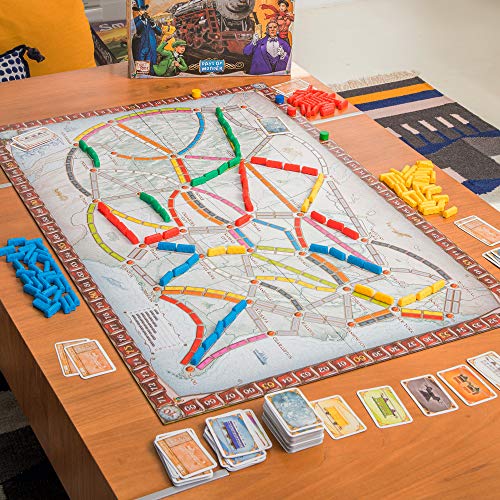
If you love games then you have to check out Ticket To Ride! This fast-paced board game will give you hours of fun with family and friends as you gather train cars and try to take over the board!
Ticket To Ride has many different variations as well so you can play across a variety of different maps.
Is Rummikub Popular?
Every day we come across many Rummikub questions. This is because people love to play this game. The game is popular worldwide, and people love to play this game with their families and friends.
There is a lot of confusion about this game because “Rummikub” is a little hard to learn. The good thing is that once you learn the rules, there’s no stopping you.
There is one question that a lot of people are asking nowadays, and that is, “Can you steal tiles in Rummikub?” We really don’t know why people are asking questions that involve cheating. You should play the game fairly, and this is the only way you’re going to enjoy the game.
There’s no way that you can steal tiles in Rummikub because players count the tiles before they play the game, and during the shuffle, you can steal one or two tiles (but we won’t suggest you to do that.”
There might be ways that you can steal the tiles from the opponent, but when it comes to the professional game, you won’t be able to actually steal tiles do it.
Rules Of Rummikub
There are a few rules that you need to follow during the gameplay, and if you don’t know about the game rules, we can list everything down. Before we write down the rules, you can read the instructions from the official book of the owner.
- There are a total of 104 tiles in the game with 2 jokers in it. Each tile has different numbers, and there are 4 different colors that are used for the tiles
- You can play with two players and four players at one time. You can’t play with more than 4 players at one time because it isn’t in the rules. If you want to play with more players, you might need more tiles depending on the number of players you’re playing with
- Before you start the game, you need to shuffle the tiles without showing the numbers to anyone. Once the tiles are shuffled, then you’re all set to go
- You can randomly pick 14 tiles from the pool or ask any player to do this job for everyone
- Once the tiles are shuffled and distributed, you’ll have to show one tile, and the one who has a greater number on the tile will draw the set first
- The set of the Rummikub contains three tiles, and sometimes you can use 4 tiles as well.
- It’s time to make your first move by creating your first “meld” (set or run). If you are unable to play 30 points on your turn with your initial meld or melds then you will have to draw a tile and your turn ends.
- After making your first move, you’ll have to wait for other players to complete their first meld as well. The game will continue in the clockwise direction
- After the game is ended, all the players will have to count the score, and if your score is greater than any other person, you will win that round. However winning the round doesn’t mean that you win the game.
- The scores are then tallied (minus scores for the players that didn’t go out and positive scores for the player that went out). Those scores are then carried into the next rounds until a winner gets 200-300 points (depending on what everyone agrees to prior to starting the game). Note: you don’t have to play rounds at can just have a single winner after each round that is played if you wish.
All the online games that are available follow the same rules. If they aren’t following the rules, you can’t call that game “Rummikub.”
You probably have heard about the game Rummy. Although most people do not know this, Rummikub is derived from this game and known as the variation of Rummy. So, the game is similar to Rummy.
Let’s break down some similarities.
- The rules are the same where you can play with a maximum number of 4 players. The only difference is that “in Rummikub” you’ll be given tiles, and in “Rummy” you’ll give cards
- There are three variations of Rummy as well as Rummikub. They both are available on the internet, and you can play the game on Facebook for absolutely free
- You have to show a card to everyone in Rummy before you get started and the game processes in the clockwise direction. When talking about Rummikub you have to show a tile to everyone in Rummikub before you get started and the game processes in the clockwise direction as well
So, these are the similarities that you’re going to enjoy when playing both the games.
Can You Play Rummikub With More Than 4 players?
According to the rules of Rummikub, the maximum numbers of players that can play the game are “4” with 106 tiles containing two jokers and 4 colors.
The numbers that are written on the tiles are from (1-13) digit, and there are only two copies of each color. So, playing with more than four players isn’t possible, but if you want to play with 5 or 6 players, you’ll have to introduce your own rule because the rules and regulations book doesn’t have it.
The other option is to play with two games put together and play with the same rules.
Can You Play Rummikub With Cards?
Unfortunately, you can’t play Rummikub with cards because the game is being played with tiles. There are a total of 104 tiles and 2 jokers in the game.
Jokers will help you secure “30 Points,” and these are the most important tiles in the game.
Conclusion
Although Rummikub is extremely fun to play, you must follow the rules in order to have fun. Once you start cheating, you have begun to go down a slippery slope of not following the rules and cheating. Although most people now that cheaters never prosper, sometimes they do win.
Although some people steal tiles in order to gain an advantage, it is against the rules and you should never do it. Anyone who steals tiles while playing Rummikub is nothing but a cheater and only deserves to lose.
If everyone follows the rules of Rummikub, it can be fun for all of the players, and if needed, you can improvise and have more than 4 players depending upon how strict you are on the rules.
If you have 5-8 players though, it is best to have a second Rummikub game in order to play by the same rules. This will allow everyone to play at one time and allow them all to abide by the rules of the game.
No matter how many people you play Rummikub with, you should never steal tiles.