
*This post may contain affiliate links. As an Amazon Associate we earn from qualifying purchases.
Have you ever wondered if Nintendo actually made money with its new consoles that they released? Maybe you want to know how they stack up against other gaming consoles that were released about the same time. Well, we have the answers for you in this article.
So did Nintendo lose money on the Wii U?
Although some people have reported that Nintendo did not make money with the release of the Wii U, they are actually wrong as that was only the first quarter and not the entire time the console was released. The Wii U has actually made Nintendo quite a bit of money since its release.
Do you want to know more about the Wii U and how it compares to other gaming systems? You will want to keep reading this article. You can also watch this video to learn about Nintendo’s sales of the Wii U.
Are you a huge Nintendo fan? Then you have to check out the Mario and Nintendo gear that you can get. Whether you want a Mario wallet, a Nintendo sweatshirt, or a classic NES hat there are plenty of choices to choose from. You can find them all by clicking here.
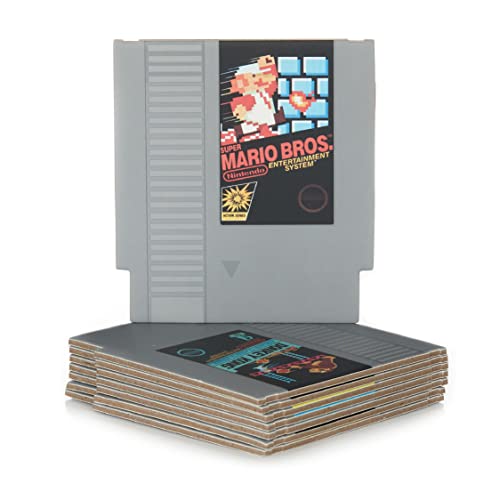
Do you love Nintendo? Then you have to check out this amazon NES cartridge drink coaster set!
This set includes 8 double sides drink coasters that look just like the classic NES cartridges.
This set is a perfect gift for the gamer in your life!
Did the Wii U make a profit or loss?
There’s no doubt that Nintendo was unable to turn the Wii U console into a “Large Profit Hub.” This didn’t happen because they intentionally lowered the prices of the consoles in order to get more sales in the first quarter of the year.
In the first quarter of the 2017 fiscal year, the Wii U was able to sell only 220,000 units. This made Nintendo have an operating loss of around $48.6 Million. The good news was that the numbers of the Wii U sales showed great improvements in the second quarter of the year. Nintendo managed to sell 510,000 consoles, and more than 200,000 consoles in the last quarter of the year.
Because the PlayStation Four and Xbox One releases, Nintendo dropped the price of the Wii U in the first quarter of 2017 which caused them to lose money in the beginning of the year. They actually ended up losing more than $50 million in the first quarter. Because of the good price though, sales stayed larger for longer and Nintendo actually made a good amount of money from the sales of the Wii U (although no one outside of Nintendo knows exactly how much).
Best games for the Wii U that helped with sales.
There are currently 771 games that you can play on Wii U gaming consoles. Below we will give you the games that helped with the sales of the Wii U and where you can purchase them.
- Lego City: Undercover
Lego City Undercover is a game that has turned out to be loved by many! The game is played by moving around a hidden city and discovering new items. Exploring the city is a lot of fun where you can indulge yourself in completing different missions, wandering in the city, and fighting with the random people or messing with the police. There are great chances that you’re going to spend tons of hours on this game daily because the game is so addictive. If you don’t already have it you can purchase it here, and start your adventure!
- The Wonderful 101
This game is full of action and addictive as well because of it’s group-management sim like Pikmin. You get to control your hero of the game in a wonderful city full of sass and puns. With dozens of followers in your command, you’re tasked to save the wonderful city from the criminals.
You can command your followers to become super weapons and target the enemies to keep the city safe. There is even a mode known as “Practice Mode” in the game, where you can use all the buttons on the Wii U controller to get the hang of how to play and how to make certain things. The game is fun and full of adventures that you can play with your friends and family! The game is actually on sale today right here!
- Donkey Kong Country: Tropical Freeze
If you’ve ever played Donkey Kong, then playing this game will not disappoint your gaming abilities! The game is challenging, but will make you want to play even more to try and pass the level you are on!
Just when you think the game can’t get any better, you dive deep into the game of Tropical Freeze where paths are crazy, and bosses are harder to kill! You have to get yourself away from the obstacles coming your way by jumping and running away to avoid them. Tropical Freeze is tough, but surely it’s a must-own title for the “Wii U Owner.” If you don’t own it yet, you can purchase it here today.
- Super Mario Bros. U
The original Nintendo gaming console is known for producing Super Mario. Mario was the biggest hit game, and was so influential, one could easily say that it was what put Nintnendo on the gaming radar!
With the Nintendo Wii u console launch, they announced the game Super Mario Bros. U! They launched this game to recall childhood memories , and they were able to sell millions of copies of the game.
The game is for the Wii U and has so many new improvements over the original Nintendo game. The new features, improved graphics (2D) and a new mission to entertain people in their spare time. If you’ve budget for playing one game on Nintendo Wii U, then Super Mario Bros. U is the one. Although it is sold out in many places, you can still purchase it here!
Wii U vs. Playstation 4
The PlayStation 4 is loved by so many people and has so many great games! It is one of the top selling consoles in the United States and all over the world! The PlayStation 4 has sold just over 106 million consoles!
When we look at the Wii U, it is pretty easy to see the clear winner. The Wii U has only sold just over 13 million consoles, which although makes Nintendo in the black, it is not anywhere near the sales amount of the PlayStation 4.
If you are wondering which is better when played though, the winner is not so clear. They both are great consoles, and the games they have made for both consoles are great. Here is a short video comparing the two consoles side by side!
XBox One sales
So we have looked at the sales of the PS4 and the Wii U, so what about the Xbox One? Where does this system fall among the great consoles of the gaming world? Although this may come as a surprise, the XBox One has only sold just over 50 million consoles! This actually puts it far behind the sales of the PS4 but still ahead of the Wii U.
Conclusion
Although Nintendo didn’t lose money with the sales of the Wii U, it was still not anywhere close to the big sales they were hoping for. It didn’t even come close to the sales of the XBox One or the PS4. Although Nintendo has released more games for the Wii U and it is still halfway popular, it is barely on the radar compared to the PS4. No matter what system you choose to play every day, if you enjoy your console and the games you play, you will have fun every day!