
*This post may contain affiliate links. As an Amazon Associate we earn from qualifying purchases.
When the Crosley record player first came onto the market, it quickly became one of the most popular players. People were attracted to its funky colorful look and it was also very cost-effective.
Many people bought it because it was cheap but if it can damage your records then it is far more expensive with each one that it destroys.
Do Crosley record players ruin records?
Crosley players have a cheap and rough needle which means it will wear out/damage your records a little faster than other higher quality players.
However it’s not like a Crosley will destroy your records as soon as you put them on.
It will take hundreds or thousands of plays before you will notice the damage that a Crosley will have caused.
Retro style record players are continuing to grow in popularity because of their built in amplifier and decent quality speakers.. If you just want the sound out of your box then you should go for a Crosley but beware! It does come with some flaws.
There are many different styles of Crosley players on the market. Some of them even offer a three-speed player so you can play a variety of different records. Other more recent record players also have hookups for headphones, bluetooth capabilities, and more.
However, beyond all this popularity, convenience, attractive looks and the feature of it being all in one package, there is a large number of people who have faced several issues that made people go against Crosley. They complain that Crosley ruins their records.
Whether this is true or not is certainly up for debate as technically all players will slightly damage the record every time that it plays through. A stylus is a pointed piece of metal (usually) so of course it is going to dig a little bit into the vinyl as it plays each record.
Do you love playing your vinyl records but your record player has seen better days? Well, you are in luck! There are tons of great record players that not only have great sound quality but also won’t break the bank. You can find them by clicking here.
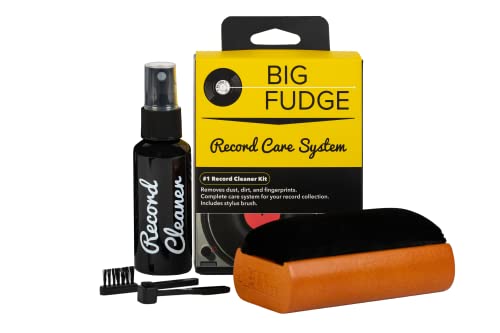
If you love records and record players, you must get a record-cleaning kit like this one. It is designed to ensure that your records stay in excellent condition to last you for decades.
Get this cleaning set and keep your vinyl records in perfect condition!
Do Crosleys damage your records?
There are several reasons from our point of view why a Crosley can damage your records. Some of those reasons are:
- Crosley has a cheap and rather rough (spherical) needle. It has a high tracking force that can cause your record to wear out prematurely.
- The speakers are the other reason why this style of player (not just Crosley) can damage your records. The speakers are enclosed in a tight place that is extremely close to wear your needle is on your record. That can send vibrations through the needle which can cause it to jump or to bounce in the grooves which will affect the sound quality and the number of plays you will get from your record.
- The tonearm and cartridge track heavily or in simple english, they put a lot of weight on the record. This causes the record to wear out faster than it normally would with a higher quality machine.
These issues aren’t solely with Crosley players however, these same issues are prevalent with all retro style players that are cheaply made.
Just because the brand is different, if the stye is the same then it will often have the same issues.
What makes Crosleys (and similar players) damage records?
These retro style turntables are very cheaply made yet they look quite nice. These retro-chic players have ruined many people’s precious records in recent years.
One reason why these players are more likely to end up with damaged records is they are geared towards the younger crowd. They are trying to capitalize on the recent popularity of vinyl and gain those newer collectors.
Since those people are newer the issues probably aren’t all caused by the player. Afterall, if you play a record that is severely scratched continuously on any player the scratches will get larger and more prominent.
Since some of the users just don’t know things since they are new it is easier to blame the record player than to admit that you messed something up.
How quickly does a Crosley ruin your records?
Every time you play your record, it damages its groove bit by bit. The more you use it the more it tears apart. In other words, the more it can cause damage to your record.
If you only play your records rarely you might go many many years before you notice any issues with using this cheaper style of player. However, if you only have one record and play it every single day over and over again, then you might begin to notice some damage in a few weeks or months.
This style of player ruins records because there is no way for you to adjust the tracking force.
The tracking force of a Crosley is set at about 5g IIRC (ought to be about 1.5g)
To sum up, even though every stylus causes some slight damage or wear on the record when it plays, Crosley (and similar style) players cause way more damage than a traditional record player.
Even a couple of plays can be enough to damage your record where you can feel a noticeable change in the sound quality.
A Crosley will wear them out a lot quicker than higher quality players but it’s not even the most awful one! There are other cheaper players that can be found at discount stores that will damage your records in just a few plays.
If you are buying a record player in a discount bin at a store, then it probably is going to damage any record you put on it!
How can you stop a Crosley from ruining your records?
The short answer is… you can’t. There is no way to stop your retro style player from damaging your records besides choosing a different player!
There is no stylus that fits on these turntables as the extra weight is what causes the record to wear. Even if you swap out the needle the arm will still be pushing it down too hard which will damage it.
You can’t put a bigger platter on these cheaper turntable models either. The motor of the record player won’t be able to handle it anything larger than what it has.
Some users have suggested that you can put a penny on the head of the tonearm which can prevent skipping, but we suggest you do not try this. To clarify, the additional weight will grind your record to a fine vinyl powder in only a few short plays.
Unfortunately, we have seen many people buying these cheap turntables and not realizing that they can harm their collection. These style players have fooled the market with its briefcase-style turntables that look great but aren’t good for your media.
This post is not the slightest bit intended to dissuade you from buying a Crosley or similar type player. However we feel like it is important for you to know the risks involved so you don’t take a chance on using it with an expensive record in your collection.
I trust this post encourages you to avoid these cheaper new turntables and get something that will get the best sound out of your vinyl records without damaging them.
Video Proof
Want to see a real live test with cheap record players to see if they really do damage your records? Check out this video below
Conclusion
In the end as long as you aren’t playing the same record hundreds of times a week you probably won’t notice the damage that a cheaper turntable is doing to your records.
As long as you are aware that the turntable might make your records non-functional in the future then we have done our job.
You have to decide if having the cool looking, but cheaper record player is worth possibly damaging your collection. For many people the answer is that they are fine with taking a chance as they bought their collection in bulk for pennies on the dollar and if a few records are damaged it isn’t the end of the world.
If your collection is something that has been passed down to you from a family member or something that you have invested a lot of time and money into then avoiding these cheap players is a good plan.