
*This post may contain affiliate links. As an Amazon Associate we earn from qualifying purchases.
Victrola is a very popular brand in the music industry. It has built for itself a good reputation over the years with its manufacturing of high-quality products. Victrola has a wide variety of products including record players that it makes but specifically in this article today I will be talking about the new reproduction Victrolas and whether they will damage your records or not.
Since records have started coming back into style many people are buying retro-style players and Victrola is one of the brands that sell that style. Some people have reported that Victrola players have damaged or even destroyed their record collection while other people have not reported a problem with them playing or destroying their records. But which is right?
Do the cheap Victrolas ruin records or are they still a good option to buy?
Cheap Victrola record players that are used properly should not damage your records beyond just shortening their lifespan a bit. All cheap retro-style record players will cause your records to wear out sooner than they would have with a more expensive record player but you normally won’t notice that until after multiple years of playing.
The reason that the Victrola (and other) cheap record players shorten the lifespan of the records that they play is that the tonearm is typically heavier than one would be on a more expensive player which in turn means that the record grooves become a little bit deeper with each play on the cheap player. Most cheap record players will also not have a counterweight which again puts more pressure on the record itself.
Eventually, this will cause the record to wear out and could also cause the grooves to become extremely damaged if the record skips a lot.
Although cheap retro-style Victrolas are prone to this extra weight thereby causing records to wear out that doesn’t mean that you should get a Crosley or other cheap record player instead. Matter of fact all cheap players have this exact same issue so no matter which brand you get it will still have the same issue.
Victrola is a good brand and getting their cheap reproduction record players is a great choice if you are just wanting to play your collection and have some fun. However, if you are a serious record collector I would recommend springing for a better Victrola player rather than those reproduction ones that you can buy for $50-$75
If you want to learn more you can keep reading this article or watch the video below.
Do you love playing your vinyl records but your record player has seen better days? Well, you are in luck! There are tons of great record players that not only have great sound quality but also won’t break the bank. You can find them by clicking here.
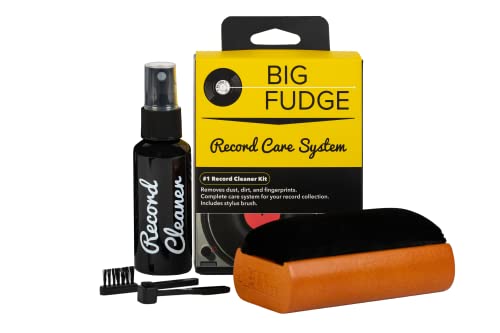
If you love records and record players, you must get a record-cleaning kit like this one. It is designed to ensure that your records stay in excellent condition to last you for decades.
Get this cleaning set and keep your vinyl records in perfect condition!
4 Things To Look For With Cheap Victrola Record Players
All cheaper modern record players do have some common issues that might damage or destroy your record but most of those can be avoided by paying attention or knowing about them beforehand so you can avoid the cheapest record player models that have these issues.
So, what are those issues I’m referring to?
If you are looking to buy an inexpensive record player there are a lot of them on the market. Knowing what things to watch out for can help you make sure that you don’t buy a player that will ruin your records.
1. Absence of A Counterweight
The first bad thing to watch for is the absence of a counterweight. The main function of a counterweight is to balance the tonearm to prevent the tonearm and cartridge weight from resting on the record and possibly damaging it.
Records are designed to be very durable but if no counterweight is present or the counterweight isn’t adjusted properly, then the record will bear all of that pressure from the tonearm. That tracking weight (Tracking weight is the weight at which the tonearm rests on the record) should be between 1.5-2 grams.
Many modern cheap record players have a tracking weight of 5 grams or even higher!
That is 2-3 times more weight that is placed on the record with a more expensive player and it will cause the needle to dig too deeply into the grooves. This will cause your records to wear out considerably faster and can also make scratches deeper if the needle gets off track.
This extra pressure can also cause your sound quality to quickly degrade as well.
2. Undersized Platter
How does a record sit on the turntable? If the tonearm tracking puts pressure on the side of the platter, it makes the record flex while it rotates. This will not only cause bad sound quality but it also damages the record’s grooves. This also causes the stylus to skip when playing and can even warp your record over time.
Make sure that any player that you buy will fit the records properly that you are going to be playing on it.
3. Wrong Size Stylus
If the stylus that comes with your new record player is the wrong size then it can quickly damage your record. This is true whether the needle is too large or too small.
Many manufacturers use a cheap stylus to save money on their cheapest models. If you are paying $50 for a record player it is a good bet that the needle isn’t very good quality and you might damage your records with it.
A large stylus can come out of the groove more easily which will cause your records to skip. That skipping can not only sound bad but it can also damage your record as the stylus scrapes across the grooves.
A stylus that is too small will stay in the grooves but the sound quality will suffer and the stylus will often dig too deep into the grooves causing far more wear on the record and shortening its lifespan as well.
4. Absence Of An Anti-Skate
Anti-skate is an essential feature of record players. It ensures that the arm doesn’t swing to the center or outside of the record. It grinds away a portion of the groove if the arm tries to move toward the center or the outside of the record when playing so you want to prevent that with the anti-skate.
Anti-skate also helps to keep the stylus running in the center of the groove, increases sound quality, and reduces possible damage to your record collection. Good quality record players will come with an anti-skate to make sure that your records aren’t damaged by the player.
Should You Buy A Victrola Record Player?
The decision on whether to buy a Victrola or not is a hard one. There are many good reviews for Victrola players on a variety of sites but that doesn’t mean that you should buy one to play your collection.,
Ultimately you have to decide how long you want to listen to your records and if the cheap cost is worth possibly shortening those records’ lifespan.
Quite simply, any record player that is super cheap is going to be made of cheap quality parts. If they spent $100 building a record player would they sell it to you for $50? Of course not!
So, if you are buying it for $50 that means the record player is of $50 quality.
If you are a new collector or haven’t spent a lot on your collection then that price range of record player might work just fine for you. If the record lasts 100 fewer plays before the audio starts to degrade it probably isn’t that big of a deal.
However, if the records you are playing are family heirlooms or quite valuable I would not recommend that you try and play them on a retro Victrola or other inexpensive record players.
Is Victrola A Good Or Bad Record Player?
When some people think of a Victrola record player they might think of cheap retro-style players or they might think of the old classic players. Depending on which model you are referring to really changes whether it is a good record player or not.
The Victrola players that you can purchase for under $100 really aren’t that good of quality and you risk possibly damaging your records over time by using them. However, the older classic Victrolas or more expensive new ones are made with higher quality and should handle playing your records without any issue.
It’s important when looking at different record players that you don’t compare apples to oranges and instead compare similar record players. A cheap Victrola player and a cheap Crosley player will both work about the same and will have approximately the same quality of build as well.
Obviously, the cheap Victrola model will not beat out the more expensive Audio-Technica model because you are comparing a $60 record player to a $300 player. If the $300 record player isn’t better quality then there is a problem!
Just make sure that if you are looking at a cheap record player that you compare its features with other cheap players and not with high-end models so you are accurately comparing the different options that are on the market in the same price range.
Are Suitcase Record Players Bad?
As with many cheaper turntables, there are some issues with the suitcase record players. Although not all suitcase record players are bad many of them have some common issues.
Suitcase record players are considered bad because of:
- Their poor sound quality
- Their lack of durability
- They can damage records (if you aren’t careful)
Victrola’s suitcase record players are designed to look cool, have portability, and allow people who don’t have space for a normal record player to own one. However, they are far from the best option if you have expensive records or care about the sound quality that those records will produce.
Real audiophiles will want to avoid getting a suitcase record player for their setup as although it will play records, this device is far from the best option on the market. Also because of the use of a heavier tracking force and a low-quality stylus this style of a record player will cause your old records to wear out prematurely.
If you have the space you are much better off getting an old record player from places like estate sales, eBay, etc.
What Are The Top Three Victrola Record Player Models?
Victrola is marketed as a modern version of the retro classic. Whether you are new to vinyl or a hobbyist, there’s always a Victrola model that’s perfect for you. The best three Victrola models include:
Victoria Vintage 3-speed Bluetooth Suitcase Turntable:
This is a budget and user-friendly product which makes it a great option for anyone who loves vinyl records or is just starting to get into it. It doesn’t support heavy usage but it has many all-inclusive features.
It is compatible with Bluetooth devices, has a three-speed turntable, and has built-in speakers. This model has a variety of colors and designs available for it and is quite easy for a beginner to use.
Victrola Modern Design Record Player
This is another nice model from Victrola which has a contemporary look. It has Bluetooth connectivity and is designed with detachable Bluetooth speakers that are rechargeable and can be easily replaced or upgraded.
It has a three-speed turntable and in addition, it is designed to avoid heavy scratching.
Victoria Nostalgic Aviator Bluetooth Record Player:
This model comes in three variants: 6-in-1, 7-in-1, and 8-in-1. It is nostalgically built to look like the record player from years gone by.
It has a three-speed turntable and is designed with several modern features like a CD player, cassette player, Bluetooth connectivity, and an AM/FM radio.
How Do I Protect My Records From Getting Damaged?
Records have continued to increase in popularity over recent years. With that popularity comes a lot of people who aren’t exactly sure how to keep their records in the best possible condition.
In this section, I want to give some quick tips on how you can keep your records in immaculate shape.
Some things that you can do to protect your records are:
- Avoid getting dust and grease on your records
- Always handle every record by picking it up by the edges. Any stain, dust, or grease that gets in the grooves can ruin the record and the sound quality.
- Carefully and gently place the record on the player
- Set the right rotations per minute (rpm) based on the record that you are playing.
- Put the tonearm on the outside edge of the record. If you try and start in the middle you will often damage the record.
- When you have finished listening to the music and are ready to remove the record from the player, carefully lift the stylus from the record and return it to its initial position, remove the record by its edges, and put it back inside the record jacket.
If you want some further tips on cleaning and handling your records you can watch the video below to learn more.
Conclusion
In conclusion, many users of Victrola products are happy with the products and their purchase while other people swear that a Victrola player ruined their records. Cheap Victrola players are of course not as high of quality as a player that costs multiple hundreds of dollars.
Whether it is worthwhile to buy a more expensive record player or not is ultimately a personal decision that you have to determine for yourself.
Some Victrola models will shorten the lifespan of your records but being that many records last 40-50 years already it is hard to know exactly how much a cheap turntable shortens that span.
It is important to remember that the cheaper a record player you buy is the worse your sound quality will be. If you plan on collecting records for the rest of your life it might be worthwhile to buy a player that is more expensive rather than getting a $50 Victrola model and dealing with possible issues and worse sound quality for years to come.