
*This post may contain affiliate links. As an Amazon Associate we earn from qualifying purchases.
Nothing is better after a long day of work or play than to sit back with your favorite drink and listen to your favorite records. Once you choose which record you want to listen to you pull it from the sleeve, only to discover that your record is warped!
How did that happen? Is it ok to play it?
Playing a warped record won’t damage the stylus or the player but it can damage the record even further. Even if it doesn’t damage the record at the very least there will be some inconsistencies with the sound quality and listening to the record might not be very pleasant.
In the worst case scenario your stylus might not be able to stay in the grooves so it may skip a lot and damage the record even further. Although you CAN play a warped record it is not a good idea to do so without fixing the record as you don’t want to risk damaging it even more.
In this article I will explain some of the most common ways that records get warped and how to fix them (yes you can fix a warped record). Just because your favorite record got warped doesn’t mean it is time to throw it away. Instead it’s time to start learning!
Do you love playing your vinyl records but your record player has seen better days? Well, you are in luck! There are tons of great record players that not only have great sound quality but also won’t break the bank. You can find them by clicking here.
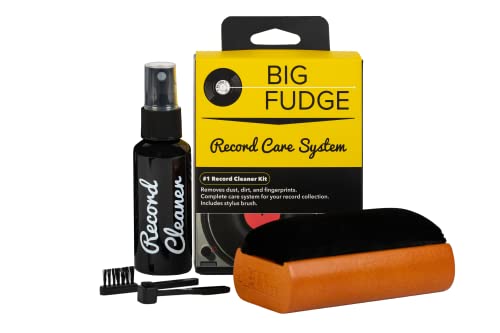
If you love records and record players, you must get a record-cleaning kit like this one. It is designed to ensure that your records stay in excellent condition to last you for decades.
Get this cleaning set and keep your vinyl records in perfect condition!
How Do Records Get Warped?
When you first discover that you have a warped record your first question is probably “How did that happen”?
There are a few major ways that records end up getting warped.
1. Records Warp Because Of The Heat
Heat is the number one way that records get warped. Since records are basically just made of plastic they can warp or even melt if they are exposed to too much heat.
If you have ever had some plastic on top of the stove or near your outside grill when they were on you quickly realize that plastic can melt pretty quick.
Now your records aren’t next to the stove or grill (at least I hope not) but they can get warped from heat through other methods.
How Are Records Exposed To Heat?
The two most common ways that records are exposed to heat is from a heat vent and from the sun. Both of these can cause serious issues with many of your records getting warped.
If you live in an area where your heat runs a lot then you probably are quite familiar with how hot the air coming out can be. You should never store your records directly in front of or above a heat register.
The hot air coming out of the vent might not be hot enough to damage a record the first time it is on but when your heat blows many times over the course of the day or night your records could begin to show the effects.
It is best to avoid this all together and not have your records near a heat vent.
The sun is the second way that temperatures can affect your records. If you have ever sat on the couch in front of a window with the sun warming your face you have experienced the effects that the sun can have.
Now you might not think that small amount of warmth is that big of a deal but you have to remember that your collection isn’t just sitting in that warmth for a few minutes. They are soaking in the sun’s rays every single day for many hours.
Over time that can cause them to warp quite severely (especially if they aren’t in sleeves). Plan ahead and don’t store the records in front of a window or door where they would be in direct sunlight.
2. Records Warp Because Of Pressure
Records can also become warped because of pressure. If you stack a bunch of records on top of each other the record on the bottom of the stack is receiving a large amount of pressure. That pressure can cause it to warp or even to crack!
Records should never be stored on top of each other and should only be stored vertically.
Sometimes the issue isn’t that you plan to store the record wrong but that you forget to store it entirely. I get it, we all live busy lives, but taking the few seconds to put away a record after using it is the best way to keep it in good shape.
I can’t tell you how many times I’ve set a record to the side intending to put it away later and a few weeks or months later I find it underneath a pile of papers, books, etc. All of that stuff stacked on top makes it very likely to warp.
To avoid this, just put your records away EVERY SINGLE TIME.
How To Keep Your Records From Warping
Although a warped record might not damage the stylus or the player it is a good idea to avoid the warping in the first place as much as possible. To make your records last as long as possible there are some things you should do and some things you shouldn’t
The do’s and don’ts are:
Do’s To Keep Your Records From Warping
- Add an extra layer of protection like cardboard to support the record.
- Wrap it with a soft cloth or paper sleeve to safeguard it from the dirt and dust.
- Preserve or store the records by placing them vertically and let them stand on end. This will reduce the pressure that can happen with horizontal storage.
- Store them in a cool dry place. Only store your vinyl records in a place where the climate is comfortable for you.
- Buy or use special furniture or boxes to store the records.
Don’ts To Keep Your Records From Warping
- Never turn up the heat near the records. This can lead to the melting of the records and thus warping.
- Put the records in direct sunlight. As sunlight can generate unnecessary heat and can cause the records to warp or melt.
- Place the records horizontally or place anything on top of the records.
- Store your records in a shed or non-climate controlled area. Huge temperature swings will cause them to condensate and gather mold.
- Store them where they will be played with by children or pets.
What if, despite your best efforts you end up with a warped record? Is there anything you can do about it?
Thankfully there are quite a few different methods that you can use to fix a record that has been warped. We will cover that next.
How To Repair A Warped Record
Of course it can be difficult to throw any record in the trash. Feeling and memories are attached to these records but because of their excessive warping, they might become useless.
Instead of throwing them in the trash, why not try and repair them and see if you can fix them? Worst case scenario, you break the record and have to throw it away so if your records already aren’t usable it is worth giving it a try.
There are a few different methods that you can use to fix a warped record. The one we are going to write works the best but it is also risky. Be sure and follow the instructions carefully.
If you aren’t comfortable with this method we will also have some videos at the end of this section with additional methods you can try.
Repair A Warped Record Using An Oven
For this method, we need two glass panels, an oven and oven mitts. The steps are as follows:
- Before starting, make sure that your record is clean and free from any dust particles using a clean cloth or record brush.
- Place your record in the center of one glass panel and place another panel on top of it gently. You are essentially making a sandwich with the two glass panels and the record in between.
- Preheat the oven and set its temperature to 180 F or 80 C. Put the record with glass panels in the oven carefully and heat it. Only leave it in the oven for 3 minutes. Set a timer on your phone or oven so you don’t forget.
- After heating, remove it out of the oven and let it cool down. If after cooling the record isn’t entirely flat then put it back in the oven for another 3 minutes.
- Again, cool the glass and record and see if the warping is gone. If so you can remove the record from between the two panes. If it is still warped, put it back in the oven.
- DON’T put the record in the oven for more than 3 minutes at a time. If you do you risk the record melting rather than flattening.
Want to see someone do this before trying it yourself? Check out this video below.
There are other methods that you can try to fix your warped records as well. Most people use the oven method as a last resort if these other methods below don’t work.
Each of these above methods might work better for you than the oven method so be sure and watch each one. If you are unsure how well it will work it isn’t a bad idea to buy some cheap records from a yard sale or secondhand store so you can test the methods out on them.
Conclusion
It is safe to play warped records. They have no major effect on the stylus but sometimes the sound produced can be unpleasant.
If the record is extremely warped then the stylus might skip across the grooves and damage your record further. Just because you CAN play a warped record doesn’t mean you should!
Always keep your records away from the heat and sunlight and store them correctly and you should eliminate most of the warping of your collection.
Prevention is the best thing but if you mess up and find yourself with a warped record you should be able to flatten it pretty easily with one of the methods mentioned or in the videos above.
If you are scared to damage your record you can even buy a few test records to try the methods out on before you do it on any in your collection.
Ultimately playing a record that is warped is possible and won’t hurt your stylus or machine but as easy as fixing a record is… why not fix it first?