
*This post may contain affiliate links. As an Amazon Associate we earn from qualifying purchases.
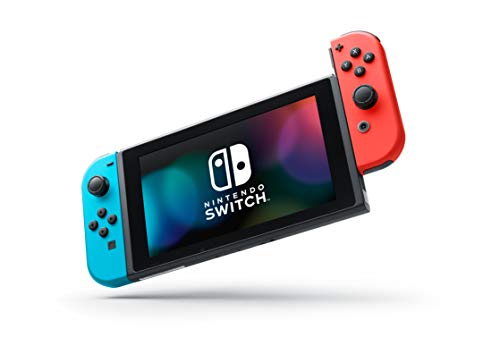
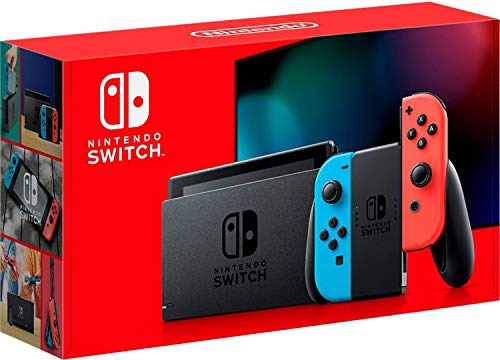
The Nintendo Switch is the first in a new era of gaming consoles. It was designed to be taken anywhere so gamers can enjoy a full home console experience anytime and anywhere. The mobility of a handheld is now added to the power of a home gaming system to enable new video game-playing styles.
At home, it rests in the Switch dock that connects it to the TV and lets you play with family and friends on a full-sized screen. On the go, you simply remove it from the dock and take it on the go with you.
When you first open your Switch you are probably like a kid at Christmas looking through the box at everything that came in it. You probably noticed that it did not come with a memory card. Since it didn’t come with a card to increase your Switch’s memory, do you even need one?
You do not need a memory card for your Nintendo Switch but it is a super helpful addition to your console. The Nintendo Switch has 32GB of internal storage (the OLED has 64GB) which is plenty to save your games as well as download a few of them to your console.
However, if you do plan on downloading many different games then you will want to buy an SD. You don’t need to have a memory card to use your Switch but personally, I prefer downloading the games to my Switch console so I don’t have to carry all of the cartridges with me.
If you are going to download more than just a couple of Switch games then you will want to have an SD for it.
This holds true whether you have the normal Switch, the Switch Lite, or the Switch OLED. The Switch OLED has more internal memory (at 64GB) but that still won’t be enough for most people to download lots of Switch games so I would still recommend getting an SD no matter which Switch console you have.
There are many different memory cards that you can choose from when it comes to buying one for your Switch. The best memory card for your Switch can be purchased by clicking here.
Having a memory card allows you to never worry about space on your Switch to save games. You will also never have to worry about how many games you can have on your Switch.

Do you love your Switch but want to stand out from everyone else with the same model? Then look no further than this custom Joy-Con grip.
This Joy-Con grip will make your Switch console look amazing and you can even choose the one that fits your style the best!
Can You Play Switch Games Without MicroSD Cards?
Now that you know you need a memory card for your Switch gaming device, you may be wondering if you can play games without an SD. Not being able to play Switch games without an SD card would not make sense, but is that the way Nintendo made the Switch?
You can play on the Switch without an SD card. If you purchase your Switch games the traditional route (on the physical cartridges) then you won’t require an SD card.
Also if you only have a handful of games downloaded to your console you won’t need SD cards as the Switch’s memory will be plenty enough to handle that.
However, if you download a lot of games (like Fortnite, Among Us, Fall Guys, etc.) or prefer to download all of your regular Nintendo games instead of having them on the cartridges then you’ll need to invest in a MicroSD card for the Switch.
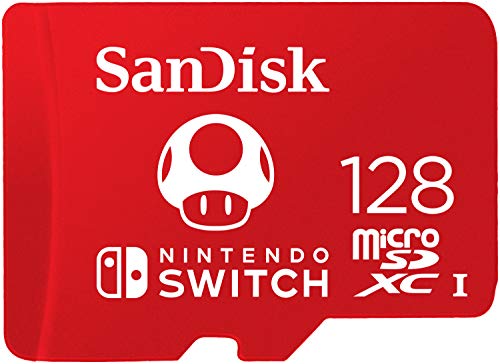
At a minimum, if you plan to download a lot of games I would recommend getting a 128Gb microSD card but you can choose a larger one for not much more. Downloading digital games take up a substantial amount of space and the internal memory that the Switch hardware has just won’t be enough to download more than a couple of games.
Not only can you play games by putting in the cartridge on the Switch, but you can also play games that you have downloaded directly from the Eshop. There is built-in storage capacity on the Switch, so you can download a few of the best Switch games from the moment you pull your Switch out of the box.
Being able to play your Switch without a microSD card is extremely important and Nintendo did the Switch right by making the Switch able to work right out of the box. You do not need to add a microSD card or go to the store before you dive into playing games on the Switch.
However, just because you don’t have to have a MicroSD card for your Switch, Switch Lite, or Switch OLED doesn’t mean it isn’t a good idea to get one. The internal storage on your Switch will get used up pretty quickly and once it runs out you won’t be able to save data (like games) onto your Switch until you get a microSD card or remove some games.
With how cheap Switch memory cards are I really feel like it’s a no-brainer for most people to just get a large microSD card so you never have to worry about running out of space.
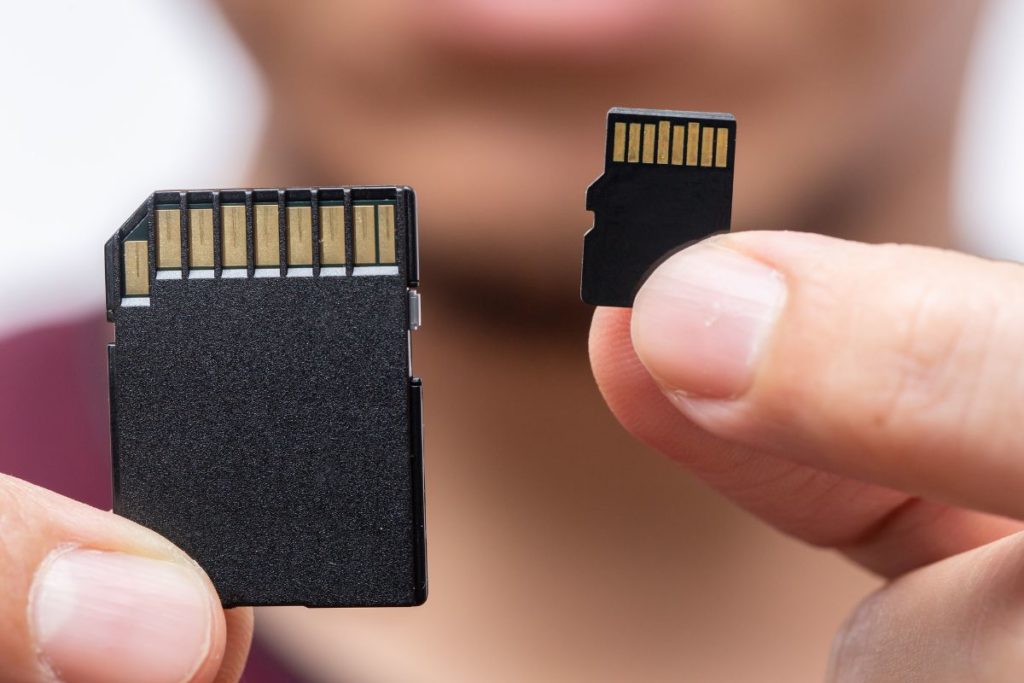
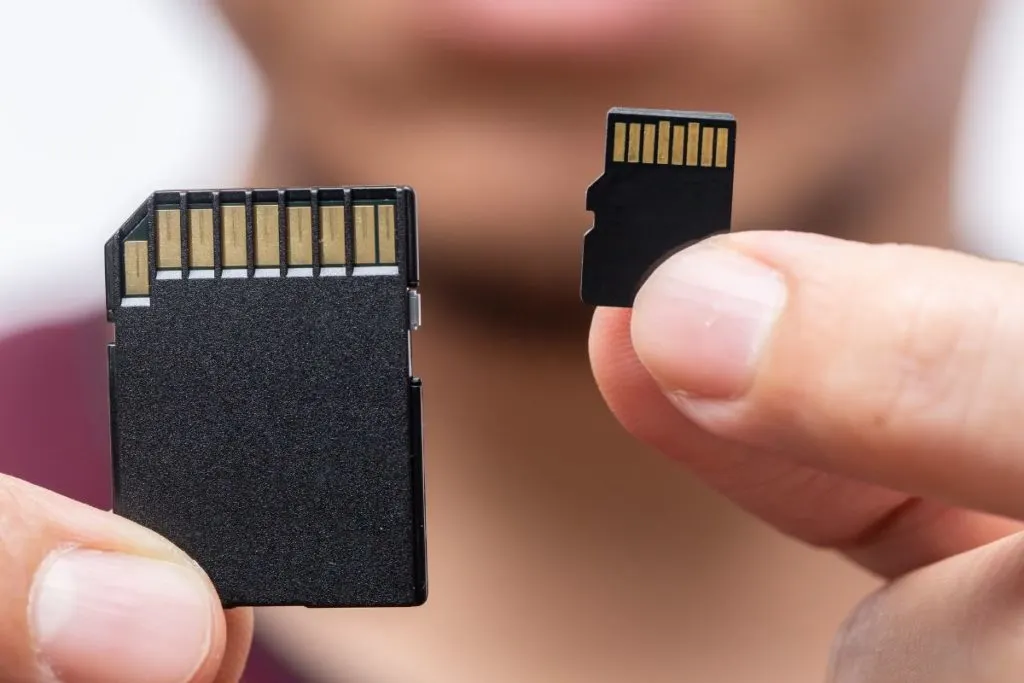
It is important to note that only MicroSD cards can be used on the Nintendo Switch console. A full-size SD card will be too big to fit in the card slot so you’ll specifically need a MicroSD card.
Do You Need A Nintendo Brand SD For The Switch Console?
When purchasing a Switch memory card online you will find many different brands to choose from. Some of these brands will say that they are licensed for the Switch but does that make them the best microSD cards to use with your Switch?
The Switch will work with any brand of card and the microSD cards that you purchase do not have to be licensed by Nintendo to work with your Switch.
As long as the one that you buy will fit in the Switch card slot and it has a decent transfer speed and read speed (which all major brands will have by default) then the brand of microSD cards that you purchase for your Switch doesn’t really matter.
Personally, I purchased the 128GB Sandisk Ultra microSD card (on Amazon) for my Switch but if you get the Kingston, Samsung, or any other major brand of microSD cards online or in a store (like Walmart, Target, or Best Buy) they should work just fine with your Switch.
All of them will have a “speed class” that will handle the transfers of the data on your Switch just fine.
So don’t bother watching a video or reading an article that will tell you the “Best Nintendo Switch SD cards” as any microSD cards from any major brand will work in your Switch just fine. Most major brands will have the same warranty period as well and truthfully, pretty much all microSD cards will last the lifetime of your Switch especially if you place it in the card slot and never remove it.

Where Is The MicroSD Card Slot On The Switch?
So, I have already covered that although you don’t need to have any special cards for memory for your Switch it is still a good idea. I’ve also covered some info to help you find an SD that works for you.
So if you have already gone out and purchased an SD for your Switch your next question might be where the slot is on the Switch. for the SD cards.
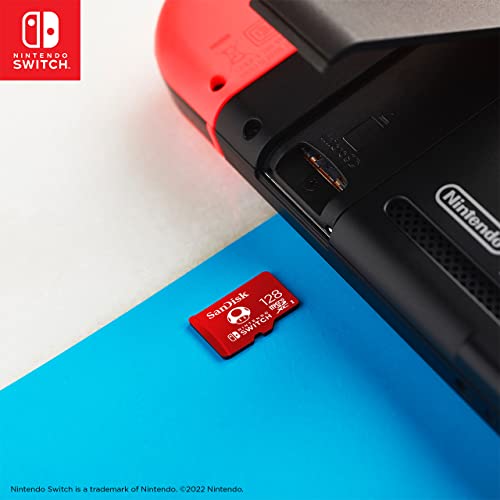
The micro SD slot on the Nintendo Switch is actually behind the kickstand. Just slide the kickstand out and put your Switch micro SD card in and the memory will be ready to use.
You don’t have to do any special formatting of the SD card on your PC or anything like that before putting it in your Switch. Just pop the SD card in, push it down until you feel it click into place, and your Switch now has all of that extra memory for downloading or saving any game that you play.
Your game will save automatically onto the cards that you put into your Switch without needing anything special done to them.

How Much Memory Does A Nintendo Switch Have? (Without A SD Card)
When the Switch was first released, there was so much buzz around it, that everyone knew everything about the console. Since it has been out a while, people’s memory of everything the Switch has and can do is fading.
Just because it’s fading though does not mean that the Switch is no longer popular. The Switch is still one of the best-selling consoles Nintendo has ever made and is not going anywhere.
One of the facts about the Switch that people forget is how much storage it has. With gaming files being bigger and more games being sold online, knowing the capacity of your Switch is very important.
The Nintendo Switch has 32 GB of internal storage. The Switch can also have up to 2 terabytes of additional storage with the use of an SD card.
With all of that storage, you will never have to worry about running out of space on your Switch ever again. Nintendo was really flexing all that they could do when they made the Switch.
They not only made a console that worked on the go and at home, but made it to where even today still has plenty of storage for all the games you want. This is such an amazing feat because originally games were only around .5GB and now are almost 15GB or more.
Can You Download Games On The Nintendo Switch Without SD Card?
If you haven’t purchased an SD card for your Nintendo Switch yet you might be wondering if you can still download games from the Nintendo eShop without an SD card.
You can download games on the Switch without an SD card however you will only be able to download 4 to 6 full games before your internal memory is full (depending on how big the games are). Once your internal memory is full on the Switch you will have to get an SD card.
So although you can download games on the Switch without an SD card the number of games that you can download will be minimal. With how cheap the micro SD cards are I really would recommend that you get one for your Switch so you don’t ever have to worry about space. You (or your kids) can then download as many of the free Switch games from the eShop as you want and not have to worry about which ones you have to delete when you run out of space.
A few years ago SD cards were far more expensive but now you can get them incredibly cheap in stores or online so it really isn’t worth the hassle of not getting an SD card for your Switch in my opinion.
Why Do You Need A Memory Card For The Nintendo Switch?
I mentioned above that having a memory card for your Switch is a really good idea and something that I would recommend. But why is that? Why do you need to get a memory card for your Switch?
The main reason why you should get a memory card for your Switch is so that you can download games and DLC to your Switch without ever having to worry about space. If you don’t get a memory card you will be severely restricted in the number of games that you can download and will be constantly having to delete downloaded games that you don’t play very often.
With a 250 or 500 GB SD card you will be able to download hundreds of Switch games to your console without ever needing to delete a single one. This means you can try out all of the free Switch games that they have on the eShop and don’t have to go through and delete the ones that you don’t play regularly.
With an SD card installed in your Switch, you can keep all the games even if you only play them once a week or once a month. An SD card will give your Switch tons of extra memory so you don’t have to worry about the space or whether you have to delete or not download a certain game.
How To Get More Storage On A Nintendo Switch Without SD Card?
So I have already stated that I feel like getting an SD card for your Switch is important. But what if you just can’t afford one right now or are traveling and don’t have access to a place to buy one?
How can you get more storage on your Switch without an SD card?
The only way to get more storage on your Switch without buying an SD card is to delete some of the software or files that are on your Switch. You could delete games you no longer play, delete screenshots that you have taken on your Switch, or only play Switch games on their cartridges.
Even if you play Switch games on their cartridges they will still take up some of the room on your Switch. So if you have a lot of games that you no longer play, deleting them from your Switch will clear up some room.
However, be warned, this will also mean you lose all of the progress that you have on that game!
So although it is possible to get more space on your Switch without buying an SD card it will mean deleting some of your games or progress on some games as well. To many people that isn’t a very good option which is why I recommend getting an SD card if at all possible.
How Many GB Is Mario Kart?
Because the interior storage of a Switch is so small, people want to know how big the games that they are downloading are going to be. People do not want to only download a couple of games and already have their storage full.
People want to have plenty of space on the Nintendo Switch because the games take up a lot of room. One of the most popular games to ask this about is Mario Kart.
Mario Kart uses 6.7 GB of storage when it is downloaded to your Switch.
However, it is not just Mario Kart that uses a lot of storage as a lot of the most popular Switch games use even more space than that!
Fortnite uses 11.2 GB of storage. Super Smash Bros Ultimate uses 16GB of storage. The Legend of Zelda: Breath of the Wild uses 13.4 GB of storage. Mario Kart 8 Deluxe uses 6.8 GB of storage. Super Mario Odyssey uses 5.7 GB of storage. Splatoon 2 uses 5.1 GB of storage.
Because all of the popular games take up quite a bit of room, many people will purchase external storage. The Switch can hold up to 2TB of storage with an SD card. Many people will only start out with 128 GB of storage as it is really cheap and will meet most of their needs.
You really only need to get a bigger SD card for your Switch if you plan on downloading all of the games for your console and never deleting any of them. This will obviously go through 128 GB of storage quite fast.
You can purchase a 128 GB SD card designed specifically for the Switch by clicking here. You can also purchase a bigger SD card if you want more space than that.
Final Thoughts
Now that you know about these games and exactly how many GB each one is, you can know exactly how much external storage you want to buy. Obviously, the more games you like to download and not carry physically will increase how big of an SD card you want to purchase.