
*This post may contain affiliate links. As an Amazon Associate we earn from qualifying purchases.
Have you ever wondered if Donkey Kong has teeth? Maybe you were playing a Donkey Kong game and noticed he doesn’t have any teeth, but in other Donkey Kong games you noticed he does have teeth? So why is it that Donkey Kong’s teeth can be seen in some games and they can’t be seen in other games? In this article we will go over everything you need to know about if Donkey Kong has teeth.
So does Donkey Kong have teeth?
Although over the years Donkey Kong’s look has been changed many times, yes he does have teeth. There are simply some games though that the creators did not show them during the game. Even though you cannot see them, they are still there though.
If you want to know more about if Donkey Kong has teeth, you will want to keep reading this article. You can also watch this short video on the history of Donkey Kong and how he has changed over the years.
Are you a huge Nintendo fan? Then you have to check out the Mario and Nintendo gear that you can get. Whether you want a Mario wallet, a Nintendo sweatshirt, or a classic NES hat there are plenty of choices to choose from. You can find them all by clicking here.
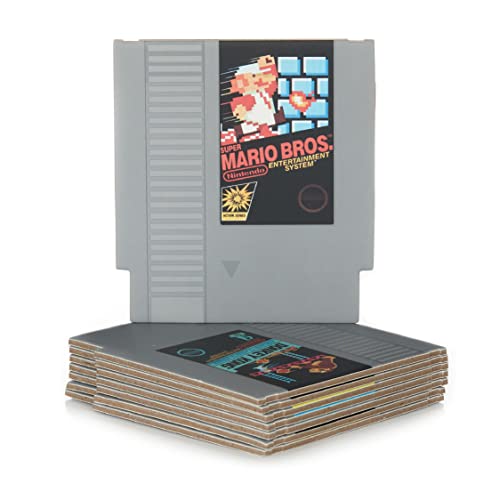
Do you love Nintendo? Then you have to check out this amazon NES cartridge drink coaster set!
This set includes 8 double sides drink coasters that look just like the classic NES cartridges.
This set is a perfect gift for the gamer in your life!
Why Does Donkey Kong’s looks change?
Donkey Kong or DK, has been created by Shigeru Miyamoto and has been produced by Nintendo Inc. of Japan. Donkey Kong is a male gorilla and is a loved video game character. Donkey Kong lives with his family and friends on Kong Island. Donkey Kong has appeared in many video games for Nintendo and has made a fortune for the company. So why did they change Donkey Kong’s look? Donkey Kong’s look has changed over time. There are actually three different Donkey Kongs in the game. The current Donkey Kong that we know is the grandson of the original Donkey Kong. So the current Donkey Kong is the third generation Donkey Kong and could be known as Donkey Kong III. The original Donkey Kong is father to Donkey Kong Junior or DK Jr or simply Junior. This is why Donkey Kong’s look may look different depending on which Donkey Kong game you play. Donkey Kong’s look and feel has changed with each passing Donkey Kong.
Different Looks for different games
Cranky Kong, when he was first introduced in the video game Donkey Kong in 1981, was completely wild and was shown fully naked. In that defining arcade game, Donkey Kong did have his teeth. But in the later games, the original DK has become old and does not show any teeth currently.
Donkey Kong’s look has changed a lot since it debuted in the game in 1983. His appearance in his looks have been upgraded in newer versions of the games. In these games, there have been some major changes that have been shown in his mouth, especially in his teeth. In many of the games, he is shown with teeth where in other games he doesn’t have any.
The original Donkey Kong, his grandson, and the modern Donkey Kong, have all shown their teeth on many occasions. Some of them can be seen in the examples below. Apart from these two examples, Donkey Kong Junior, who appeared only in a few of the games, didn’t show any teeth either.
In the breaking game, Donkey Kong can be seen with teeth. This was Cranky Kong, or the original Donkey Kong. In the next game, Donkey Kong Country , where Donkey Kong jr. made his appearance, he doesn’t show any teeth. In Donkey Kong 64, the lead role is the current Donkey Kong. Here he remains toothless as he looks in Mario Kart 64. In Mario Kart Double Dash, Donkey Kong Jungle Beat and Mario Kart 7 he can be seen showing off his teeth again.
In the game, Super Smash Brothers, there is some confusion. Nintendo made some very stupid mistakes here. In the box art of the game he is shown without any teeth but in the game he can be seen with teeth. In the next game, Donkey Kong Country Returns, he is also seen without teeth once again but then he returns with teeth in Donkey Kong Country Tropical Freeze.
Donkey Kong’s look changes a lot in the Super Smash Bros. series. His look was distinctly different from his previous looks. He was more cartoonish with his character not having the same look as he did originally or as he did in the Mario games. In Super Smash Bros, Donkey Kong has much darker skin and he has distinct teeth which are colored white.
This is where Donkey Kong’s teeth changes are distinct. In Super Smash Bros. Brawl, Donkey Kong’s teeth are again changed. The color of Donkey Kong’s teeth changes from white to a more yellow color and his teeth are also very large in size.
What are the reasons for these changes?
There is not too much information given for why they needed to change the color of Donkey Kong’s teeth. A lot of gamers really liked Donkey Kong’s pearly white teeth and they did not react well when they changed the look of his teeth to more of a yellow color and made Donkey Kong’s teeth much larger in size.
One reason why they might have made this change is that in the real world gorillas have very large teeth and it also makes Donkey Kong look a little more manly and macho in the game. So perhaps Nintendo thought that giving Donkey Kong bigger and more yellow colored teeth would resemble his character better in making him look a little bit more macho, opposed to smaller and whiter teeth.
Gamers had mixed responses to these changes
Some gamers did not react well to the changes Nintendo made to Donkey Kong’s look. Some think that the bigger size of Donkey Kong’s teeth makes him look stupid and the character loses his mature look that he once had. Sometimes when showing the larger, yellow teeth it does not look great in the game and led to negative responses about this popular character. Some feel that it is quite unnecessary to have these teeth and it simply doesn’t go with the character.
Showing off big teeth on many occasions could also mimic unnecessary face gestures which could be badly interpreted. There are times when showing teeth can completely change the effect of reaction on certain events.
Another response from gamers was that in some of the games, Donkey Kong is shown to have pearly white teeth but there is no explanation given as to how a gorilla could take care of his teeth.
Why did they make changes to Donkey Kong’s teeth?
Giving an animated character any extra abilities in features, powers or characters, brings a lot of work for those who design and develop the game. In the case of video games, it is particularly the responsibility of the sketch artists to recreate those extra visuals and replicate them properly in each and every frame in the games. They do this so that they look real and natural.
When Donkey Kong was given teeth in some of the games as mentioned above, it increased the workload of all the artists,the animators and the coders too. They had to work together to put the animations into proper place, which meant extra work. As simple things can lead to delays and increase in budgets and new features however small, leads to release of newer versions. Any additional features can have an effect on the budget of the game as well.
When Nintendo added these features on and off, they might have been experimenting with this change of Donkey Kong’s look and how the public would react to the changes. Going by the fact that Donkey Kong had his teeth on multiple occasions proves that Nintendo had liked the idea and thought this feature of Donkey Kong was a good idea for their business.
Conclusion
So now that you know the reasons behind the changes of Donkey Kong’s overall look, we know that Donkey Kong definitely does have teeth. You also know that over the years Donkey Kong’s teeth have changed and look different depending on which Donkey Kong game you are playing.