
*This post may contain affiliate links. As an Amazon Associate we earn from qualifying purchases.
If you recently started collecting records or are just trying to learn more about the best way to take care of them then you are in the right place. Everyone knows that you should clean your records but knowing how often you should clean them is much more difficult.
How often should I clean my vinyl records? There is no official number of weeks or months that you should clean your records. However, you should clean them at the following points in their usage:
- When you first purchase them
- Before you play them
- After you play them
- After they get any damage
In this article we will discuss each of those times in more detail and hopefully put your mind at ease on when you should clean your records.
If you don’t clean your vinyl records, then dust and other particles can damage the records when you go to play them. This is because the dust and dirt can cause the stylus to come out of the grooves and scratch your records.
Excessive use of chemicals will damage your vinyl records as well. Thus, too much cleaning will damage the records, and too little cleaning will have the same effect. As a result, there has to be a balance to ensure that you can keep out particles without exposing your records to an excess quantity of cleaning chemicals.
Furthermore, proper cleaning of records helps improve the listening experience. You will get the best sound experience, free from cracking and other disruptions when you keep your records clean.
So, how do you balance all of these things together and decide how often to clean them?
There is no official cleaning schedule for vinyl records, which is why some people overdo it, while others don’t do it enough. You can choose to clean it when you notice a need, or when you feel it should be cleaned. You can also wait till you notice particles accumulating and do it then.
Do you love playing your vinyl records but your record player has seen better days? Well, you are in luck! There are tons of great record players that not only have great sound quality but also won’t break the bank. You can find them by clicking here.
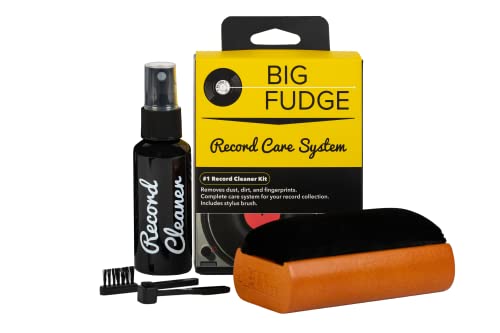
If you love records and record players, you must get a record-cleaning kit like this one. It is designed to ensure that your records stay in excellent condition to last you for decades.
Get this cleaning set and keep your vinyl records in perfect condition!
When should you clean your vinyl records?
While spring cleaning for your house once a year is fine you probably don’t want to wait an entire year between cleaning your records. This is especially true if you are playing them regularly. Regular cleaning will help ensure that they remain in functional working condition for many decades to come.
These specific periods are consistent or at least, will help you maintain a form of consistency. They are not too close together to cause any damage to your records but they will be frequent enough to ensure that there is no build-up of dust or other particles that are harmful to vinyl records.
This practice will also help to prolong the life of your machine. Some of the best times to clean your vinyl records include:
When you first purchase them
You may wonder why you need to clean a record that you just bought. Especially when you bought it from a record store you trust and not online. But this is the first step to determining how often you have to clean your vinyl record.
A record that has been stored in a location that you don’t know its conditions will need cleaning. Before a record hits the shelves at your local store it could have been sitting in a warehouse for weeks or months and then could have taken a cross country journey to get to the store.
As soon as you get home from the record store, take the record out of its sleeve and clean it. You should also clean the sleeve as well to ensure your record is going back into a clean sleeve. When you do this, you can proceed to store the record in a cool and dry area. As long as the storage room is well ventilated and free from moisture your record will stay in perfect condition.
However, if you fail to clean it before storing it, it might have something on it from the manufacturing or shipping process that would damage it while it sat in storage.
When you want to play them
Whenever you bring a record out of storage and you wish to play it, you need to clean it before you begin. Cleaning a record before playing it will help protect the needle of your record player and will also make it so that way you don’t damage the record. You will also prolong the life of your vinyl record as you will avoid scratching while the record is playing.
As long as you don’t play the record daily this practice is going to serve you well. However, if you play the record daily, cleaning it daily is not advised. This will expose your vinyl record to excess amounts of cleaning chemicals which will be bad for your record.
If you play the record daily, you should return the record to the sleeve when you finish playing the record. This will prevent it from accumulating dust. It will also prevent your record from being scratched accidentally.
Before returning them to their sleeves
When you are done playing a record and you want to return it to the storage, you should clean it once again. Like when you first buy the record, this will ensure any particles it may have picked up will be removed. The sleeve should also be cleaned as well to ensure that there are no particles on it. Once you have cleaned both the sleeve and the record, they are set to return to storage once again.
For this cleaning I would only use a dust brush and not do a deep cleaning. Most of the time you will only need to get out a small amount of dust out of the grooves or a little bit of vinyl that they needle scraped off (yes, this happens regularly).
A quick brush off will keep your record in good condition for the next time you use it.
After they get damaged
Your records are going to get damaged at one point or another if you ever take them out of storage. Whether it is you dropping your record or accidentally touching the grooved side, it is important to clean it after any damage.
If you accidentally leave your heat off in the winter or AC off in the summer then after the temperature normalizes take the time to go through and clean each record carefully.
If your storage room gets some water in it, take the time to dry off each record and sleeve.
Think of records like your hands, you don’t want to clean them too often but anytime they get dirty it’s a good idea to clean them off.
How to properly clean your records
Now that you know when you should clean your records it is important to know the best ways to do it.
Some people swear by using just soap and water while others simply use a dust brush every time. The best method is probably somewhere in between those two. For most people using a dust brush regularly and then using soap and water or cleaning solution when the dust or dirt has really accumulated is a good option.
Want to see which methods other collectors prefer? Check out these videos below.
How many times should you clean a vinyl record in storage?
Once you have cleaned your vinyl record and placed it in storage, the next question is how many times you need to clean it while it is in storage. The answer is not at all. Once you clean both the vinyl record and the sleeve before storing it, you don’t have to clean it anymore in storage for many years.
It will remain in good condition in storage for a long time as long as there aren’t any temperature or moisture issues.
It is important to make sure that the storage conditions stay ideal. The storage should be free from moisture and it should not be damp. This will damage both the record and the sleeve. In case of water damage to the storage area, you should remove the records from the storage as soon as possible.
Once it is dried out properly, then you can return the records to ensure there is no contact with water. You should also make sure that your storage room is well ventilated, as vinyl records need good air circulation to stay dry.. This will also help prevent insects from getting into the room and interested in munching on your records or sleeves.
With proper storage practices, a clean record will be in its original condition for years.
Conclusion
Cleaning your record should be done regularly but how often you do it should be based more around the usage of your record than how many weeks or months it has been since the last cleaning.
If you clean your records with a dust brush or soap and water you can clean them as often as you like as long as you make sure they are fully dried before storing them again. If you use cleaning chemicals then it is really a good idea to only clean them with those chemicals after they come out of storage.
The last thing you want to do is damage your records because you cleaned them too much!