
*This post may contain affiliate links. As an Amazon Associate we earn from qualifying purchases.
Do you play Rummikub all the time but it seems like you can never win? Maybe one of your friends always wins and you think he is cheating and want to know how he is doing it. Well, in this article we will go over everything you need to know about how to cheat at Rummikub.
So how do you cheat at Rummikub?
In the game of Rummikub you can cheat if your friends are not paying attention by simply knowing where the matching tiles are, and the jokers are before the pile is mixed.
When you are mixing the pile, you simply make sure that those tiles you want to keep stay under your hand, or do not get mixed by someone else. When you go to pick your 14 tiles, you simply pick the ones that you already know what they are so you begin with the jokers as well as matching tiles. If you are playing online, there are various cheat codes that you can use as well.
If you want to know more about cheating when you play Rummikub, you will want to keep reading this article.
You can also check out this video to see how to cheat at Rummikub without anyone knowing.
If you love board or card games then you have to check out the game called Throw Throw Burrito! It is a fun fast-paced game where you throw squishy burritos at other people you are playing with! You can learn more by clicking here.
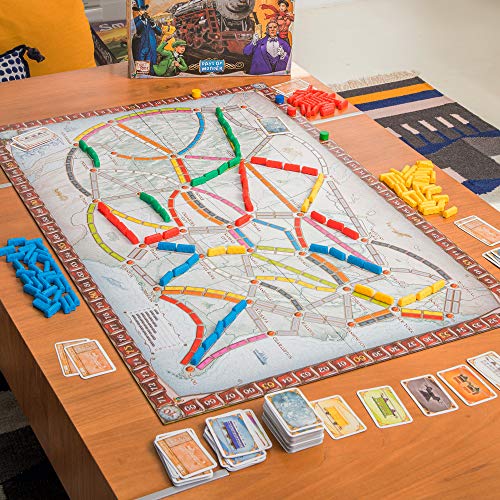
If you love games then you have to check out Ticket To Ride! This fast-paced board game will give you hours of fun with family and friends as you gather train cars and try to take over the board!
Ticket To Ride has many different variations as well so you can play across a variety of different maps.
Is Rummikub popular?
The original Rummikub game is one of the trendiest and most amazing games that you will ever come across. Many people around the globe love to play this game because the game is so much fun. You don’t actually have to use the force in the game to win it for you, but it is a game of the mind where you have to use good techniques to outsmart your competitors.
The game has been selling on the gaming market for more than 60 years now. There are a few newer players though that want to cheat to win the game and we will discuss that next.
How to cheat at Rummikub?
If we are talking about the original version of the game Rummikub, then you can cheat on it because the tiles are hidden before you pick them up. When you cheat in this game, it is all about how good you are with your cheating skills and paying attention while things are being mixed.
If we are talking about all the other online versions of the game, then there are a few cheats that you can apply and win the game with a shortcut. If you do cheat though, you won’t be able to enjoy the win knowing that you didn’t actually win.
This is why we recommend playing the game as it is intended and not cheating. Although you will not win as much, it is better to play the game and not cheat so that way every time you win, you know it is authentic and earned.
How do you always win Rummikub?
Winning Rummikub isn’t that hard. All you need to do is to follow the instructions well and use your mind. It is that simple to win at the game. Here are a few techniques for you to use so you can win the game almost every time you play it.
- Set your priorities first and always choose the tiles wisely before you play them. It’s better to take your time (2 minutes maximum) before making a move.
- Be alert and observe every single thing that your opponents are doing and play as smartly as you can.
- Always try to get rid of the highest points first. If you keep the joker till the end, it might cost you 30 Points. This is where knowing how close your opponents are to winning is important. You will want to hold onto the joker as long as possible, but never get caught with it left in your hand.
- Remember you can meld more than 3 tiles at once because it’s in the rule, but most of the players don’t use it
That’s how you play with the technique, and that’s how you can win almost every single game.
Here are some other frequently asked questions that people have asked about Rummikub.
How do you clean Rummikub Tiles?
Although this is something most people do not think about, cleaning the Rummikub tiles is important. It is important because no one would want to play the game with dirty tiles. Cleaning the Rummikub tiles is an easy task, and you can do it by following the steps below.
- You can clean the tiles with cotton balls by using baking soda
- Cleaning the tiles with the help of alcohol works great as well
- Get a bowl, add boiled water in it, put all the tiles in it, and leave it for 30 minutes. Take all the tiles out of the water and clean them with a clean cotton ball.
Those are some of the ways of cleaning your tiles with stuff probably around your house.
Can you finish with a joker in Rummikub?
Yes, you can use the joker with any of the tiles you want to use. You will want to be careful though as saving your joker to the end can be very dangerous. It is dangerous, because if someone else goes out before you, you will get a penalty of 30 points, and that can lose you the game.
After the first player goes out then all of the other players will add the tiles’ value remaining on their rack. The winner will receive the total of all of those points and the losers will receive those points as a negative value.
If you have the joker left on your rack at the end then you will receive an extra 30 negative points and the winner will get an extra 30 points as well!
Can you use 2 jokers in one meld?
There are no rules that make using two jokers in one meld against the rules. However, it isn’t a good idea to play that way unless it is your last play of the game.
The reason why this isn’t a good idea is that it can easily allow the next player to have access to one or both of those jokers. If they are able to manipulate the board and only use that single tile that you played with the two jokers they then have those jokers free to use to create new sets or runs.
So although you can play two jokers in with one set it isn’t a good idea.
How do you count points in Rummikub?
The jokers in the game are 30 points each. When someone finishes their tiles and yells Rummikub, you will have to add up the points left on your rack. The total of the numbers on the tiles is the number of points you will get. The losers all get negative points for as many as they had left on their rack, while the winner gets the combined points of all of the players as a positive.
Ultimately the winner is the person who reaches the predetermined point value first. Most of the time 200-300 is used but some people also just play a certain number of rounds and then the player with the highest score after those rounds wins the game.
What is the initial meld in Rummikub?
The first time you lay down tiles in the Rummikub is known as the initial meld. This is where players start with a set or run of 3 tiles or more to start things off. The game will run in the clockwise direction after you determine who is going to go first.
Can you play Rummikub with 6 players?
The maximum numbers that are allowed to play the game is 4. You can however play with 6 players if you have 52 more tiles to play with.
If you have an extra 52 tiles, then you can play with 6 players. Most people will do this by using two Rummikub games and pulling the additional tiles from the second set. You can also do this to make the game up to 8 players.
Conclusion
Now that you know how to cheat in Rummikub, you can look out for other players who are cheating. You can also make sure that if you want to win against someone, that you can do so with confidence. Although cheating is never recommended, it can be fun every now and then to win a few rounds back to back against your friends and amaze them with your gaming skills!