
*This post may contain affiliate links. As an Amazon Associate we earn from qualifying purchases.
If you have a bunch of extra records or are trying to decorate a game room or something in your house then hanging those records from the ceiling is a cool option to consider.
As difficult as this may sound, trust me it is quite easy. Hanging your vinyl records from the ceiling can give the room a very beautiful or ugly look, depending on how well the vinyl records are being hung. Now, I know you will prefer the former to the latter look.
Hanging our records from the ceiling can be referred to as ‘’album art’’, this is a great and lovely way to spice up your room or studio as the case may be.
So what is the best way to hang your records from the ceiling? You can hang your records using the:
- Loop method
- Mobile method
- Glue method
Each of these methods are best for a certain style so depending on the style you are going for will determine which method you will want to use.
This article will guide us through on how our vinyl records can be hung beautifully from the ceiling. These three basic methods can be used to easily hang our vinyl records from the ceiling and not look horrible.
Do you love playing your vinyl records but your record player has seen better days? Well, you are in luck! There are tons of great record players that not only have great sound quality but also won’t break the bank. You can find them by clicking here.
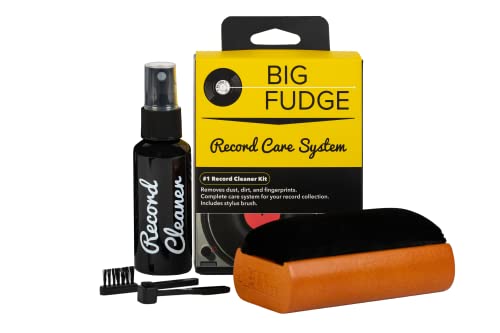
If you love records and record players, you must get a record-cleaning kit like this one. It is designed to ensure that your records stay in excellent condition to last you for decades.
Get this cleaning set and keep your vinyl records in perfect condition!
Loop method
Loops are round flat plastic which comes in different sizes and colors. The vinyl records can be arranged side by side using a rope to attach it to the loop to make a fine round design. Then hang it up from the ceiling. Remember that the ceiling must have a small bent nail from which this loop will be hung.
Basically using this method will mean that you have a wheel style loop that has a bunch of records hanging from it. One of the huge benefits of this method is that you can use the style of rope that fits your decor the best.
You can use a new nylon rope if you want it to blend in with the ceiling and want the records to be the stars or you can use an old rustic style rope to add a bit of flair to the design.
The materials needed here are the loops, bent nails, tiny ropes and of course, records.
All you have to do is attach the vinyl to the rope or ropes. You can do this by tying knots on either side of each record and threading the rope through the center hole of the record. You can also use a plastic loop on each side of the record to hold them in place.
You can be as perfect as possible and measure the distances between each record or you can just do it randomly based on what you think looks good. It’s totally up to you!
Once you have all the records on the rope then you will want to tie the rope back to itself and then run the rope up the ceiling (assuming you want your loop to hang off the ceiling). If you want your loop to be closer to the ceiling you can just have the rope loop up to the ceiling on every stud.
Speaking of studs, it is important to make sure that you put the nails into the studs/ rafters so that your records don’t fall down on someone’s head. It might seem like records don’t weigh much (and they don’t) but if you have a bunch of them on the rope the nail/nails will need to hold all of that weight.
A normal record will weigh 4-5 ounces so if you have 100 of them on your rope you are talking about 25-30 pounds that the nails will need to hold. If they are just into the drywall and not the studs behind it your loop will definitely wall down!
Mobile Method
This is the most popular way to hang records from the ceiling. It requires far less work than actually making a loop or a wheel (as mentioned above) and it is much more attractive than the glue method (mentioned below).
For the mobile method you are literally going to hang the records individually on a string or rope hanging from the ceiling. It will look just like a baby’s mobile that is above their crib.
One nice thing about this method is that you can hang as many or as few records as you like. You could do a small cluster of 5-10 records just in the center of the room, or you could scatter them all over the ceiling and use hundreds of them.
The choice is up to you!
The mobile method can be quite time consuming if you are doing hundreds of records as you have to attach each string or rope to the ceiling individually. This is especially time consuming if you have a taller ceiling and have to climb a large ladder to attach each one.
The only materials you will need for this method are the strings, your records and a support from which your vinyl will be hung. You can just attach each record to the drywall using drywall screws or you can also attach a board to the studs/rafters on the bottom side of the drywall and have all of your strings attached to that board.
I personally prefer the drywall screw method and like to just have records hanging down from all over the ceiling.
Glue Method
By far, this is the simplest way to hang a vinyl record from the ceiling. Of course this method is more like attaching your records to the ceiling than it is hanging them from it.
The only material needed here is your glue or caulk. Depending on your type of ceiling, wood glue is preferable on most ceilings however normal glues can also serve the purpose. You can even use a caulk instead of glue if you prefer. The caulk will last longer but will also be harder to take off if you ever want to change the decor.
I personally like to use Liquid Nails as that stuff holds like crazy and can be found everywhere.
The glue/caulk should be spread on your vinyl records then slowly push them onto the ceiling. You can arrange them in any sequence or pattern you want.
Use your hands to push the record tightly against the ceiling to make sure it is firmly situated and won’t fall off. Don’t push too hard or you might damage the drywall or even push through it!
You do have to be careful not to spill the glue on your hands because most glues don’t come off the skin easily. You can wear gloves just to be safe.
This method is easy but hard to change in the future.
With the first two methods mentioned above you just have some nail or screw holes to fill if you ever want to take it down. If you glue records to your drywall you will often ruin the drywall finish and you will have to hire someone to come in and fix it.
That is after you scrape every single record off the ceiling!
Conclusion
For most people one of the first two methods is the best way to have records hanging from your ceiling. You can certainly use the third method to do the entire ceiling in records but make sure you are happy with the look for a long time as it is a pain to get off and to fix.
With the loop or mobile method you can take it off and won’t have much repairing of the ceiling that will need done.
Ultimately you have to decide which method is best for you and just do it!
Good Luck