
*This post may contain affiliate links. As an Amazon Associate we earn from qualifying purchases.
If you are new to vinyl records or have just never had to store them without sleeves before then this article is for you. In this article we will discuss some vital things to keep in mind when storing them to ensure that they don’t get scratched or damaged while putting them in or out of storage.
How do you store vinyl records without sleeves? You always want to make sure that you store records vertically no matter whether they have sleeves or not. Without sleeves you also want to make sure to have a soft piece of cloth or paper in between each record as well as purchase some poly sleeves to keep them dust free.
Records are relatively durable since they are made out of plastic. They are difficult to destroy but they are much easier to damage. If you aren’t careful while storing your records you are likely to scratch them or even gauge them deeply!
Of course you need to avoid doing that at all costs so we will discuss some things you should do when storing your records without any sleeves.
Do you love playing your vinyl records but your record player has seen better days? Well, you are in luck! There are tons of great record players that not only have great sound quality but also won’t break the bank. You can find them by clicking here.
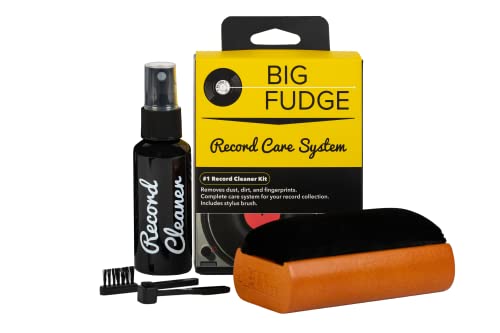
If you love records and record players, you must get a record-cleaning kit like this one. It is designed to ensure that your records stay in excellent condition to last you for decades.
Get this cleaning set and keep your vinyl records in perfect condition!
Why would you store records without sleeves?
Before we dive into steps that need done when you don’t have sleeves we wanted to mention why you might store records without sleeves.
First, you should never store records without sleeves by choice. If at all possible you should use the cardboard sleeves that the record came with on the outside of the record when you are storing it.
You shouldn’t store records without sleeves just because you think it looks cool or you don’t like some of the artwork on the cardboard sleeve. If you have the sleeves for your records you should use them!
Often the reason that people have to store records without sleeves is because the sleeve was either missing when they bought the record or the sleeve got damaged somewhere along the line.
If the sleeve was ripped or torn I would still recommend using it as it will still offer some protection for the record. If it got wet or moldy because of improper storage or an unforeseen event then you definitely don’t want to store your record in a wet or moldy cardboard sleeve.
What to do if you don’t have sleeves
If you don’t have sleeves for your records then the best thing to do is to buy replacement sleeves. You can buy exterior record sleeves (also known as jackets) at a variety of retailers.
Record sleeves/jackets can be purchased in bulk lots of 10 or 25 and normally come in white, black or brown colors.
Purchasing these sleeves to replace the ones that are lost or damaged is your best option as it allows you to keep your record safe from scratches or damage while also helping to keep it cleaner than it would otherwise be.
If you don’t want to purchase the exterior cardboard sleeves for your records then I would at minimum buy the poly bag type sleeves. These poly bags/sleeves are designed to help protect your records from dust and dirt that might gather on them during storage.
Without a cardboard sleeve/jacket or a poly bag you are leaving your records exposed to all of the elements including the very real possibility of them being scratched or gaugued during storage.
How To Protect Your Records Without Sleeves
Let’s say there is absolutely no way that you can buy either replacement cardboard sleeves/jackets or a poly bag sleeve. What are some things you should make sure of doing to help keep your records safe?
1. Put paper or a cloth between each record
Although paper or cloth won’t be as good as having a sleeve is is still better than nothing. You don’t want records to be touching and scraping against each other as you will scratch them when you pull them in or out of the box.
Put a soft paper towel or even better a piece of scrap cloth in between each record to keep them from touching.
2. Keep them away from moisture
Moisture is one of the worst enemies of records. When you store records in moist areas they are very likely to get mold on them which is incredibly difficult to get off.
Since all of your records will be touching or at minimum in close proximity to each other the mold is likely to spread from record to record and cause a ton of issues.
To avoid having to deal with this issue it is vital that you store the records in a cool dry place!
3. Avoid sunlight
Treat your record storage as if they are vampires and the sunshine will kill them… because it will! Records in sleeves can handle being stored in some sunshine but records without sleeves in direct sunlight is a recipe for disaster.
Sunlight will always heat the record’s black surface up much quicker and much hotter than it would if the record had a cardboard sleeve. That means that record will begin to warp much faster than it would if it was in a sleeve.
The best place to store records would be a closet or interior room that doesn’t have any windows to make sure that they aren’t exposed to any sunlight at all.
4. Don’t stack your records
You shouldn’t stack records on top of each other whether they have sleeves or not but it is especially important to not do this when there is nothing between your records.
Normally stacking a few records on top of each other wouldn’t be that big of a deal as long as you didn’t stack too many or didn’t leave them like that for too long. With records without sleeves every record you stack up is an opportunity for the record grooves to scratch each other and cause the records to both become damaged.
Never stack records without sleeves horizontally on top of a table or on top of each other! They should only ever be stored vertically.
Proper Record handling techniques
There are other important things that you should watch out for when storing your records. These hold true whether they are in the sleeve or not.
Each of them is important to remember to help keep your record collection in as good of condition as possible.
1. Always remove the vinyl record from the record player
A common mistake that many people make is to leave their records on the record player when it is done playing. This practice is so common that it occurs with CD’s and other entertainment methods as well. With CD’s, this practice may not have a major significance, however, with vinyl records, it is ill-advised.
Whenever you are done playing the record, it should be removed from the record player and transferred to its storage location. This will help to avoid scratching the vinyl as well as help keep it clean as it doesn’t collect as much dust when stored horizontally.
2. Clean your records regularly
It is not enough to store your vinyl records properly, you also need to clean the records regularly as well.
When you store your vinyl record without a sleeve, it will attract dust particles and possibly other things. They may be harmless at first, but with enough time, they will continue to increase until they begin to make your record skip or have unwanted noises.
It is important for you to clean your record regularly to keep them in good shape.
You should brush them off with a record brush before and after each time you play it. After pulling it out of long term storage you should check your records for excessive dust or dirt and clean them thoroughly as needed.
You can watch the video below for some tips on how to properly clean your records.
3. Touching your records
When touching your records you should only hold them by the edges and never put your fingers or hands on the playing surface at all. Because your skin has natural oils on it when you touch the playing surface of the record you will cause that spot to attract and hold more dirt.
That means the next time that you try to use your record it will be even more dirty than ever before because of you touching it.
You should also keep your records from touching other surfaces besides the record player’s platter (turntable). The less that your record touches the better condition and the cleaner that it will stay.
Conclusion
Records can be stored without sleeves or jackets but it is much better to simply purchase replacements than it is to store them without those items. The cost for replacement sleeves is minimal so if you are planning on keeping your collection for a long time then investing in replacements is 100% what we would recommend.
For more information about how to store vinyl records and other important storage tips, you can watch the video below.