
*This post may contain affiliate links. As an Amazon Associate we earn from qualifying purchases.
Have you been wondering if, in the game Monopoly, the person who owns the property is in jail, do you have to pay rent? Maybe this is an argument you have had on different occasions when playing Monopoly and you want to know what the official rule is.
Well in this article we will go over everything you need to know about if you have to pay rent if the person is in jail.
So in Monopoly, do you have to pay rent if someone is in jail?
When playing Monopoly you can still collect rent while you are in jail. So that means jail is actually one of the best places to be in Monopoly since you don’t have to worry about paying rent but you can still collect it.
When in jail in Monopoly you can still get rent from a regular property, houses, as well as hotels. There is nothing that prevents you from collecting rent while you are in jail for your three turns.
If you want to know more about Monopoly, and if you have to pay rent if someone is in jail, then you will want to continue reading this article. You can also watch this short video on how you can get out of jail in Monopoly.
If you love board or card games then you have to check out the game called Throw Throw Burrito! It is a fun fast-paced game where you throw squishy burritos at other people you are playing with! You can learn more by clicking here.
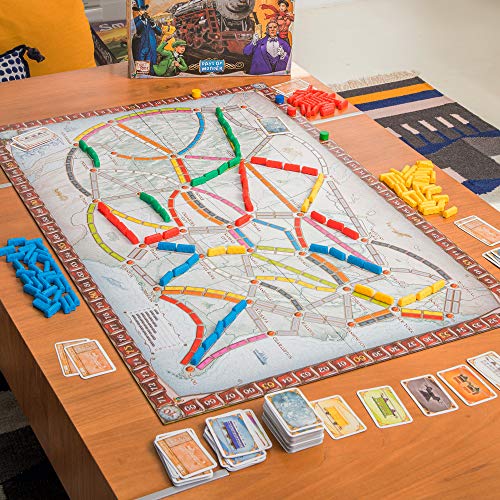
If you love games then you have to check out Ticket To Ride! This fast-paced board game will give you hours of fun with family and friends as you gather train cars and try to take over the board!
Ticket To Ride has many different variations as well so you can play across a variety of different maps.
What Happens When A Player Goes To Jail In Monopoly?
When a player goes to jail in the game of Monopoly the only thing that happens is they will not be moving around the board until they get out of jail. If the game is just beginning this can put the player at a disadvantage since they won’t be able to land on and purchase properties. However, they can participate in any property auctions that take place even if they are in jail.
Jail is one of the four corner spaces on a Monopoly board. If in jail, a player’s turn is suspended until the player rolls a double, plays a get out of jail free card, purchases the get out of jail free card, or pays the 50 dollar fine.
In jail, you will still collect rents from your properties and you can also trade properties etc. just like normal. You get the benefits of playing the game without the risks of landing on one of your opponent’s properties.
However, as much as you might want to stay in jail forever, you must leave if you roll doubles or after your third failed attempt at rolling doubles and paying your $50 fine.
How Long Can You Stay In Jail In Monopoly?
As mentioned above, being in jail in Monopoly is actually a very safe place. That is because while you are in jail you don’t have to travel around the board. So if there are multiple properties with houses or hotels on them you won’t be landing on them since you are in jail.
Since jail is a relatively safe place as you get later in your Monopoly game you might be wondering how long you can stay in there?
You can only stay in jail for a maximum of three turns. If you roll doubles on your turn however you can get out of jail faster (and without paying the $50 fine).
Say for example that on your second turn in jail you roll doubles. At that point you HAVE to get out of jail and move the number that is on the dice. If you roll doubles while you are in jail you MUST get out of jail and move the number of spaces shown on the dice.
Unfortunately, you cannot decide to stay in jail if you roll doubles. Instead you must get out.
If on your third turn you have a get out of jail free card you can use that to get out of jail without paying the $50 fine. You can also try and roll doubles on your third turn but if you don’t get it you are required to pay the $50 fine (and you cannot use your get out of jail free card).
How Does A Player Get Out Of Jail In Monopoly?
So we already talked about how long you can stay in jail for but what about getting out of jail? If it is the beginning of the game you will want to get out of jail as quickly as possible so you can return to purchasing as many properties as possible (to hopefully get a match).
But how exactly do you get out of jail in Monopoly?
There are three ways to get out of jail when you are playing Monopoly. Those are:
- Rolling Doubles
- Use A Get Out Of Jail Free Card
- Pay The $50 Fine
If you are trying to get out of jail as quickly as possible you will either want to use your get out of jail free card or pay the $50 fine. Although rolling doubles could save you from using your Get Out Of Jail Free card or paying the fine if you don’t roll doubles your turn is over and you have to wait until your next turn to pay the fine or use your card.
So if you are wanting to get out of jail as quickly as possible you will want to use the card or pay the fine before your first turn in jail.
Do You Collect $200 When You Land On Go To Jail?
On the top right corner of the Monopoly board there is a space that tells you to “Go To Jail”. When you land on that square everyone knows that you need to go to jail but do you pass go on the way there so you are able to collect the $200 while on your way to jail?
If you land on the Go To Jail square do you get to pass Go?
When you land on the Go To Jail Square you go directly to jail and do not pass Go or collect the $200.
If you look at the way the policeman on that Monopoly square is pointing you will notice that he is pointing backwards towards the jail, that is because you do not pass go when landing on this square.
If you think about this it makes a lot of sense. If you did pass go and get $200 when landing on that square then you would want to go to jail as it would put $200 in your bank and you would only have to pay $50 to get out thereby netting you $150 everytime that you landed on that square.
Of course jail is supposed to be a punishment so that wouldn’t work out well.
So even just based on logic you wouldn’t get the $200 when you land on the Go To Jail square. However, the rules are clear that any time that you land on the Go To Jail square or draw a card that sends you to jail that you DO NOT pass go and you DO NOT collect $200.
Can You Sell A Get Out Of Jail Free Card?
If you have a get out of jail free card but never seem to go to jail you might be wondering if you can sell or trade it. Afterall, getting out of jail costs $50 so someone might be willing to buy it from you for $30 or $40.
But can you actually sell a Get Out Of Jail Free card?
In Monopoly you can sell or trade a Get Out Of Jail Free card. As with anything that you own in the Monopoly game it can be traded or sold with any other player.
So if you are running short on cash and another player is in jail you might want to offer it for them at a discount. They will save a little bit of money and you will get the money rather than just holding a worthless card.
One thing to consider before selling your Get Out Of Jail Free card is that if you do end up going to jail you will have to either roll doubles to get out for free or pay the $50 fine. So if you sell your Get Out Of Jail Free card for $40 and then go to jail you might end up paying $50 to get out and end up losing out on $10.
That’s just something to keep in mind before selling or trading with your Get Out Of Jail Free card the next time that you are playing Monopoly.
Conclusion
So now that you know more in depth about how the Monopoly rules apply to you in jail you can make better decisions on whether you want to stay there or get out of jail as soon as possible.
You can still collect rent from other players while you are safe from having to pay rent to other players. Though you cannot stay in jail forever, you do not have to be too upset about getting sent there in the game especially if you are later in the game.