
*This post may contain affiliate links. As an Amazon Associate we earn from qualifying purchases.
If you recently bought a record player you are probably wanting to find some information about what is good or bad for the records and for your new player. In this article we will specifically discuss whether it is bad to leave a record player on all night.
So, does it hurt to leave the record player on all night? If it is a one time thing leaving a record player on overnight shouldn’t hurt anything besides costing you a little extra in electricity costs. The problem with leaving it on is what might happen when the record ends and no one is there to keep an eye on it.
Records players aren’t like CD players where there aren’t moving parts and nothing can go wrong. There are a lot of things that can go wrong with a record player when the record finishes.
Do you love playing your vinyl records but your record player has seen better days? Well, you are in luck! There are tons of great record players that not only have great sound quality but also won’t break the bank. You can find them by clicking here.
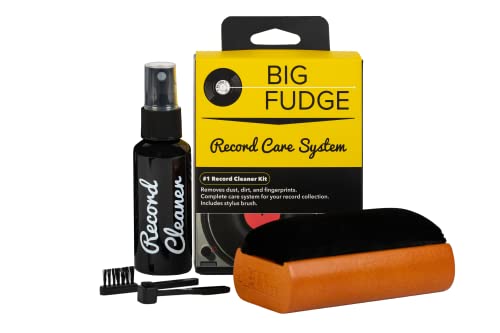
If you love records and record players, you must get a record-cleaning kit like this one. It is designed to ensure that your records stay in excellent condition to last you for decades.
Get this cleaning set and keep your vinyl records in perfect condition!
What Could Go Wrong If You Leave A Record Player On?
You are just leaving your record player on for a few hours overnight, what could possibly go wrong? Unfortunately a lot of things could happen while you are asleep! Most of them involve damaging the record, the player, or the stylus/needle.
Say for example the stylus has an issue and gets stuck on the last section. Your player could loop in the same spot all night long and ruin your record.
What if your stylus has an issue and doesn’t lift off the record all the way and won’t go back into its place properly? Your stylus could scratch up your record the entire night.
Or what if your stylus arm gets stuck part way on the return and continue to try to get back to its position over and over again damaging the needle, the gears, and other internal items on your player.
You should certainly not leave a vinyl record on your record player for long periods of time unless by accident. It is a good idea to make a habit of always putting the record back in its sleeve and putting it away after every use.
By putting the record away after every use you will protect your record from getting dirty/dusty while also keeping it from getting accidentally scratched while it is on the player.
Leaving A Record Player For A Few Minutes
Leaving your record player for a couple of minutes shouldn’t be an issue for most people or players. The damage to the player or record will normally happen over a long period of time.
You also don’t have to stay by your record player the entire time that it is playing.
That would be CRAZY!
Just being able to hear the player will allow you to fix it if you hear something off such as the record being stuck, or horrible screeching noises. Being able to fix those issues quickly will help protect your record and player from getting damaged.
It is a bad idea to leave your record player for the entire night but occasionally if you need to step away for a couple of minutes you shouldn’t worry too much about that.
What Could The Costs Be To Leave A Record Player On?
When you leave the record player on all night it not only costs you money in terms of power but also it is a possible fire danger if left running all night. This is especially true if you have a much older model and the wiring hasn’t been updated.
Of course the likelihood of this happening is quite small but the possibility is there nonetheless.
Another cost that you could face if you leave your player on all night is replacing the records and even the entire player. As mentioned earlier, there are a variety of things that could go wrong while you aren’t watching your player. Each one of those would cost you money.
Some people never see much of a problem with a needle resting on a record for short periods of time, of course, if you leave it like that for ages there is always the risk you might knock the needle across the record which could require hours of time to repair.
This certainly isn’t much of a financial cost as cleaning supplies are cheap but it is quite a large amount of time that you will lose. That is especially true if you scratch the record so bad that you have to sand it as well.
Other Issues With Leaving Your Record Player On
You also need to consider the general gravity of the needle and weight of the needle which may cause a slight indentation at a fixed spot on the record if the record player is on all the night unattended. This could be from the record getting stuck in the same spot, the stylus not pickup up like it should, or even there being a mechanical issue that causes the player not to turn like it should.
But what if you record player doesn’t damage the record or have any problems as mentioned above?
It is still not a good idea to leave it running all night!
Why? Because when you leave your record player running you are decreasing the lifespan of your player. The parts on a record player won’t last forever. They will slowly wear out with each record that you play. If your player continues to spin all night long you are wearing out many different parts unnecessarily while it is left on.
Damage caused by the pressure of the needle
Over time the needle will slowly wear down the vinyl on your records. Even if your player is designed to continue to play a record over and over again and it doesn’t have any issues doing so, you are putting more wear on your record that is necessary.
I personally like to listen to noise when I sleep. I started with music and a year or two ago went to “white noise”. For some people having a record player on all night is like that.
They enjoy listening to the music while they are drifting off to sleep and having it on all night works as white noise. However, since a record player will slowly wear down records over time, you are significantly reducing the quality and life of your records by playing them all night.
Don’t All Record Players Destroy Records Overtime?
It’s a common thought today that all the newer record players destroy records anyway so what is the point in trying to keep your vinyl in good shape. Why worry about if the record might get damaged overnight if my player is going to destroy the record in a couple of years anyway?
Well thankfully someone did a test on some of the newer players to see if they are damaging the records anway. You can watch their video below:
Conclusion
Leaving your record player on all night might cause problems and it might not. If your player functions flawlessly and nothing goes wrong with the needle, stylus, arm, turntable, or the internal mechanisms then playing a record overnight will only add to the wear and tear on the machine and records.
If however something goes wrong with any of those things you could find yourself having to buy new records, a new player, or even (in extremely rare cases) dealing with a house fire.
For many people the risk just isn’t worth it!
If you like to listen to a specific record all night long you can probably find it on one of the many streaming services and have it streamed on your phone all night long. That is a much safer alternative and you won’t risk damaging your records or equipment that way either.