
*This post may contain affiliate links. As an Amazon Associate we earn from qualifying purchases.
Have you ever played on a PlayStation Classic and thought about buying one? Maybe you have been looking at one for a while, but aren’t sure if you should.
So is a PlayStation Classic worth it?
If you grew up playing on the PlayStation or even just liked the games of the PlayStation, then the PlayStation Classic will be worth it. It is worth it because the console comes with 2 controllers, wireless capabilities, HDMI connection, as well as 20 preloaded games directly on the console.
If you want to know more about the PlayStation Classic and the games on the console, you will want to keep reading this article. You can also watch this video if you prefer to learn visually.
If you love PlayStation you need to check out this amazing game room light decor. It looks just like the buttons on the PlayStation controller and the light reacts to the music that you are playing as well! You can check it out by clicking here.
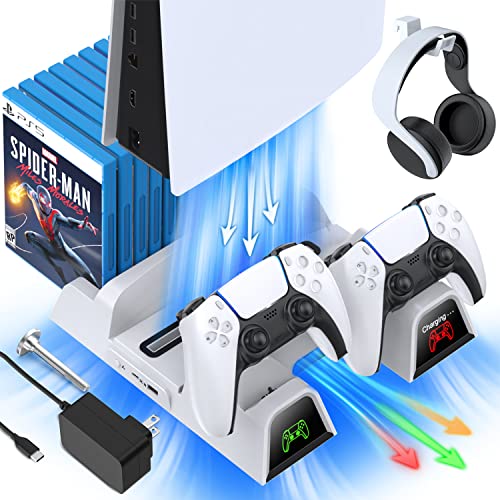
If you have a PlayStation console you should also have one of these stands. It makes it incredibly easy to organize your console and games as well as charge your controllers at the same time.
Plus it has a cooling fan to make sure your console doesn’t overheat when you have your weekend gaming marathons!
Original PlayStation or PlayStation Classic?
Although a lot of time has passed since the original PlayStations release, it is still ranked as one of the most popular consoles. The PlayStation, took the world by surprise when it was released, and instantly became a top selling console! The original PlayStation has sold over 102 million consoles all around the world! The console was fun to play, and the games that were available for it.
When Nintendo launched their NES Classic, Sony knew that they needed to compete. What better way to compete than by releasing the PlayStation Classic. The classic was tiny similar to the NES Classic, and came preloaded with games as well. The console was small enough to almost fit in your one hand, but kept the size of the original controllers. This made the original controllers seem extremely large compared to the console.
Features of the PlayStation Classic
The PlayStation Classic is a gaming icon that has refined the gaming world. It has changed the gaming concept of the future. Its elegant gaming color, the small rectangular design, initially captured the attention of people. With another gaming console in the market, it was tough to capture the gaming market. The PlayStation Classic changed the game with its high-end gaming features, and cheap price. The 20 built in games made buying the console worth it if for no other reason than to play all the classics.
PlayStations Classic Controllers
PlayStation Classic gave rise to the Classic Controller that became an icon in today’s latest PlayStation. Many of today’s consoles follow this classic design pattern. It is comfortable to play with and easy to use. If you see the buttons on the controller, you will see that the new controllers have followed the same design. The latest consoles such as PlayStation 3 and PlayStation 4 have the same controller structure as that of the Classic and original one.
This is because of the success of the original PlayStation. People liked the process of this controller because each button was easy to access and convenient to handle. The original shape and buttons of this controller time-traveled to support the new consoles as well. This controller could be attached to the PlayStation Classic using the USB port.
The only disadvantage that these controllers had was the absence of analog sticks. The analog sticks are the black rubbery round sticks that could be rotatable. These sticks controlled the motion of the characters. Because of its absence, games that involved car racing, character controlling, and other stuff were tough. These analog sticks are best to recommend for 3D games and racing.
PlayStation Classic Games
When the PlayStation Classic was released, it came with 20 preloaded games. Even though some people do not like all the games that are on the console, you are bound to have at least a few of the games that you have played, or enjoy playing. If you have not played any of them, now is a great time to seize the opportunity and play some of these incredible games.
A few of the popular games on the console are: Arc the Lad, Armored Core, Grand Theft Auto, Tekken 3, and Sega Frontier.
The 20 preloaded games are a lot of fun to play, and once you start all of your memories with the original PlayStation will come flooding back. Although this gaming platform was very liked, it could have been made better by installing the games that people liked the most.
History of the PlayStation
There were two versions of the PlayStation. Sony released the first version in Japan on 3rd December 1994. It was grey and looked fat in design. Soon a new version with significant changes was released. It was not given a new name but called the same and improved version of the PlayStation.
The first version of the PlayStation was grey and had the disk container in the center. Also, it had one button on one side and two on the other. They are used to perform the reset, power, and open operation. The later version of the PlayStation was released in 2000, which replaced this old one. It was slimmer in size, following a pure white color.
Although Sony officially discontinued it, it can still be seen and bought from some video game stores and gaming arenas. PlayStation came into the market as competition to Nintendo. New games related to this console were released from time to time. They had a fast, responsive display with excellent graphics that gained the attention of almost all the gamers. The graphics that this system offered are pretty great to follow. They were very advanced according to their time, and because of that, the games were very detailed.
The PlayStation Classic was recreated as a better version in December 2018. Although a lot about the system was better than the original, Sony did not change the original graphics of the game system so it felt like you were playing on the original PlayStation.
Conclusion
If you love Sony or have ever played the first Sony PlayStation, you will definitely want to purchase the PlayStation Classic. This console will be able to take you back and bring back all the memories of playing on the original PlayStation.
You are not going to want to miss this once in a lifetime opportunity to own a piece of history as well as be able to share your childhood with your own children someday. Although the original PlayStation does not seem that old now, if you want a chance to play the game and share it with your kids, you will want to buy one now before prices increase and you are stuck paying 2-3 times the price they are now. So if you want to own your very own PlayStation Classic, here is the best place to buy one.
No matter if you grew up with the PlayStation, or if you are buying it for a friend or relative, they are bound to love you! These consoles make great gifts as they already come preloaded with all the games someone needs. They also have all of the necessary connectors to connect the console to the Modern day TVs via HDMI. Although this may not seem like a big deal, there is nothing more annoying than pulling out your favorite gaming console and not being able to play because you have to have an adapter that you cannot find. If you do need an adapter for your original PlayStation, though, you can find one here and have it delivered in 1-2 days.