
*This post may contain affiliate links. As an Amazon Associate we earn from qualifying purchases.
Many pool table owners are recovering or installing their own pool table and the selection of the type of pool table felt to use is usually the most important decision to make.
The first thing to know is that billiard fabric is called by many different names such as pool table cloth, pool table felt, billiard felt, pool felt, billiard cloth, a green, a cover, etc..
The sport itself is properly called billiards, but most people know it as playing pool.
So is pool table felt glued down?
There are a few ways to attach felt to a pool table. The most common ones used are staples and glue. So some pool tables will have the felt glued down while others will have it stapled instead.
If you would like to know more about if the pool table felt is glued down, please keep reading or checkout this video!
If you are looking to get better at playing pool one of the best ways to do that is by upgrading your pool cue. One of my favorite cues is the Viking Valhalla. It is available in a variety of colors and won’t break the bank. You can find it by clicking here.
Installing Pool Table Felt
You can attach felt in more than one way. You may use staples or glue in installing felt. By the way, to those who do not know what felt is, well accurately, felt is known as a pool table cloth.
Oftentimes, the installation of pool table cloths must be done by professionals. However, as we get older and older we become reluctant to ask for any professionals to do such a job. You believe you can do it and it will cost you less than hiring someone to install it for you.
Although with pool table felt, it is much better to ask professionals to do the job due to the fact that if you have stretched it in the wrong direction and any dust left on the table can make your pool tables surface bumpy or irregular. Objectively, you may still do this on your own, but you will need to work slowly and carefully.
The first thing that you should do is to prepare the pool table and the felt and everything needed like the glue or staples.
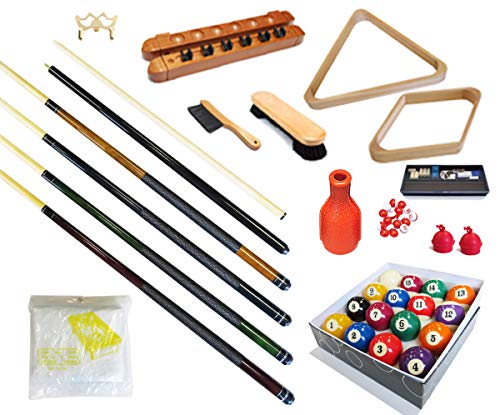
If you have a pool table then you need to get this accessory kit. It includes pool cues, extra pool balls, and all the gear you need to keep your pool table in tip-top shape.
If you are tired of your kids (or friends) ruining your good pool cue when they play then having these extra ones will keep that from happening (just be sure to hide your good one!).
Dismantling The Pool Table
Once you have your materials, you may then start the process by removing the pocket liners from each pocket. Most table pockets, regardless of the table size, follow the American table standard. These are normally angular pockets that are oriented inward. They are commonly 1.75 to 2.25 times as wide at the opening diameter of the 2 ¼ inch balls as and mostly wider in the middle sides than in the corners.
Removing table pockets is only necessary if they are already installed on the table. After the removal of pockets, you will need to find the bolts on the underside of the table that keep the railings in place. You need to remove them so you can move the railing to a safe storage space. Teh railing should not be damaged or it might interfere with the movement of the pool balls around the pool table. So removing the railings is a must.
A railing can be composed of two, three or four pieces. In any case, no matter how many sides the railing is made up of, if it is two or more sides then you will need one or two assistants to help you carry the railings. This is to avoid damage.
Remove Old Felt
In the case that there is existing felt on the pool table then removing the old one is important to do before putting the new felt on. You have to be careful to make sure that all the old felt is removed. If the felt was attached using a staple, then it is easier to remove using a staple remover. If the felt was glued on, then you can just rip it off the table but you will need to do it carefully. Glued felt if removed incorrectly might cause damage to the table itself.
Level The Table
This part is optional, but if you want a good pool table then this part is a must. You might need a bubble level or any instrument that is designed to make sure the surface is horizontally leveled or vertically plumb. If you do not have this instrument, you may also use your android phone to have a bubble level, this is free as a mobile application.
Make sure to also clean the slate. You do not need to use any water or cleaning solution as this might have an unpredictable reaction. You may just use a dry clean cloth to remove any dust. If any residue builds up on the surface, then you may just use a knife or any other flat item but not a sharpened blade to scrape it off.
Cutting The Felt
More often than not, felt comes in a bigger roll or one large piece of cloth. You may make one cut on the felt and then you can just rip the felt by hand. However, if you are not that confident about ripping it with your bare hands, then you may just use scissors or any gadgets for cutting.
Roll The Felt
You’ll know that it is the correct side up when it has a smoother surface than the other side. Usually, you would notice a printing on the edge that will also tell you the quality grade of the felt. In case that you cannot find the label of quality grade then just consult a professional. Hang extra felt on the foot end area and a little extra on the head part where you are going to start the installation. You do not want to be short and have to start all over.
Apply The Felt
Start by folding the felt on the head area where you just put a little extra cloth. In folding, it should have exposed the underside that will hang over the vertical side of the slate. Start spraying the slate where the cloth will be attached.
Glue is better than a staple in many aspects such as when you use glue, it looks cleaner while a staple can be seen on the surface and is much more difficult to hide. After spraying the glue, carefully attach the felt to the table. The felt must be tight enough to prevent any wrinkles. Then repeat the process on the other end. However, you will need to wait a couple of minutes before starting again on the other parts so the glue has a chance to dry slightly, then repeat until all sides have been glued.
Finishing Up
Trim the felt that overhangs on each side. You may use those trimmings to create pockets and pocket liners. Corner and middle pockets can be made from felt trimmings. You will need to cut those trimmings horizontally then arrange them like making a net. You may glue or staple them inside. Put them in to protect the balls from damage.
Conclusion
Generally speaking, you do not need to re-felt your table very often. Felts are replaced usually every three years although felt can last for up to 10 years if they are cared for properly. This will be a whole lot of hard work but if you are determined to do so, then definitely you can. There are a few ways to attach felt to a pool table. The most common ones used are staples and glue. Now that you know how pool table felt is secured to the table, you can let all of your friends know that it is glued down sometimes.