
*This post may contain affiliate links. As an Amazon Associate we earn from qualifying purchases.
Have you been looking for a good game to play and you saw Rummikub in the store? Maybe you are looking for a review of the game, but aren’t sure you can trust what other people say. Well, in this article we will go over everything you need to know about Rummikub and if it is a good game.
So is Rummikub a good game?
If you have played Rummikub before, then you know just how fun and addicting playing Rummikub can be. The game is fast paced, fun, challenging, and will always leave you wanting more. The game is good for people of all ages as well as family and friends.
If you want to know more about Rummikub, you will want to keep reading this article. You can also watch this short video to learn how Rummikub is played.
If you love board or card games then you have to check out the game called Throw Throw Burrito! It is a fun fast-paced game where you throw squishy burritos at other people you are playing with! You can learn more by clicking here.
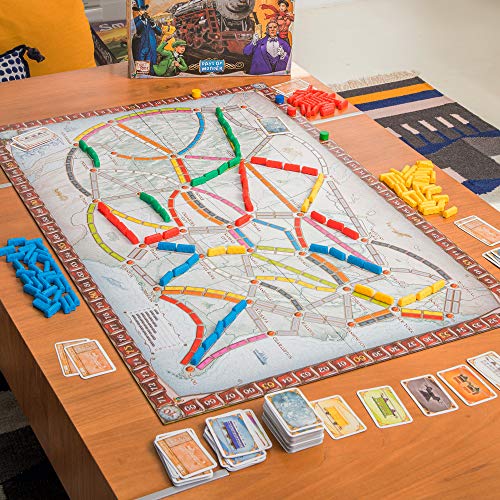
If you love games then you have to check out Ticket To Ride! This fast-paced board game will give you hours of fun with family and friends as you gather train cars and try to take over the board!
Ticket To Ride has many different variations as well so you can play across a variety of different maps.
History of Rummikub
The game Rummikub was invented by a man called Ephraim Hertzano, a Jew born in Romania. Ephraim is known to have made the first set of Rummikub games with his family in the backyard of his home. Ephraim sold these sets as a door to door salesman and as a consignment basis at small shops.
As the years went by, the family licensed the game to other countries, and it became Israel’s game that sold the best via export. In the year 1977, the game became a bestseller in the United States of America. Three different versions of the game are known worldwide. They are American, Sabra and International.
Presently Rummikub sets which are the modern ones include only the Sabra version rules. Rummikub is widely known as a good game. This is associated with the way it is played, its perks, and its benefits to gamers.
Playing Rummikub
The Rummikub game is based on tiles for 2 to 4 players. The Rummikub game has 104 numbered tiles with a value of 1 to 13 in four unique colours. It comes with two copies of each as well as two jokers. Each of the players has 14 tiles in the beginning and then will take turns putting down tiles from their racks into groups of at least three.
One draws a tile if they cannot play. In a version called Sabra most loved and frequently played, the first player who uses up all their tiles, scores a positive score based on the total of all tiles in the other players’ hands. All the while, the losers get negative scores.
A group is formed when three or four tiles of the same numbers are combined. Each number has a different colour. A run is commonly formed when there are three or more numbers of the same colour played together.
Playing a group or a run makes a set, also called a meld. On the first turn, the objective is to play either groups or runs that add up to at least 30 points. If your tiles are not adding up to at least 30 or even close, you can take a tile from the pool. You will continue to do this until you can get a 30-point set in the game. You are not allowed to play the drawn tile until the next turn. This commonly applies to any tile drawn during the game.
Perks of Rummikub
Rummikub improves teamwork in the family. When played by families, Rummikub is a pretty great game for the whole family to have fun playing together. The game is easy to assemble when done by a team. The instructions are easy to read with clear examples of the number of moves to be made in the game. This game assists people to work together and create social bonds which are beneficial to the family.
- Improves the Cognitive skills of the player.
One of the main advantages of playing Rummikub is the reduction of the risk of intellectual declines. Some of these are very prevalent and are known as Dementia and Alzheimer’s. Rummikub helps the brain to maintain and grow cognitive associations at any age. The hippocampus and prefrontal cortex mainly benefit from playing Rummikub.
These two areas of the brain are in charge of complex thought processes and the formation of memory. Their reduction is one of the earliest stages of Dementia and Alzheimer’s. Those who are significantly aged show the most benefit from activities like playing board games such as Rummikub. The earlier one starts to play Rummikub, while they have better cognitive skills, the better they will be as they get older.
Rummikub can also reduce high blood pressure. It provides health advantages through laughing. It is well known that to lower one’s blood pressure; one should select a board game for entertainment rather than competition. Laughing is proved to increase endorphins which are biochemicals that create a feeling of happiness and well-being.
This production of endorphins assists muscles to relax and blood to circulate freely in the body, which lowers blood pressure. High blood pressure is associated with a higher risk of damage to blood vessels, heart disease, and stroke.Playing Rummikub magnifies one’s immune system, thus boosting the bodies’ immunity.
Research has displayed that negativity and stress can reduce one’s ability to fight diseases. Good feelings like the laughter and happiness that often comes with playing Rummikub prevents these results by releasing serotonin that combats stress and magnifies the immune system.
Rummikub and Coordination and Dexterity
The Rummikub game also improves coordination and dexterity amongst the young, the old, the sick and people with physical disabilities. Rummikub requires one to use motor skills to pick up and move pieces. Occasional practice improves these skills which are advantageous for young people as well as people with mental or physical disabilities. The aged and those who are healing from terrible accidents benefit from playing it as well. They can stretch their body parts during the game as well as keep their mind focused.
Rummikub has been proven to also improve child development. Rummikub games usually carry out an essential role in child health and brain growth. They help young children mature in logic and reasoning skills. They improve critical thinking and magnify spatial intelligence at an early age of children development. Children who play Rummikub amplify their communication skills as well as it helps them develop longer attention spans, and the ability to focus for increased periods.
The game of Rummikub has so many advantages, and it’s not hard to see why this board game has consistently been shown to find a place in homes all around the globe for such a long time. The next time that you pick up Rummikub to play with your friends or family it is important also to remember that one is not only enjoying himself but also improving the physical and mental health of himself and those around him.
Conclusion
Now that you know all of the benefits of playing Rummikub you can clearly say that it is a good game to play. Not only is it fun for everyone that plays the game, but it is also a good way to improve your health. If you do not own a Rummikub game and you want to purchase one, this is the best place to get one.