
*This post may contain affiliate links. As an Amazon Associate we earn from qualifying purchases.
Are you looking at the Sega Dreamcast and considering buying one? Maybe you have been thinking about it for a while, but cannot decide if you should pull the trigger on actually buying one.
So is the Sega Dreamcast worth buying?
The Dreamcast is worth buying because of the nostalgia alone. It is especially worth buying because of the many accessories that it offers such as the “fishing reel” that made all the fishing games on the console so much fun!
Are you a huge Sega fan? Then you have to check out the amazing Sonic and Sega gear that you can get. Whether you want a Sonic wallet, a Sega sweatshirt, or a classic hat there are plenty of choices to choose from. You can find them all by clicking here.
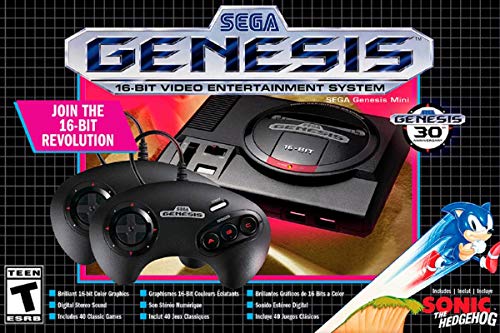
If you love Sega then you will want to check out this Sega Genesis Mini console. It comes with two controllers and even comes preloaded with 42 Games!
Enjoy these classic Sega Genesis games without having to purchase a single game cartridge!
What is Sega Dreamcast?
The Sega Dreamcast is a home video game console that was released by Sega. It was the first in the 6th era of computer game consoles. This means it was released before Sony’s PlayStation 2, Nintendo’s GameCube and Microsoft’s Xbox. The Dreamcast was Sega’s last original gaming console to be released. The Dreamcast was the last of 18 years of gaming consoles that were released.
As compared to the costly equipment of the futile Sega Saturn, the Dreamcast was intended to decrease costs with “off-the-shelf” segments, including a Hitachi SH-4 CPU and a NEC PowerVR2 GPU. Released in Japan, the Dreamcast got a very thriving U.S. launch supported by an enormous marketing strategy. Sadly as excitement for the PlayStation 2 began to build, the sales for the Dreamcast began to go in a downward spiral.
Even though the Dreamcast had a short life expectancy and reserved external help, people have considered the console pretty advanced for its time of release. Its library contains numerous games that are considered imaginative and creative, including Crazy Taxi, Jet Set Radio, and Shenmue. Just as The Dreamcast was additionally the first console to include a built-in modem for Internet support and online play.
How much is Sega Dreamcast worth?
The price of the Sega Dreamcast console varies depending on the condition it comes in, the color, and many other aspects. A second hand Dreamcast, has sold for as low as $16, yet the console can cost all the way up to $190 if you still have it new in the original box.
As it should be obvious, used costs for the Dreamcast can vary depending upon the state of the console and whether the game system comes in its unique packaging. Used consoles costs can similarly vary to some degree from retailer to retailer. It also seems like the color of the console affects the price.
As with most retro consoles, there is not a typical “going rate” for new, complete-in-box game systems because of irregularity. With that being said, there have been Sega Dreamcast consoles that have sold for well over $200!
Here is a list of various Sega Dreamcast systems and what I have seen them sell for.
Second hand: $16-$190
Refurbished: $80
New: ~$200+
At Popular Retailers they have sold for:
EBay: $57
Lowest cost sold: $16
Highest price sold: $190
Amazon Dreamcast (Renewed): $80
GameStop (Pre-owned): $60
GameStop (Trade-in): $12 Store Credit/$12 Cash
The best Sega Dreamcast games
Sega Dreamcast has brought about some of the most beautiful games of the last decade. Unlike other high-end brand names, the game system has provided quality software for people who love playing games. Although the Sega Dreamcast has been somewhat underrated, here is a list of games that makes the game system worth buying! The following is a video of the top 10 Dreamcast games ever made!
1. Crazy Taxi
Indeed, Crazy Taxi and its sequels have shown up on various platforms now, yet there was nothing like finding it on the Dreamcast. Joined with the arcade wheel, this is an arcade game in most every sense, and all the better for it.
2. Virtua Tennis
A game that similarly got changed over to any format that’d take it, and once more, there’s nothing as undiluted as the Dreamcast version of it. The spin-offs developed the enjoyment, yet the first Virtua Tennis is as yet heavenly. Also, the King match toward the end is a challenge worth taking.
3. Shenmue
A yearning, ambitious mix of action, adventure, narrating, and, well, vast amounts of stuff. Shenmue was imagined as a multi-section story, albeit reduced offers of the first implied that Shenmue 2 landed in subtitled form, and wasn’t translated. It’s a troublesome title, with the same number of spoilers as fans; however, it indicated the sheer desire of the Dreamcast programming library and Sega.
4. Force Stone 1 and 2
It was also called the Capcom battling game. This game appeared to be overlooked by everyone. Aside from an awkward PSP change, there’s been a minimal indication of any affection for the joyful Power Stone games for quite a while. The continuation, specifically, is a four-player frenzy at its best.
5. Fly Set Radio
A sequel made it onto the first Xbox in its initial days; however, the cel-concealed Jet Set Radio indeed was something other than what was expected, which made it all more discouraging when it dropped down after release. It has a sound portion of vandalism mixed with a great deal of action and deserves a return.
6. Samba De Amigo
Ok, this is the best beat game of the most recent decade. Samba De Amigo costs a person $85 on the release date,and it’s still the absolute best cash you can spend at any point spent on gaming.
7. Soul Calibur
A lot of gamers call this the best Dreamcast game ever and undoubtedly one of the absolute best battling games ever. Quite splendid, and still favored by a large number of the sequels that followed.
8. Resident Evil: Code Veronica
One of the better passages in the Resident Evil establishment, and for quite a while, it was only a Dreamcast exclusive before it landed across to the PS2. It’s still worth it, however, as it is decently cheap to buy one used.
9. Daytona USA
The Dreamcast was not deprived of excellent racing games – Ferrari F355 and Metropolis Street Racer, for example were great games. Keeping in mind that the home change didn’t relate to the enjoyment of a row of arcade cabins, it had a pretty good attempt, and made alot of people feel like they were right there on the track.
10. Ikargua
The Dreamcast was everything except dead in the mass market when this unmistakably old school 2D vertically scrolling shooter turned out. It was one of the absolute last but brilliant releases the console had. It also kept the nature of the product library going right to the end.
Conclusion
The year 1999 brought forth one of the most favorite and fleeting video game consoles ever, the Sega Dreamcast, with its release going about as a bitter-sweet journey for Sega as a hardware developer. Today the Sega Dreamcast is still held in high respect by fans and retro fans the same. This is because of its inventive features and its great library of games.
For those of you who need to keep the fantasy alive, there are a lot of things to consider with regards to what Sega’s last console brings to the table. If you like basically any old school games that were released ahead of their time, the Sega Dreamcast is definitely the gaming system for you to buy.
While you may not like all of the games made for the system, there are so many good games that will just blow your mind and make you fall in love with Sega for the first time or all over again. So what are you waiting for? Go ahead and but that Sega Dreamcast you have always wanted right here!