
*This post may contain affiliate links. As an Amazon Associate we earn from qualifying purchases.
Have you ever wondered if you should buy a Gameboy? Maybe you weren’t really sure if they would be fun to own or not. Well, in this article, you will learn everything you need to know about the Gameboy and if you should buy one or not.
So should you buy a Gameboy?
The decision to buy a Gameboy really comes down to personal preference. This is because some people love the Gameboy, while others prefer other gaming consoles. The Gameboy is a great option if you are looking for something portable, and also kid friendly while still playing the great games of years gone by.
The Gameboy also has many other amazing features that we will be showing you in this article. So if you want to know more about the Gameboy, you will want to keep reading this article.
You can also check out this short video to learn all about the Gameboy.
Are you a huge Nintendo fan? Then you have to check out the Mario and Nintendo gear that you can get. Whether you want a Mario wallet, a Nintendo sweatshirt, or a classic NES hat there are plenty of choices to choose from. You can find them all by clicking here.
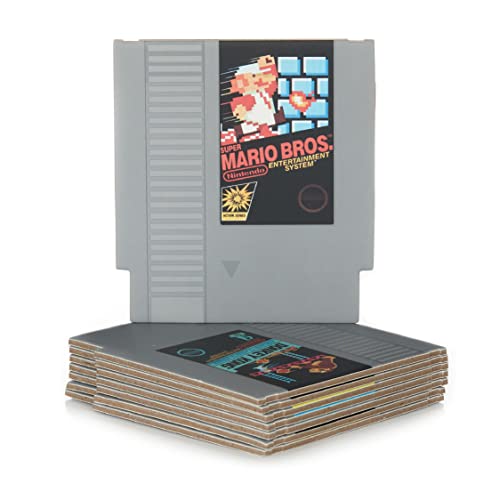
Do you love Nintendo? Then you have to check out this amazon NES cartridge drink coaster set!
This set includes 8 double sides drink coasters that look just like the classic NES cartridges.
This set is a perfect gift for the gamer in your life!
Is Every Gameboy Version Worth Buying?
The Gameboy first used cartridges and didn’t offer much in the way of color. Nevertheless, the Gameboy Color was the first Gameboy that offered real gaming color, and was capable of playing the original cartridges, plus had its own line of colored cartridges.
The older Gameboy could not perform these features, which means it dropped in popularity once the Gameboy color was released.
After the Gameboy color was released, came the Gameboy Advance. The Gameboy advance was the most comfortable Gameboy, had a fuller screen and two additional buttons. The new Gameboy played smaller and better cartridges and could play color cartridges, but could not play the original cartridges.
The next version of the Gameboy was the Gameboy SP. It was essentially a Gameboy Advance but it had been built with an LCD screen and a laptop-style body. The SP was very popular among fans and gamers all over the world.
When it was originally released, the Gameboy was everything.Many people would spend hours in their room playing on the Gameboy and many times frustrate their parents by not playing with their friends. Some parents even went as far as banning the gameboy from ever being played because they wanted their kids to play outside instead of staring at a screen.
Who owned a Gameboy?
Although everyone wanted to buy a gameboy, not everyone could own one. Some people could not afford them, while other people just simply did not like having the handheld device in their house.
The Gameboy altered the video game industry and every kid’s habits. Today, the game doesn’t always get the immense credit it received 20 years ago. Every time you download a new game on your phone to kill time, remember it all started with Gameboy.
The current video game age cares a lot about how good the graphics of the game are, which ones offer a realistic approach to games, and even sometimes you forget it is not a film but a game. Despite the advancement, the latest titles cannot capture the black and white, or green and white magic that came with the original gameboy.
A Gameboy is for every kid who wishes to own a beautiful handheld console that is always fun to play. Today, all the other consoles are black boxes, with high spec coffins where games go for their funerals. A Gameboy is something completely different though.
It was admirable to have one, and you could sit and stare at it all day playing it without ever getting bored.
A Gameboy was a vast little token of promise that everyone should buy. Its packaging was something different that no one had ever seen before. Even without getting the game out of its thick branded stripe box, you will be drooling because you know what that box represents.
It’s remarkable how the game comes with a small shiny cardboard game box that offers every player chills in the right way. This game was exceptionally done from the packaging all the way down to the details on the device.
The Gameboy Design
Many people purchased the Gameboy for its amicable design. Starting your console up and running it is worth the wait. The slide of the GameBoy logo followed by the good ping takes us back to a more innocent age when life was all about having no worries and simplicity.
Video games are all about buttons, and using them isn’t rocket science. Yet, there is something incredibly comforting about the simple set up of D-pad buttons on the GameBoy.
You will be up pressing them all day—it’s fun.
Top Gameboy Games to Play
The long wait for the game Tetris! To dislike the Tetris, you must be a real blockhead as it’s the feature that defines the GameBoy. All you have to do is clear four lines in a row thanks to the ‘I Tetromino’ as most players called it.
The underwater level in Super Mario Land. Mario takes him to the ocean in his own submarine. You will love looking for those seahorses. Start feeling better after a visit to Dr. Mario if you found Tetris a bit too Mario-less, then Dr. Mario is the game for you.
As falling drug capsules were used to neutralize nasty viruses, many pharmacists went into their chosen industry because of these games. More games include Zelda: Link’s Awakening, Castlevania: The Adventure, and Metroid II: Return of Samus.
You can enjoy more by buying a GameBoy and enjoy wireless gaming. Moreover, it brought backward compatibility with other Nintendo platforms. You can make use of the GameBoy Color, GameBoy Advance, and notably the N64.
You can also use the same game cartridge without having to buy a new version of GameBoy.
When buying a GameBoy, no matter how old, you are coming with more than just a pocket game. It’s one of the best-selling game consoles of all time, and has become one of the four games that could be played on the N64. For instance, you can play the Pokémon Stadium’s Transfer Pak, enabling Pokémon Red, Blue, and Yellow users to play their game on the GameBoy console.
You can use a built-in emulator with the possibility of double or even triple-speed, making leveling-up a less complicated process.
Since the onset of the GameBoy, the summer GameBoy pocket came up, which addresses the flaws of the original console. The new game comes with multi-color screens, a slimmer design, and shoulder buttons that are now standard features in modern game controllers.
Conclusion
So, it’s worth buying a GameBoy. Even though the GameBoy line was discontinued, and the DS took over Nintendo’s handheld market, you can still buy a GameBoy new, or used but old. You can still see the original DNA in Nintendo’s most famous contemporary platform the 3DS.
While future reincarnations of the console focused on minimizing its bulky size and incorporating modern technologies, the original GameBoy is still seen as a classic.