
*This post may contain affiliate links. As an Amazon Associate we earn from qualifying purchases.
Have you ever wondered who exactly owns Sega? Maybe you heard or saw that there are Sega games on the Nintendo Switch and wondered what this meant. Well, in this article we will go over everything you need to know about Sega as well as whether Nintendo bought them.
So who exactly owns Sega?
Sega is actually still owned and operated by Sega Enterprises. They are not owned by Nintendo, Sony, Microsoft, Disney, or any other company at this time.
Although Sega is not owned by Nintendo, they do have the rights to many of Sega’s standard games. This is why there are some Sega games on the Nintendo Switch as well as other Nintendo devices.
Sega and Nintendo have a great relationship, but Nintendo does not own Sega. If you want to know more about Sega and Nintendo, you will want to keep reading.
If you are interested in Sega then you will definitely want to check out the Sega Genesis mini console that comes with 40 preloaded games found here.
You can also check out this video below if you prefer to learn more that way.
Are you a huge Sega fan? Then you have to check out the amazing Sonic and Sega gear that you can get. Whether you want a Sonic wallet, a Sega sweatshirt, or a classic hat there are plenty of choices to choose from. You can find them all by clicking here.
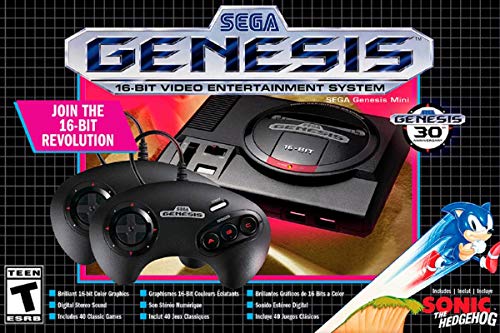
If you love Sega then you will want to check out this Sega Genesis Mini console. It comes with two controllers and even comes preloaded with 42 Games!
Enjoy these classic Sega Genesis games without having to purchase a single game cartridge!
Who Owns Sega Right Now?
After realizing that Nintendo actually does not own Sega we can now get into who officially owns Sega at the moment. American businessmen Martin Bromley and Richard Stewart are the masterminds behind the creation of Sega Entertainment. It was founded in June of 1960.
The company was originally called Nihon Goraku Bussan and eventually was changed to Sega Enterprises, Ltd.
In its early stages, Nintendo was Sega’s biggest competitor in the market once it was bought by Gulf and Western Industries in 1969. After they purchased Sega, they immediately began to develop arcade games.
The first video game consoles to be developed by Sega were the SG-1000 and the Master System. It all began back in the early 1980s when Sega executives David Rosen and Hayao Nakayama led a management buyout of the company with backing from the CSK Corporation.
The problem was that Sega’s next console release/launch, the Sega Genesis, was not until 1988 (about the same time as the NES). When it did release though, it boosted Sega’s position in the market. The Sega Genesis does have a lot of fans but the really big success did not come until 1991 when Sega released its iconic game Sonic the Hedgehog.
Not only was it a complete success outside of North America, but it also managed to outsell many games on the Super Nintendo Entertainment System.
This put Sega on the board and made them a big target that Nintendo wanted to take down!
However, due to Sega’s giant failures in the US later in the decade when the 32X, Sega Saturn (Sega Mega Drive) Sega CD, and Dreamcast consoles failed, it got out of the home console market and became a third-party developer and publisher. After that, in 2004, the Sammy Corporation acquired Sega.
Sega’s Japanese assets were purchased by a group of investors for $38 million. This purchase was led by Rosen and Nakayama who went on to become the CEO of Sega Enterprises.
Did Nintendo Buy Sega When They Went Bankrupt?
Even though Nintendo did not buy Sega when they went bankrupt, they were able to make some good deals with them for the future. While Sega and Nintendo were competitors in the gaming console market, Nintendo was still able to keep a professional relationship with Sega and not try to tear down their products.
Since Sega & Nintendo were never at total war with each other they were able to make some deals when Sega stopped producing their own video game consoles.
Even at one point, Sega sold more of their new consoles than Nintendo’s new systems. Throughout all of this though, Nintendo did not ruin its relationship with Sega.
Because Nintendo was kind to Sega throughout their entire rivalry, Nintendo was able to make some very beneficial deals with them.
They were able to secure the rights to have Sega games on the Wii U as well as on the 3DS and the Nintendo Switch. This deal was highly beneficial to Nintendo as popular games such as Sonic the Hedgehog can now be played on many Nintendo gaming consoles alongside Mario, Luigi, Zelda, etc.
This deal not only helped attract more gamers but also helped Nintendo capture a huge share of Sega’s market without the need for a merger.
When Sega stopped making hardware and just started doing software, the first platform that they wanted to release Sonic on was a Nintendo console. Sega knew from the very beginning that the Nintendo platforms were where the passionate Sonic fans were.
Unfortunately, the Wii U didn’t manage to get as many gamers on the hardware as they were hoping.
However, even with Nintendo having Sega games on their consoles, this does not make Nintendo the owner of Sega; it simply just gives them the rights to particular games which they can showcase on their own gaming consoles.
Nintendo and Sega have gone on to continue a great relationship that has endured to this day. Because of this friendship between Sega and Nintendo, Sega has been able to publish many great games on Nintendo platforms.
This is why when you go to play on your Nintendo Switch, you will be able to find many Sega games including Sonic the Hedgehog!
Is Sega A Public or Private Company?
So now you know that Sega is not owned by Nintendo and is still its own separate company but is that a private company or is it a public company that you can buy stock in?
Sega is a private company that is mostly owned by Sammy Holdings. You cannot buy stock in Sega currently since it is private.
Sega used to be a publically traded company with stock on a variety of different exchanges over the years but currently, they are a private company so you cannot buy stock in Sega.
Is Sonic Still Around?
Even though there are no Sega consoles, you can still play Sega games on many different devices today. You can play on many different Nintendo consoles as well as even on an iPhone. Sega has even partnered with a developer and has turned Sonic the Hedgehog into an app.
Now you can play all of the original Sonic games right on your phone! This is something many people have taken advantage of as they carry their phones with them all the time. Because of this convenience, you can play all of your favorite Sonic games anywhere you want.
You can also play Sonic the Hedgehog 2 on your iPhone by simply downloading the app from the app store. The best part is that all of these games are free on the app store and do not require you to spend any money to play them!
Who Owns Sonic The Hedgehog Now?
Since Sonic is no longer exclusively available on Sega consoles (since they aren’t making new consoles) you might be wondering who actually owns Sonic the Hedgehog.
The rights to Sonic the Hedgehog are still owned by Sega. Sega has allowed different Sonic games to be produced for Nintendo consoles in recent years but the Sonic trademark is still owned by Sega.
Just because Sega doesn’t make consoles anymore doesn’t mean that they no longer own the rights to Sonic. Sonic is still the IP (intellectual property) of Sega and will still that way until Sega decides to sell those rights to another company.
History of Sega
Sega Games Co. Ltd. is a Japanese multinational video game developer and publisher headquartered in Shinagawa, Tokyo. The name “Sega” got its name from blending services and games together to make Sega.
Its international branches, Sega of America and Sega Europe, are respectively headquartered in Irvine, California, and London, England. Sega’s arcade division, once part of Sega Corporation, has existed as Sega Interactive Co. Ltd. since 2015.
Both companies are subsidiaries of Sega Holdings Co. Ltd. This is in turn a part of Sega Sammy Holdings. From 1983 until 2001, Sega also developed and sold many different video game consoles.
Conclusion
Now that you know that Nintendo does not own Sega, you can correct all of your friends who think that they do. Even though Nintendo owns the rights to some of the games and has a good relationship with Sega, they have not been able to or chosen to purchase Sega as a whole.
Although there are some rumors about it, Nintendo has not made any official statement as of yet about if they are going to purchase or try to purchase Sega at this time.
So if you were hoping that Nintendo would be purchasing Sega or has already purchased Sega, to make some amazing games, you will be disappointed.
Unless Nintendo decides that they need to purchase Sega to make some more money, they will probably just continue to use the games that they have made with Sega and have on their consoles already.