
*This post may contain affiliate links. As an Amazon Associate we earn from qualifying purchases.
Have you ever wondered what the monopoly pieces mean? Do they have a specific meaning, or are they just random pieces? Well, in this article we will go over everything you need to know about Monopoly and the pieces.
So what do the Monopoly pieces represent?
Although most people think the pieces do not have meaning, they actually do. The original Monopoly pieces represented things that the wealthy owned, and things that the poor owned or used.
Each piece also had a meaning behind it, which we will look at in this article. If you want to know more about Monopoly pieces and exactly what they represent, you will want to keep reading this article. You can also check out this video to learn about the Monopoly pieces.
If you love board or card games then you have to check out the game called Throw Throw Burrito! It is a fun fast-paced game where you throw squishy burritos at other people you are playing with! You can learn more by clicking here.
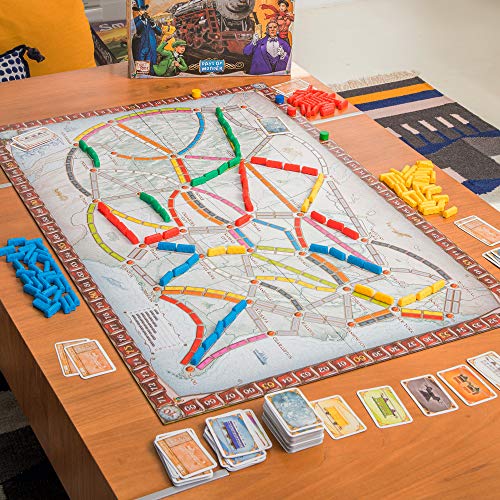
If you love games then you have to check out Ticket To Ride! This fast-paced board game will give you hours of fun with family and friends as you gather train cars and try to take over the board!
Ticket To Ride has many different variations as well so you can play across a variety of different maps.
About the Monopoly pieces
Now that we have seen monopoly and its gameplay, let us now consider its game pieces. The game has its pieces to be a wheelbarrow, an iron, a hat, a ship, a dog, a race car, and a few others. These pieces have meaning among which include, conflict, wealth, hard work, and an agreement between players(faithfulness) among others.
- The car
The car is the most popular piece. It is favored by 1 out of 4 players. Individuals who pick it will in general be cordial, inviting, flexible, and versatile. Players who pick the vehicle will in general be male and are exceptionally energetic.
- The Scottish dog
This piece is favored by 1 out of 5 Monopoly players; it is the second most popular piece. They will in general be more female than male. They view themselves as reliable, faithful, and quick to play. They are intellectually skillful and enthusiastic about winning. Canine players see themselves as mellow daring people and cautious in their system. They take additional time tallying their cash.
- The hat
This game piece is also a joint second most popular piece. It is picked by 1 of every 5 Monopoly players. The hat kind of player will in general be contemplative, all things considered, yet the game is an incredible getaway for them, where they can be somewhat more overwhelming than normal. These players wouldn’t fret causing them to notice themselves or being dubious in the game and play deliberately. They additionally will in general figure the chances of a money related return before making a venture.
- The iron
This is a piece that is equally played by males and females in the game. The iron type of player refers to those who are persisting and prevail despite adversities. Iron types of players are called pluggers.
What do these pieces mean?
Although these pieces tell the different types of players in monopoly, it is not always true of what the player re[resents. Originally the pieces were just items that a rich person would own or use versus items that a poor person would use. For instance, a rich person would own an expensive dog, a car, or a boat, while a poor person would own the wheelbarrow, the iron, or the shoe.
These items for the poor would represent jobs that rich people would hire poor people to do. Although these pieces were originally intended to separate the rich and the poor, the players of this game all start out with the same amount of money, and the same opportunity. This is what allows the players of this game, no matter what piece thy use to actually win the game.
What is Monopoly?
Monopoly is a board game in which players play a two-sided dice in order to go round the board. In this game, you buy and trade properties, you build properties and you collect rent for these properties from opponents. The aim of each player in this game is to make the opponent(s) go into bankruptcy. Money acquired in this game can be lost through game processes like Community chest squares, tax squares and the likes. This game is a game where a player can end up in jail, where such a player would be inactive. A jail term can be ended by performing certain tasks demanded by the opponent.
One thing you should know about monopoly is that it is a game of chance, luck and player skill. Monopoly is played in such a way that the principles are muddled, and numerous players have their own varieties that aren’t recorded in the rulebook. When the game is played with two players, it is advised to up the number of players because of the nature and mechanics of the game. Although it can be played with two players, it is far more fun with more players.
How to set up the game
Open the Monopoly board and lay it on a level surface. Ensure every player has enough space to keep their cash and property deeds before them. You should likewise spread out the Chance and Community Chest cards on the board. They are set apart on the inside. Next, you will want each player to pick a game piece. Every player gets a game piece to move around the board. The game accompanies an enormous determination, yet you can likewise play with any little article. It doesn’t make a difference what piece you pick as they all fill a similar need.
First, you will need to give every player $1500. Prior to the game beginning, the bank gives everyone their beginning cash. It should be $1500 total. Most players like to keep their money and properties in front of them, however you can store your cash any way you need as longyou know where it is and how much you have. Players may likewise trade cash for various bills of a similar worth. For instance, offering $500 to the bank in return for 5 $100s.What then goes next is to pick a banker. This player is responsible for all the cash, property, houses, lodgings despite everything having a place with the bank. The broker can in any case play the game, however they should make sure their own cash is independent from the bank’s. If it is simpler, the banker can put the case where most players can reach, permitting individuals to grab cash, houses and properties, giving that they possibly do this when they’re permitted to.
It is then time to roll the dice to pick the primary player. Whoever rolls the most elevated number goes first, and play at that point proceeds clockwise around the load up. You can utilize two shakers or one, whichever you like. A snappier option is for the most youthful or freshest player to go first. This avoids the underlying shakers rolling and gives them a little favourable position. After the main turn, the play goes to the player on the left in a clockwise fashion.
Conclusion
Now that you know what the different pieces originally represented, you can know what piece you should pick up next time. If you have a favorite piece to play with though, since the piece you choose doesn’t matter for the game, you should still try and get that same piece. Sometimes just the knowledge of the game pieces and what they represent can make you look far superior to the other players in the game.
Even though these pieces were designed to separate the poor from the rich, the game has been used to bring people together for many years.