
*This post may contain affiliate links. As an Amazon Associate we earn from qualifying purchases.
Sega Genesis was generally known as the mega drive launched by Sega. Sega Genesis is a 16-bit video game console. Sega is a company that developed and sold Sega Genesis. The Genesis is the Sega company’s third console of the Master System.
Sega uses different names on its devices in different countries. It uses Sega Genesis with the name The Mega Drive in countries like Japan, Europe, and Australia. Similarly, it uses the name Sega Genesis in the USA because of the trademark issue there.
So What Does Sega Genesis Do Not Remove Mean
There are rumors that the slot under the Sega Genesis was a secret way to hook up the Sega Genesis to your PC. Unfortunately, the slot under the console is the expansion slot that plugs into the Mega CD and has nothing to do with hooking up the system to a PC.
It’s similar to the RAM expansion slot on the top of the N64 which also has a Do Not Remove sticker on it. It’s to ensure nothing gets damaged or dusty when not in use.
If you would like to know more about what the Sega Genesis do not remove means, please keep reading.
Are you a huge Sega fan? Then you have to check out the amazing Sonic and Sega gear that you can get. Whether you want a Sonic wallet, a Sega sweatshirt, or a classic hat there are plenty of choices to choose from. You can find them all by clicking here.
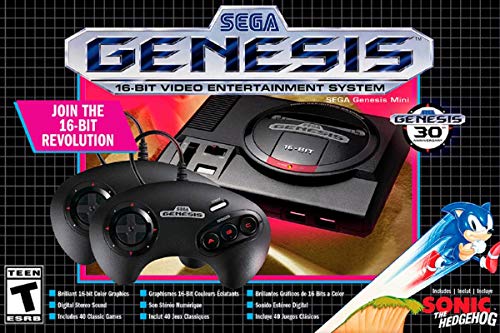
If you love Sega then you will want to check out this Sega Genesis Mini console. It comes with two controllers and even comes preloaded with 42 Games!
Enjoy these classic Sega Genesis games without having to purchase a single game cartridge!
Development Of Sega Genesis
Starting from the early 1980s there were five well known companies working on Sega Genesis based projects. Sega Enterprise is one of those companies that started production of this mega drive. Sega launched its mega product known as a mega drive in the Japanese market on October 2, 1988. Sega also announced its date of the launch of this marvelous product in North America with a date of 2nd January 1989 even though they did not know the basics of the industry of North America.
Cost Of Sega Genesis
Cost is one of those things that play a vital role in the selling of any product. If you have an older second-generation Sega Genesis then it might cost you about $185. Similarly, if you have the new third-generation Sega Genesis that we are talking about costs you about $60. It is that product selling on different platforms such as Walmart at an average price of $50. The decline in the cost is mainly because of the decline in the worldwide cost of tech items.
Sega Genesis Discontinued
The original Sega Genesis that was developed by the company was discontinued in 1997, but its copy is still very popular in different regions of this world. In a rough comparison, almost 150,000 copies of Sega Genesis are sold in Brazil every year. The main thing that ruined Sega is the production of Sega CD, 32X and Saturn. As the Dreamcast came into production and had some success gamers were unable to afford Sega.
Sega Genesis Troubleshooting
Sega Genesis issues is one of the main problems that are faced by the user of Sega or Mega Drive. Many other problems associated with Sega Genesis can be as follows:
- No Picture or Black Screen
If you face the problem of no picture or black screen you have to make sure that the console is fully turned on and the game is fully loaded and inserted in it or not. After that, you have to remove the dust from it and have to clean the gaming port properly to get rid of that problem.
- Won’t Turn On
The second main problem that might happen is the system will not turn on. To get rid of this problem you have to make sure that the AC adapter is properly fitted or plugged in. After you check that, also check to make sure the AC adapter is not tearing from somewhere, If it is tearing, you will need to repair that issue. If the problem still persists, check for the solder point to make sure the connections are still good.
- Showing of Static Screen
The Third main problem in Sega Genesis is the static screen. To get rid of this problem, you have to check that the RF cable is fully plugged in to the television and you also have to check the cable or wire is fully fine having no tears in it.
- Working The Controller Properly
The fourth problem with the Sega Genesis is the working of the controller. To get rid of the issue of the controllers not working correctly, you have to use or apply a different controller into the same port to check if the issue is the controller or the system.if that controller works, then there is an issue in the first controller. If the second controller is not working as well, then there must be an issue in the port or wire or even system.
- No Sound On Sega
The fifth and last issue in the Sega Genesis is the issue of no sound. That is normally an issue of the RF cable. You have to move the RF cable and if it does not start working then you have to replace the RF cable to tackle this situation.
Add Ons
With the advancement in the technologies Sega also announced that to enhance its Sega Genesis, it was going to add 2 add ons in its Genesis. This was mainly done to enhance its capabilities; it launched Sega CD, that is a CD-based system, and similarly, it launched a 32 bit peripheral generally known as Sega 32X.
Sega Genesis Controller
The shape and dimensions of Sega Genesis generally consist of a directional pad. It is usually round in shape with three main buttons in it and having the start button as well. By looking for market requirements Sega also launched its six main buttons interface of Sega genesis in 1993. It usually has three additional buttons.
Sega Virtual Processor
Sega generally works on the virtual processor to meet the time’s requirement. Sega starts work on enhancing the chip it usually has to beat the super Fx which results in creating the Sega virtual processor.
Sega Legacy
Sega Genesis has ranked among the world’s best video game consoles in the world. In 2009 the international games council also announced the Sega Genesis as the world’s best sports games specialist. This is a great achievement for Sega Genesis that started its journey in 1988 and is still ongoing with a great legacy. In 2014, Sega Genesis ranked 6th of 10 in top world game controllers, a great milestone for the Sega Genesis that continues its journey with great success in the field of game controllers.
Without Sega Genesis, the role of playing the game would not mean much. As it ranked among the best controllers, the thinking of its removal did not mean a lot as without Sega Genesis the purpose of playing is not fully satisfied. So this is the overall legacy and means of Sega Genesis from the beginning of production until today.
Conclusion
There are rumors that the slot under the Sega Genesis was a secret way to hook up the Sega Genesis to your PC. Unfortunately, the slot under the console is the expansion slot that plugs into the Mega CD and has nothing to do with hooking up the system to a PC.
It’s similar to the RAM expansion slot on the top of the N64 which also has a Do Not Remove sticker on it. It’s to ensure nothing gets damaged or dusty when not in use.