
*This post may contain affiliate links. As an Amazon Associate we earn from qualifying purchases.
One of the most common problems that players often complain about when it comes to their PlayStation is the overheating issue. Overheating can cause some serious damage to the system and there is definitely a long-term cure for it. Too much gaming at one time can definitely overheat the whole system. In addition to that, the external environment can often contribute to the heating issue too.
So, what happens if your Playstation console overheats?
If your Playstation overheats once it likely won’t cause a ton of issues. You will just need to turn it off or unplug it and give it some time to cool down. If your console overheats quite regularly it can certainly cause some issues with the internal electronics and could even eventually stop working entirely.
If your console overheats on a regular basis then you should take some of the below steps to try and fix the issue with your console.
Your PlayStation is likely one of the major entertainment systems that you cannot live without. Playing games and chilling is a part of the PlayStation routine and there is certainly no harm in it. Since you have invested a lot of money in buying your Playstation console, proper care is one of the main things that you should be focusing on. Luckily, there are multiple ways in which the PlayStation can be properly taken care of to help protect it from all external agents and internal failure too. So, what do you need to do to help prevent your console from overheating in the future?
If you love PlayStation you need to check out this amazing game room light decor. It looks just like the buttons on the PlayStation controller and the light reacts to the music that you are playing as well! You can check it out by clicking here.
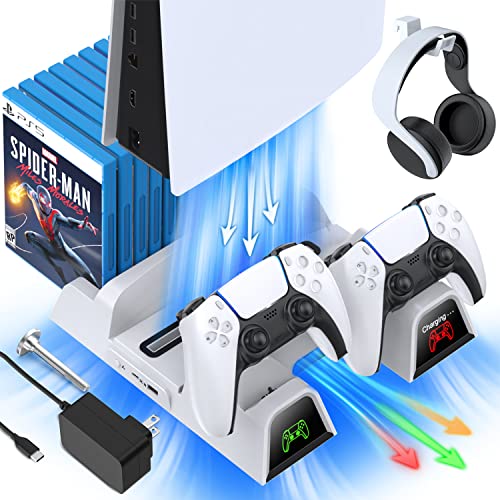
If you have a PlayStation console you should also have one of these stands. It makes it incredibly easy to organize your console and games as well as charge your controllers at the same time.
Plus it has a cooling fan to make sure your console doesn’t overheat when you have your weekend gaming marathons!
What causes your Playstation to overheat?
Rising temperatures for all electrical gadgets out there is not a good sign. It means that there are some factors that are responsible for creating this problem. If you have a PlayStation with you and it is heating up quite easily, then there are probably one or more of these issues present with your console. Learning what causes the overheating in the first place and then finding the solution to each issue will be what we will discuss next.
The room temperature
Overheating of your console will not normally be a one time thing. If you have overheating issues once then you will continue having them until the underlying issue is fixed.
However, overheating doesn’t mean that your system is completely broken. It simply gives you the chance to check the whole system over and find exactly what is causing the issue. On that note, higher room temperatures can significantly contribute to the overheating of your PlayStation device. This is especially true if your console is in a place where it gets direct sunlight through a window or door. In order to handle it immediately, follow the steps below:
- First, switch off or unplug the PlayStation immediately. Do not touch the fan part of the PlayStation as it will normally be quite hot. You also don’t want to move the system at this point as the heated electronics could be more susceptible to damage when moving.
- Once the device slightly cools off then you can move it as needed or simply turn it on again.
Now, you can start playing normally again. Try to keep the room temperature between 60 to 80 degrees Fahrenheit, when playing with your PlayStation. If your console was in direct sunlight it is a good idea to move it to where it won’t be exposed to the sun’s rays.
Too much time spent gaming
Sometimes, game addicts never think of leaving their PlayStation. This action certainly contributes to the factor of overheating. Therefore, controlling the normal temperature of the device is also essential here. If the device is heating up very fast, this could be because you are continuously playing your favorite games for many hours or days at a time.
It is a good idea to let the PlayStation also get some rest and time to cool down. Therefore, all you have to do is take some time away from your console and let it cool off. If you are leaving your console on all the time even when you aren’t playing it then that is not the best idea. It would be better to shut it off entirely when you aren’t playing so that it has a chance to cool down.
Poor ventilation and dust accumulation
Another thing that can often contribute to the overheating issue of your PlayStation is the accumulation of dust and poor air flow. You might be using your PlayStation normally, but the damage here has already begun to start. Lack of ventilation can often contribute to dust particles settling inside of the PlayStation, thereby overheating the device.
In order to take care of your device, follow the steps below:
- First, unplug the whole system from the main outlet and let the PlayStation completely cool off. Do not touch the device now.
- Next, you can either open up the console to clean it out manually or you can purchase a couple of cans of compressed air to blow the accumulated dust away. Assuming you don’t have access to compressed air then you would continue the steps below.
- Take a cloth and rub the insides and the fan area in gentle strokes.
- Avoid rubbing any area that is too hot and come back to it later on.
- Make sure that the cloth is made of microfiber and is completely dry.
- Once you have removed the dust, reassemble the system and then turn it back on
Also keep in mind that having something on top or in close proximity to your console can cause the air not to move properly. It is a good idea to not have anything close to the console and the console sitting flat on top of the furniture by itself with nothing under it that could hinder air flow.
For some additional information on how to handle your Playstation overheating check out the video below.
Some preventive measures
Even if you haven’t had issues with your Playstation overheating yet it is still a good idea to take some steps to prevent the overheating from ever taking place. Some of the best and easiest preventative steps that you can take are:
Keep up with regular cleaning
Regular cleaning is always a good idea for your console. Never let your device go through the ordeal of dust accumulation and poor ventilation. Always keep a microfiber cloth handy and gently clean the surface of the PlayStation regularly. It is also a good idea to have some compressed air and blow out the fan area once or twice a month. This will help in keeping your device working properly and should help prevent overheating.
Update the console
Console manufacturers will put out software updates for their consoles quite regularly. It is a good idea to keep up on those as software issues can sometimes cause overheating as well. Keeping your console up to date is a great way to avoid any issues coming from the software.
Avoid Hot Areas
As mentioned above rooms that are hot or have direct sunlight coming in should be avoided if possible. If you are going to be out of town for a while or know a specific room in your house always gets hotter in the summer then moving your console to a cooler room is a great preventative step to take to avoid the overheating ever happening.
Conclusion
It is a major concern for all players out there when it comes to overheating problems related to the PlayStation. However, instead of panicking at the moment, try to focus on the solution first.
The easiest thing that you can do to cool off the device immediately is to allow proper air and ventilation first. Once you have done that you can either open up the console to clean out the dust or debris or use some fast moving air to clean it out.
If you do have to open the console to clean out the dust you will want to avoid opening the device immediately after overheating to prevent any damage. Also, if you have no experience in how to deal with overheating, then check out ways to open up the PlayStation in one of the many videos online. When you are cleaning the Playstation you will want to make sure to use a dry microfiber cloth and never use a damp one to clean your electronics.
With just a little bit of precaution and making smart decisions you can keep your playstation from overheating or resolve the overheating problems easily.