
*This post may contain affiliate links. As an Amazon Associate we earn from qualifying purchases.
Monopoly is a popular board game that has many different intricate rules that you have to learn to excel at the game. As the game progresses you will eventually have someone who won’t be able to pay what they owe. But what happens at that point?
When you can’t pay in Monopoly or you run out of money you will have to either sell your houses/hotels, mortgage your properties or sell/trade them to pay your debt. If you don’t have anything left to mortgage or sell in Monopoly you will be declared bankrupt and then everything that you have will go to the person who you were unable to pay.
Once this happens you are officially out of the game.
Most of the time when this happens your properties etc. will go to another player but what if you owed the money to the bank due to a community chest card or landing on a square on the board? Well in that case all of your properties would then go back to the bank and be able to be sold again to other players.
Most of the time when a player goes bankrupt it will be because they couldn’t afford to pay for landing on a property that had houses or hotels on it. In that case, the owner of that property that you were unable to pay would get all of your money and properties in exchange.
In the case of you owing money to a creditor in Monopoly, you can only mortgage unimproved properties according to Monopoly’s rules. So if you own houses on a property you will need to sell those back to the bank before you then try to mortgage the property.
Monopoly is a board game currently published by Hasbro. In the game, players roll two six-sided dice to move around the game board, buying and trading properties, and developing them with houses and hotels. Players collect rent from their opponents, with the goal being to drive them into bankruptcy.
Money can also be gained or lost through Chance and Community Chest cards, and tax squares; players can end up in jail, which they cannot move from until they have met one of several conditions.
The game has numerous house rules, and hundreds of different editions exist, as well as many spin-offs and related media. Monopoly has become a part of international popular culture, having been licensed locally in more than 103 countries and printed in more than 37 languages.
If you would like to know more about what happens when you cannot pay in Monopoly, Please keep reading or check out this video!
If you love board or card games then you have to check out the game called Throw Throw Burrito! It is a fun fast-paced game where you throw squishy burritos at other people you are playing with! You can learn more by clicking here.
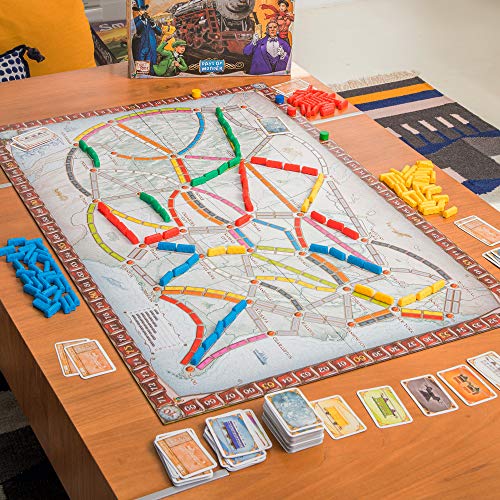
If you love games then you have to check out Ticket To Ride! This fast-paced board game will give you hours of fun with family and friends as you gather train cars and try to take over the board!
Ticket To Ride has many different variations as well so you can play across a variety of different maps.
Important Monopoly Rules
As you go around the board while playing Monopoly you will roll the dice and move the number of spaces that it shows on them. If you roll doubles then you will get to take another turn.
As you move your playing pieces around the board and land on properties from Vermont to Park Place and Boardwalk you will have the option to either purchase them or put them up for auction. If you land on the jail spot you will be “just visiting”. If you land on the Go To Jail space then of course you will actually be in jail.
After going to jail on your next turn you can try and roll doubles to get out of jail for free or use a get out of jail free card. If you don’t do either of those things you will have to pay $50 to get out of jail on your third turn.
As you move around the board your goal should be to purchase as much unowned property as possible. This is especially important as it will allow you to get a matching color-group which allows you to build houses and hotels (and hopefully win the game).
You also shouldn’t avoid buying railroads or utilities. Although you can’t build houses and hotels on them you can collect tons of rent if you own multiple of these types of properties.
Monopoly House Rules
One thing to remember when playing Monopoly is that there are many house rules such as putting extra money in Free Parking or using extra pieces for houses or hotels (there are only a limited number of houses in Monopoly according to the official rules).
Another common house rule is that as you move your tokens around the board if you land on Go you will get double salaries. Again there is nothing in the official Monopoly rules about getting bonuses just because you land on Go instead of passing it.
All of these house rules are okay to play with as long as you agree about them ahead of time. The problem comes in when everyone plays by different house rules and they don’t agree on them ahead of time.
So if you don’t intend on playing with the official Monopoly rules be sure and discuss it before starting.
Monopoly Game Setup
Now the board game equipment will need to be set up. Open the Monopoly board and lay it on a level surface. Ensure every player has enough space to keep their cash and property deeds in front of them.
You should likewise spread out the Chance and Community Chest cards on the board. They are set apart on the inside. Each player must pick a game piece. Every player gets a game piece to move around the board.
The game pieces are included, yet you can likewise play with any little article. It doesn’t make a difference what piece you pick as they all fill a similar need.
You will need to give every player $1500. Prior to the game beginning, the banker gives everyone their beginning cash. It should be $1500. Most players like to keep their money arranged in front of them, however, you can store your cash any way you need to as long as you know what it’s worth before you.
Players may likewise trade cash for various bills of similar worth. For instance, offering a $500 bill to the bank in return for 5 $100s.What then happens next is to pick a banker. This player is responsible for all the cash, property, houses, and lodgings despite everything having a place with the bank.
The banker can in any case play the game, however, they should make sure their own cash is independent of the banks. If it is simpler, the banker can put the case where most players can reach, permitting individuals to grab cash, houses, and properties, given that they only do this when they are permitted to.
It is then time to roll the dice to pick the player who is going to go first. Whoever rolls the highest number goes first, and play at that point proceeds clockwise around the board. You should use two dice when playing the game.
An easier option rather than rolling to see who will go first is for the youngest or oldest player to go first. This avoids the underlying dice rolling and gives them a little favorable position.
After the first turn, the play goes to the player on the left in a clockwise fashion.
Losing The Game Of Monopoly
There is only one way that you lose in the game of Monopoly and that is to declare bankruptcy. To be bankrupt in Monopoly you will have to owe more money than what you can raise through the sale or mortgaging of your properties.
When you are bankrupt in Monopoly, you owe more than you have. It is a situation in which you do not have enough to offset what you owe someone else. This debt can be to the bank or to another player in the game.
If the bankrupt player owes money to the bank then when you go bankrupt you will give all of your assets to the bank as well. If you owe money to another player then when you go bankrupt they will get all of your assets as well.
One thing to keep in mind is that if you have any mortgaged property they stay mortgaged even when they transfer to another player in the event of your bankruptcy from not being able to pay rents. So the new owner will need to pay the bank to unmortgage the deed card that they now own.
The mortgage values are half of the purchase price of the property (of course you can also just look at the back of the title deed cards). To pay off the mortgage you will have to pay back half the value of the property plus a 10% fee to the bank.
Of course, if the properties were returned to the bank then they will no longer be mortgaged when they are resold to other players.
What Happens With Mortgaged Property In Monopoly?
If a player in Monopoly chooses to mortgage the property, they will receive half of the purchase price from the bank in exchange for agreeing to not develop the property (meaning you can’t add houses and hotels to a mortgaged property).
Once a property is mortgaged, it cannot be developed or used in any way by the owner until the mortgage is paid off. This also means that other players are not required to pay rent when they land on the mortgaged property, and the owner cannot collect any income from it.
The property remains in the possession of the owner, but it is essentially inactive until the mortgage is lifted.
To lift the mortgage, the owner must pay the bank the original mortgage price of the property plus an additional 10% interest. This can be a costly endeavor, but it is necessary if the owner wants to develop the property and collect rent from other players.
While mortgaging a property may provide a quick influx of cash for the owner, it also puts them at a disadvantage as they cannot collect rent or develop the property until the mortgage is lifted. It is a strategic decision that players must consider carefully before choosing to mortgage their property.
How Do You Mortgage Property In Monopoly?
Mortgaging property in Monopoly is a common way for players to generate cash when they are in need of funds. To mortgage a property, the player must first own the property and not have any buildings on it.
The player then takes the property card and places it face down on the board (or wherever they keep their properties), indicating that it has been mortgaged.
The player then receives the mortgage value of the property, which is typically half of the purchase price of the property. For example, if a player buys Boardwalk for $400, they can mortgage it for $200.
The player can later unmortgage the property by paying the mortgage value plus an additional 10% interest. So, in the example above, the player would need to pay $220 to unmortgage Boardwalk.
While mortgaging property can provide a quick influx of cash, it does have drawbacks. The player cannot collect rent on a mortgaged property, so if another player lands on the property, they do not have to pay rent to the owner.
What Happens If You Can’t Pay Rent In Monopoly?
If you can’t pay rent in Monopoly, there are a few potential consequences that could happen.
First, the other player who owns the property you landed on has the option to collect any assets you have, such as houses or hotels and even properties via trade, in order to make up for the unpaid rent.
If you don’t have any assets to give, they can force you to mortgage your properties, sell all that you have and even force the sale or trade of your properties so you can pay the rent that you owe. Until your debt is paid play does not continue.
If you don’t have anything of value left or no one is willing to trade with you so you can pay off your debt then you will be declared bankrupt. All of your money/property will go to the person to who you owe the debt and you will be out of the game.
Conclusion
If there is ever a point in the game where you owe money to people and you do not have any money left including any properties to mortgage, then you will need to either make a trade with another player for money or go bankrupt and lose the game.