
*This post may contain affiliate links. As an Amazon Associate we earn from qualifying purchases.
Have you ever been playing a game and wondered what the penalty was for hitting someone else’s ball in a pocket? Should it be brought back out, or left in the pocket? Well, in this article we will go over everything you need to know about this and all of the rules for different pool games.
So what happens if you pocket your opponent’s ball in pool?
If you hit your opponent’s ball into a pocket while you are playing pool, the ball will stay in the pocket and your turn will be over unless you were able to pocket one of your own balls as well.
So if you are stripes and you knock one or more of your opponent’s solids into a pocket the pocketed balls stay in the pocket. You don’t get to take another turn unless you also hit one of your own balls into a pocket as well. So if you hit a solid ball into the pocket it doesn’t get taken out even if you were shooting at a stripe ball.
Any balls that you knock into a pocket stay in the pocket except for in the case of a scratch. In that case, you take out the cue ball and your opponent has an open table and you lose your turn.
But what happens if you hit your opponent’s ball first?
If you hit your opponent’s ball first it counts as a foul/scratch and your opponent gets the cue ball in hand. That means they can place the cue ball anywhere on the table that they like and shoot at whichever ball is on the table that they like as well.
I will go into more detail about what happens when you hit your opponent’s ball first as well as cover other common issues when hitting your opponent’s ball in pool in the next section of this article.
If you want to know more about pool and pocketing someone else’s ball, you will want to keep reading. You can also watch this short video to learn all of the official rules of 8 ball as that is what almost everyone plays.
If you are looking to get better at playing pool one of the best ways to do that is by upgrading your pool cue. One of my favorite cues is the Viking Valhalla. It is available in a variety of colors and won’t break the bank. You can find it by clicking here.
In Pool Can You Hit The Opponent’s Ball To Make Yours? (Can You Hit Their Ball First?)
There are many different rules that you must follow when playing the game of pool. It is important to know what you can and cannot do. If your ball is tucked in behind your opponent’s ball can you hit their ball first?
According to the official BCA (Billiard Congress Of America) pool rules, you cannot hit your opponent’s ball first. If you do accidentally hit their ball first it is not a legal shot and counts as a foul which gives you a loss of turn and your opponent will get the cue ball in hand.
That means your opponent can now place the cue ball anywhere on the table that they like and can shoot at any ball on the table as well. So, you will want to avoid hitting your opponent’s ball first and only hit a legal object ball as giving them the ball in hand gives them a great advantage.
Giving your opponent an advantage like this where they can place the cue ball anywhere will likely allow them to be able to pocket multiple balls and get far ahead of you in the game and possibly even hand them the game on a silver platter.
So you don’t want to hit your opponent’s ball first even if it is in the way of your perfect shot.
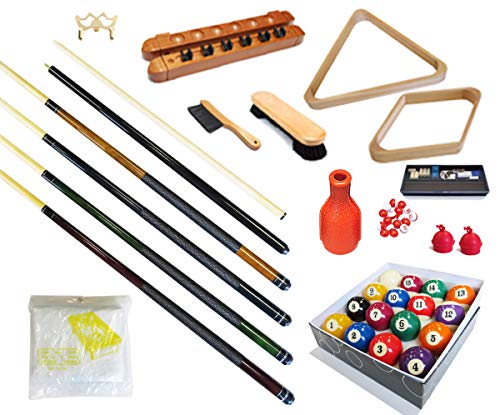
If you have a pool table then you need to get this accessory kit. It includes pool cues, extra pool balls, and all the gear you need to keep your pool table in tip-top shape.
If you are tired of your kids (or friends) ruining your good pool cue when they play then having these extra ones will keep that from happening (just be sure to hide your good one!).
Is It A Scratch If You Hit The Opponent’s Ball First? (What Happens?)
If you are playing pool and you accidentally hit your opponent’s ball first what happens? Do you just put their ball back where it was? What if the cue ball caroms off a bumper and hits the solid colors (when you are stripes)?
Does it count as a scratch if you hit your opponent’s ball first?
If you are the shooter and you hit your opponent’s ball before hitting your own it counts as an infraction/foul. The foul penalties are that your turn ends and your opponent gets the ball in hand.
So yes, if you hit your opponent’s ball first it is a scratch in pool!
It doesn’t matter if you hit a bumper first before hitting your opponent’s ball or not. If you hit a ball of his group it counts as a scratch and he can now place the cue ball anywhere on the table and shoot at any ball on the table.
Some people think that if you scratch (in any manner) that the cue ball must be put behind the head string and that the incoming player cannot shoot at a numbered ball that is on that same side of the headstring. However, that is not an official rule.
The only time when you have to put the cue ball behind the head string is if your opponent jumps the ball off the table on the break. Beyond that, a foul or scratch is always ball in hand.
When there is a scratch or foul (whether they are intentional fouls or not) your opponent gets the cue ball in hand and has an open table (can shoot at any of their balls that they wish).
Another thing to keep in mind is that you can’t shoot a “safety shot” where you hit a certain number of bumpers and then hit your opponent’s ball. You CAN NEVER hit your opponent’s ball first or it counts as a foul and they get the cue ball in hand.
Even if you accidentally hit the cue ball with a forward stroke motion and the cue ball bounces sideways hitting your opponent’s ball it still counts as a foul. Whether you intended to hit your opponent’s ball or not does not matter, it is still a foul.
There is only one time when it doesn’t matter which type of pool ball you hit… and that is before any balls have been pocketed. If the breaker doesn’t manage to put any balls into the pocket despite hitting a legal break shot you then choose which ball you want to shoot at and can even hit any ball first that you like.
Matter of fact in this scenario you can hit a solid ball to pocket a striped ball if you wish without any penalty. But once a player has pocketed a specific type of pool ball then you are no longer allowed to hit your opponent’s ball without it being a foul.
Can You Hit The Opponent’s Ball Before The 8-Ball?
When you are shooting at the 8 ball in pool you are required to call your intended pocket. If you call a pocket and it goes into a different pocket then that counts as a loss of the game.
So obviously it is important that you not only knock the ball in but also that you pocket the called object ball in the correct pocket. But what about if your opponent still has balls on the table?
Since you no longer have any obvious balls on the table that are “yours” does that mean that you can hit your opponent’s balls first? Or do you still have to only hit the 8 ball?
Even if you have no balls left beside the 8 ball you still CAN NOT hit your opponent’s balls first. If the offending player hits the other player’s ball first it counts as a foul/scratch and the shooter’s turn is over.
The opponent then gets the cue ball in hand as with every other normal scratch/foul.
Just because you committed a foul on the 8 ball doesn’t mean a loss of game however as the only time you lose when you scratch on the 8 ball is if you hit the cue ball in while hitting in the 8 ball on the same turn.
You had your choice of groups of balls at the beginning of the game and you keep that as your group for the entirety of the game (even when shooting for the 8 ball). Just because your opponent has other balls left and you don’t doesn’t mean that you can hit them.
The object of the game of pool is to knock in all of your balls (including the 8 ball) before your opponent does. So it makes sense that one of you will still have balls on the table while the other player is shooting at the 8 ball.
However, just because you have pocketed all of your balls does not mean that you can now hit your opponent’s balls first. Even if the cue ball barely kisses one of your opponent’s balls it still counts as a foul and a scratch.
Is It A Foul To Pot Your Opponent’s Ball In Pool?
If you hit in your opponent’s ball when you are playing pool does that count as a foul? Does anything happen if you hit their ball in?
If you hit your opponent’s ball into the pocket it is not a foul unless you hit their ball before hitting your own. However, you do not get to go again unless you also knock in one of your balls.
Essentially since you are giving your opponent a free ball into the pocket there is no rule about not being able to do it. So if you accidentally knock your opponent’s ball into a pocket and also knock one of your balls in then you get to go again.
If you only knock the opponent’s ball into the pocket then your turn is over and it is your opponent’s turn.
What Happens If You Pot Your Ball And An Opponent’s Ball In Pool?
When you are playing pool (and you aren’t very experienced) you will find that sometimes you will accidentally hit your ball into a pocket and in the same turn knock an opponent’s ball in. If that scenario happens what do the rules say you should do?
If you hit your ball and your opponent’s ball into a pocket on the same turn you get to take another turn since you knocked in one of your balls. There is no penalty or foul for knocking in your opponent’s balls assuming that you hit your ball first.
If you hit your opponent’s ball first and then pocketed it and your ball that is a foul and your opponent gets the cue ball in hand. However, even in that scenario both of the pocketed balls stay in the pocket but your turn is over since you committed a foul.
If you hit your own ball first and it goes in the pocket as well as potting one of your opponent’s balls it is still your turn since no foul has occurred.
Conclusion
Hitting your opponent’s ball in any pool game is never a good idea, and no matter what game you’re playing, you will get a penalty if you hit the other player’s ball into a pocket. Some games even go as far as giving you a penalty if the cue ball even touches their ball before it touches anything else.
This is why it is important to make sure that you do not hit another player’s ball, and you definitely do not want to hit their ball into the pocket as that can easily cost you the game.