
*This post may contain affiliate links. As an Amazon Associate we earn from qualifying purchases.
Do you have an old Atari that you are wanting to sell to try to make some money? Maybe you heard they are worth quite a bit so you wanted to try and make a little bit while they are popular. Well, in this article we will go over everything you need to know about selling your old Atari.
So where can I sell my old Atari?
There are many places to sell your old Atari. Probably one of the best places for you to sell it is online locally. Many people use Facebook Marketplace or local Facebook groups that allow people to post items for sale. Other people have taken it to pawn shops, or sold it online using Ebay. You can also sell it online at various websites as well as some people sell their Atari on Amazon.
If you want to know more about selling your Atari, you will want to keep reading this article. You can also check out this video to learn all about Atari and where it began!
If you are an old-school Atari lover then you have to get a classic Atari T-Shirt to show it! To see the most popular Atari T-Shirt retro designs that will stay classics for years just click here.
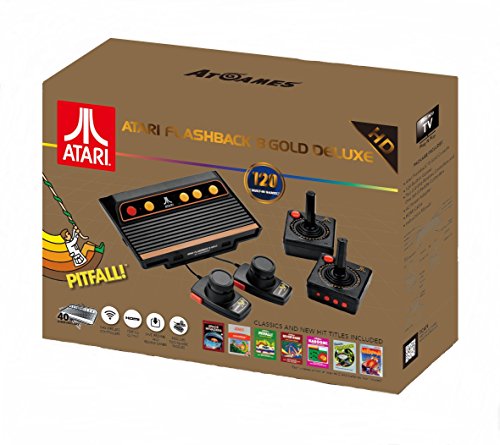
If you love all things Atari then you have to check out this awesome Atari Flashback console.
The Atari Flashback 8 comes with two wireless controllers (YES, WIRELESS!) two paddle controllers, and 120 authentic Atari games.
Where is the best place to sell your Atari?
Locally
If you’re wanting to sell local, I would consider Craigslist or Facebook Marketplace. If you’re wanting to sell it the fastest, I would recommend the pawn shop or a game store.
The pawn shop will almost always low-ball you unless you know how to barter, and game stores generally have a set trade-in value that isn’t very high. Of course if selling person to person, always meet up in a public, populated area if possible (preferably with an outlet to show them that it still works).
Online
Here’s a list of a few websites where you can sell your old Atari online!
Buybackworld.com
You can quickly select your Atari 2600 Gaming System using their search bar or step by step method so that you receive an accurate instant quote. Their goal is to make selling your Atari 2600 Gaming System the quickest, and easiest way to sell and trade-in online. They provide free shipping on all orders, pay quickly, and your instant quote value is good for 30 days.
BuyBackWorld.com buys your used, old, broken and unwanted Atari 2600 Gaming Systems. To sell your Atari 2600 Gaming System for cash, simply find your gaming system, tell them the condition, and get your instant quote. Once you have an instant quote, you can tell them where they need to ship your free shipping kit, to mail them the item. Once you receive the mailing kit, you can simply ship your Atari to them and wait for the check to be delivered.
Every order gets a free shipping kit. There are no pictures to take or listing hassles to manage, and you can get an instant quote for your used electronics and other items. Most of the time, you can be on your way to extra cash in less than 60 seconds. All payments are sent within two business days of an item passing inspection and they offer the most payment options in the industry. You can be paid via check, PayPal, direct deposit, BuyBackWorld.com gift cards, or a prepaid debit card. These options are limitless, and they want your business.
Estarland.com
If your old Atari is collecting dust in your basement, you will definitely want to consider this option!
All you have to do is to build your account balance with your trade-ins, and request a payment at any time. For your convenience, there are 4 payment options available when you want to receive your money. You can also use the credit to purchase other games or gaming systems that they have on their website.
There are three simple steps to follow to get cash.
FIND IT
Find your items and click on the “Trade-In” button to add them to your cart. From there all you do is simply checkout. You can search items by title or UPC number.
SEND IT
Pack and ship your trade-in. You may be eligible to receive a free ground shipping label to send your trade-ins to them.
GET CASH
Once your trade-in is completed, request a payment from your account page. You can get a direct payment, or you can use the money to buy items on their website.
Pricecharting.com
Although this website does not buy the Atari system, it does buy every game for the system. They also have a pricing guide for every game for your system. This is the easiest way to keep track of the value of your games for your Atari and which ones are selling for a premium right now.
eBay.com
eBay is everyone’s go to option when it comes to selling something online. Not only is it easy to sell on Ebay, but many people find that items will sell for a premium, as well as they do not charge very many fees for selling items. Ebay is also known to allow you to list your item for free and not pay anything unless the item sells! This is very important as no one wants to pay to list an item that they are not sure someone is willing to pay for.
Amazon.com
Recently Amazon has become a big competitor in the used gaming system world. Originally they only sold brand new items, but over the years Amazon has grown into a great place to sell your items.
They allow you to post many items for sale, and because so many people shop on their website, it normally doesn’t take long for your item to sell.
History of the Atari
The Atari 2600 originally released in 1977. It was the first successful video game system without built in games. The Atari 2600, while in the end reigned supreme, it had stiff competition early in its life. Once the original Pong craze ended, consumers finally realized the Atari 2600s true capabilities.
With this came possibly the first ever game that was considered a shooting game. This game was extremely popular and was called Space Invaders.
Atari began picking up momentum once Space Invaders was released. This ended up paving the way for must have games such as: Demon Attack, Pitfall, Defender, Asteroids, Missile Command, Kaboom, River Raid, and Montezuma’s Revenge.
Aside from original Atari releases, a large number of third-party companies produced games for the system as well. This caused a huge saturation of the market and eventually led to the video game crash of 1983.
Some of the more popular Third-Party games included: Q*Bert, Popeye, Super Cobra, Frogger, Congo Bongo, and Space Jockey.
Even through all of this, Atari was still able to come out on top and be a super popular gaming system that even today many people still play.
Conclusion
Now that you know where to sell your Atrai, you can decide how quickly you want to sell it, and where the best place to sell it is. There are many options to sell your Atari, but when you are selling it, you will always want to be safe.
If you sell it locally, you will want to meet in a safe location as well as not at your home. Most people will choose a public place where people will be present. This keeps both parties safe when making the transaction. If you are selling online, you will want to watch out for scammers and make sure you have the money in your account before you ever ship the item to someone.