
*This post may contain affiliate links. As an Amazon Associate we earn from qualifying purchases.
Have you ever been moving out of a house and wondered who accepts pool tables as a donation? Maybe you have run into the problem of the table is too heavy to move and you want someone to come and get it. Well, in this article we will go over everything you need to know about pool tables and who accepts them as a donation.
So who accepts pool table donations?
Although most organizations such as Goodwill and other thrift stores will accept your pool table, you are responsible for getting it to their location. If you want someone to come and get the pool table from your house, you may have to contact a local thrift store, or create a post on Facebook giving it away.
If you want to know more about donating a pool table, you will want to keep reading this article. You can also watch this short video to learn how to move a pool table without damaging it.
If you are looking to get better at playing pool one of the best ways to do that is by upgrading your pool cue. One of my favorite cues is the Viking Valhalla. It is available in a variety of colors and won’t break the bank. You can find it by clicking here.
Who would want a pool table?
Pool is a game and form of recreation that is loved by people of all ages. Most of the game enthusiasts have their own pool table to enjoy and play more to sharpen their skills without any pressure. However, times may change, and the object that was a source of fun now needs to be discarded. Different people have different reasons for disposing of their pool tables and may include moving to a new residence, creating more space within the house, or buying a better quality table.
No matter what the reason is, some pool tables may still be usable and can benefit someone else. This is why they should not be dumped into the garbage if someone else can use it. As a way of giving back to the community, you can choose to donate your pool table to an individual or an organization within your community. Donation benefits the recipient, but in some countries, a donor may also receive a direct reward. You may be having the heart to give away your pool table, but the question comes down to who do you give it to?
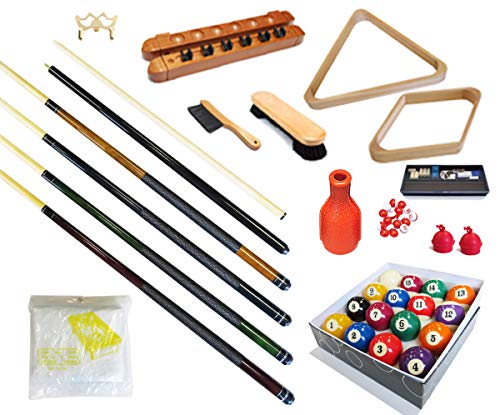
If you have a pool table then you need to get this accessory kit. It includes pool cues, extra pool balls, and all the gear you need to keep your pool table in tip-top shape.
If you are tired of your kids (or friends) ruining your good pool cue when they play then having these extra ones will keep that from happening (just be sure to hide your good one!).
What is the donation procedure?
When you have fully determined that you are going to donate your pool table, you should do the following things.
The first thing you should do is to thoroughly clean the table as well as all of its accessories. Pool table accessories include cue balls, cue sticks, chalk, cloth brushes, rack, etc. Organizations will not accept anything simply because it is a donation. Your table will be more appealing when it is in the best condition possible in terms of functionality and cleanliness. To clean the table, vacuum any dust off the felt and frame and wipe the cues and the balls using a microfiber fabric. You will also want to consider polishing the table finish to enhance its appearance. As you clean, ensure that every part of the pool table including pockets are intact
Next, you will need to find an organization to give your table to. Within your community, there might be organizations that accept pool table donations. You can think of the possible institutions and look for their contact information. These could be charities, after-school programs, or community recreation centers. Some people will even donate it to a local church as this counts a tax writeoff, and the church will use it as a program for the kids in the church to play.
After making a list, you will want to contact each organization to verify whether they accept pool table donations and inquire if they would be interested in yours too. In some instances, you will be required to provide the table details such as the size, brand, age, current condition, available accessories, etc. and reason for your donation before the organization expresses its interest in your gift. When you reach an agreement with a recipient, ensure you settle on the day and time of pick up as well as who will be responsible for the moving of the table.
Next you will need to plan for the table to be moved. A pool table cannot be transported as a unit from one place to another. There are many reasons for this including the table will not fit through doorways, it is extremely delicate, as well as most pool tables are extremely heavy. In most cases, you will have to dismantle the table on your own, or you can hire a professional.
Some organizations who are picking up the table may also be able to take the table apart for you. This is something that should be discussed while you are on the phone with them. Disassembling the pool table makes transportation easier. In case the organization agrees to pick the item from your home, you may only need to help in carrying the parts and accessories into the truck. On the other hand, some may require you to deliver the equipment to their property. This is something you should consider before you agree to donate the table to a charity.
When the donation is tax-deductible, and the organization is 501(c), remember to ask for a donation receipt after the delivery or pick-up of the table.
What if I cannot find a charity to donate it to?
When you fail to find an organization that is interested in your pool table donation, you can consider other strategies that include selling it locally, or posting it for free to someone in need.
A pawn shop or store selling used sports items is another option that you can explore if the direct donation does not work out.
If all else fails and your table has to be taken to the garbage, you will have to make a special arrangement for its collection and disposal since it is a bulky item. Discarding the pool table may be more tedious than acquiring one despite the numerous options available.
Does every organization accept pool tables?
When you decide to donate your table, you must find an organization that accepts your item. The organization can be within your local community or outside of it. Most of the groups are usually involved in sporting activities and include youth centers, seniors’ homes, church groups, community recreational centers, and other charity organizations.
For example, the Boys and Girls Club of Delaware has numerous local branches that accept various sporting equipment donations. This includes pool tables and its accessories. The needs may vary depending on the region and season, so you will always want to contact the company in your local area and ask them.
Do any places come and get the table?
Some groups offer free disassembly and collection of pool tables. They will then take them to their stores where organizations in need can make applications and receive the donations. Some of the wholesale sports stores do this as a way of giving back to society.
Sometimes, finding an institution may not be possible, but you can consider giving your table to an individual within the neighborhood who might be in need. There are always people in need in your area, and sometimes a pool table would be fun for a family to have in their home.
Conclusion
When you want to get rid of your pool table for whatever reason, if it is still in good shape, you should always consider donating it. Organizations that accept pool table donations may be found within your local community and include after school youth-centers, community recreation centers, seniors’ homes, church groups, and other charities.
You can also donate to individuals within your neighborhood. Even though you may not get a tax write-off for a donation to a person, sometimes giving back just feels good.