
*This post may contain affiliate links. As an Amazon Associate we earn from qualifying purchases.
Sega CD games. It can be one of those that are a nightmare to find not shattered to pieces or cracked. A decade ago, Sega CD collectors used to buy carrier cases of 10 Saturn games that were old new stock and cannibalize them. They had to destroy copies of the courier crisis to get excellent examples for Sega CD.
So why are Sega CD games so expensive?
Sega CD games are expensive because of the high demand for them from collectors. Since these games are no longer being produced by Sega the price of them is largely controlled by the supply and demand among collectors.
If you would like to know more about this topic, you will want to keep reading this article. Below is a video on this topic.
Are you a huge Sega fan? Then you have to check out the amazing Sonic and Sega gear that you can get. Whether you want a Sonic wallet, a Sega sweatshirt, or a classic hat there are plenty of choices to choose from. You can find them all by clicking here.
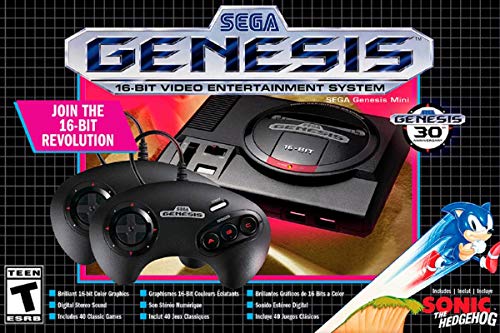
If you love Sega then you will want to check out this Sega Genesis Mini console. It comes with two controllers and even comes preloaded with 42 Games!
Enjoy these classic Sega Genesis games without having to purchase a single game cartridge!
Unit and Graphics Enhancements
Sega CD games had more storage, and allowed for games to be nearly 320 times larger than Genesis cartridges.
Sega CD games became familiar for several well-received games such as Sonic CD and Lunar.
Sega CD games introduced memorable games that can be played on modern systems without the need for the actual Sega CD hardware.
The rarest and most valuable Sega CD games
The Sega CD was ahead of its time and didn’t get the support it deserved. Despite its reputation, there are a handful of collectible titles in the cult genre like RPGs and 2D Shooters. Note that some of these games are not infrequent in the sense that there are not many accessible, but limited relative to demand which makes the games expensive.
The most unusual and most valuable Sega CD games
Keio Flying Squadron: Keio stuck out from the crowd because of its heavy use of Japanese culture throughout the game itself and on the box art. At that time, it was repackaged in another way to appeal to western markets.
Snatcher: This is a game that came out during the last days of a short-lived console. And is only discovered by hardcore gamers. Snatcher is generally regarded as groundbreaking for the adventure genre. It initiated visual novel attributes to search out a deep back story.
Snatcher started to become the main cult classic title that Sega CD fans began to talk about and was typically demanding the top prices within the Sega DC library.
The Space Adventure: Most Sega fans didn’t notice that this game showed up until the collecting scene started growing. The title may have risen out of obscurity with die-hard Sega CD collectors, and it does have some redeeming qualities such as graphical presentation and plot.
Popful Mail: The most well-known work was the Lunar Series, but Popful Mail is one of the quirkier and harder to find of their Sega CD releases. The game is pretty, funny, and quirky, and better yet, it made it out of Japan.
Radical Rex: Radical Rex is one of the rarest, because copies on eBay only have a completed sale once or twice a month.
Earthworm Jim: The most popular characters of the Tude era of mascots, Earthworm Jim stood Earthworm above shoulders on the rest with incredible visuals, endearing characters, and non-stop action.
Shining Force CD: When the Sega CDs entry into the Shining Force Strategy RPG series hit the shelves, it was at the height of the series popularity. So it’s completely understandable why the Shining Force CD is so desired among fans of that genre.
Fatal Fury Special: The Deadly Fury Series was an early cornerstone franchise for SNK, and the series did get some ports to other platforms. It also happens to be one of the rarest Sega CD games in the library.
Lunar Eternal Blue: One of working designs first big project was working on A Lunar Silver Star, which was named best RPG of 1993 by a game fun magazine. And eventually it went on to become the best Sega CD title of all time. Lunar Eternal Blue was released late in the Sega CDs lifespan, so it’s harder to come by. The game is classic and will keep you busy for a long time.
Lord of Thunder: This game has earned a place atop shooter fanatics and Sega collectors alike. The Sega CD port may have taken a bit of a visual hit, but was well done overall.
Loading a real Sega CD Copy
It’s not advisable to play Sega CD games through your CD –ROM drive. The process is likely to have problems, and you will experience slow loading times. It’s recommended you rip your Sega CD game to a BIN. Your hard drive has a lot of space. Again, it’s essential to have a digital backup of your game. It will save you just in case your physical copy gets lost or broken.
Here is how you can do it:
- Put the game into your CD – ROM. Give it a moment for windows to load it. While loading, the computer may ask “what do you want to do with this CD?” If this pops up, close the window.
- Ensure that your CD – ROM drive is set with Kega Fusion.
- Go to files to boot your Sega CD. Wait for a moment for the game to load.
- The initial screen you see is the Sega CD BIOS screen. Just press start and the game will begin. If, after pressing start you see the CD player screen instead of the game, there is a problem. It means that your Sega CD game is not valid.
Now that your Sega CD game is running. It’s also vital for you to know about perfect sync and formatting memory.
Perfect Sync
This is a feature that informs Kega Fusion to give fewer commands with the emulation of a Sega CD game. It’s a must for certain Sega CD games to have this feature to be enabled, or else they will lock up at specific points in the beginning.
To enable perfect sync:
- Click on option > perfect sync
- Now load your Sega CD game. You need to restart it if you currently have a Sega CD running.
Formatting Sega CDs memory.
It’s crucial to do this if the game gives you a “backup RAM not initialized” error.
At the Sega CD BIOS screen, push the button you set.
- You will arrive at the CD player screen. Move the hand to the option and access it.
- You will arrive at a screen with some memory info.
- You will arrive at the screen where you can manage your memory. First format your internal memory
- Choose “Yes” to format
- Following format, select the RAM cart.
- Choose “Yes” to format
- Now choose exit
- At the CD player screen, choose CR – ROM to boot CD.
Conclusion
So in conclusion, Sega CDs are expensive since most of them are hard to find and the increase in value. We have also shown you some of the rarest and most valuable Sega CD games. And we’ve given you the steps on how to load, and sync the game to your computer.