
*This post may contain affiliate links. As an Amazon Associate we earn from qualifying purchases.
Many gamers of today wonder and hope to find the real reason behind the horrendous price of Sega games. Have you ever wondered why they are so expensive? Maybe you want to know if you should wait for the prices of these games to go down or if you should instantly purchase them before they increase any further? Well, in this article, we will go over everything you need to know about Sega Games and why they are so expensive.
So why are Sega games so expensive?
Sega games are one of the most expensive games available right now because everyone wants them and they are hard to find. Most of the time if you want to purchase a Sega game, you will have to buy from a collector as you can rarely find them at garage sales or pawn shops.
If you would like to know more about Sega games and why they are so expensive, you will want to keep reading this article. You can also check out this short video to learn all about expensive Sega games.
Are you a huge Sega fan? Then you have to check out the amazing Sonic and Sega gear that you can get. Whether you want a Sonic wallet, a Sega sweatshirt, or a classic hat there are plenty of choices to choose from. You can find them all by clicking here.
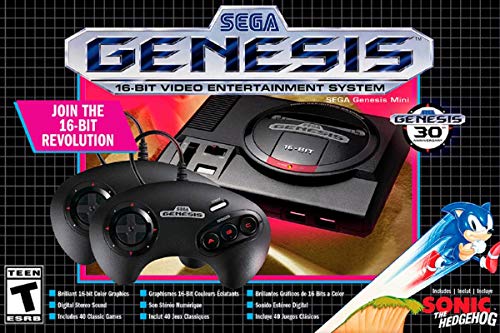
If you love Sega then you will want to check out this Sega Genesis Mini console. It comes with two controllers and even comes preloaded with 42 Games!
Enjoy these classic Sega Genesis games without having to purchase a single game cartridge!
What makes a Sega game expensive?
The prices of these games vary from game to game depending on a lot of different factors. The fact cannot be denied that there has been an overall increase in the prices of all games recently though. The most common reason that the price of a game increases is because of the rareness of the game.
There are some games that are common, such as Panzer Dragoon and Nights. This game has almost doubled their prices simply due to the high market demand for it. These games originally could be purchased for only $15-20 at one point. Today though, it is an entirely different story. If you want to purchase Panzer Dragoon and Nights for the Sega, it will set you back almost $40.
Not only is this crazy, but surprisingly it has not led to a fall in the market demand for these games.
Because there has not been a slow down in demand, the price will only continue to go up as well. Sega games have caught hold of a huge market of gamers who not only enjoy gaming on this console, but are also willing to make these expensive purchases just to play a piece of history.
Are all Sega games this expensive?
Apart from the demand of these games, there are many other Sega games that are expensive. The good news is that not every single Sega game is expensive right now. There are still some games out there that do not have demand for them yet, or that have plenty of copies available. Even though there are some games out there like this, most of those games have even increased in price.
Even though it is not to the extent that some games have, Sega games are one of the most expensive gaming system games that are on the market today.
If you are wanting to purchase Sega games to play, but you do not want to overpay for the games, you will need to do your research and find the games that are not that expensive yet. If you are looking for games to purchase and collect, you may want to look at titles that are extremely popular right now, and then look for those specific titles on the web or in local stores to find cheaper prices.
Doing this will help you increase your potential profit and could ithin even a few weeks or months make you double what you paid.
Is collecting Sega games expensive?
Although by now you know that some Sega games are extremely expensive, you can also find some good deals. This is because as the prices have increased so fast, some people and local stores have not been able to keep up with the rising prices. This can help you purchase specific titles for far less than they are currently selling for if you find the right place to purchase them.
If you are just beginning to collect Sega games, you may want to make sure you have enough money to become the collector. Although you can find games for a couple of dollars, there are some highly sought after titles that can be in the hundreds of dollars for one game. If you are going to have a good collection of Sega games, you will need to have quite a bit of money set aside to purchase them.
If you are selling a different collection though, you may find out that Sega games are not that much more expensive than collecting other items. Depending upon what items you are collecting will depend upon how much money is needed to create your collection. This is true of every single item you collect whether it is Sega games or Original Nintendo games.
Depending upon how big of a collection of Sega games you want, and what titles you want in your collection, it can be decently expensive. It all really depends upon the games you are collecting and the condition of the games you are collecting. If you are collecting Sega games that are loose and used and not in good condition, you will be able to get a lot of games for fairly cheap.
The problem is that if you want good quality Sega games that are in their original packages, you will have to pay a premium. If you do pay that premium though, you may find out that you are the only one with the title in that condition and you could pay for your entire collection simply by selling one of the games in your collection.
Is collecting Sega games risky?
Although there is some risk when you collect Sega games, you always hold the physical item in your possession, which is not risky. It becomes less risky because if the price goes down this year, all you have to do is simply hold the game for a few more years to be able to sell it for far more than what you paid.
As with collecting anything, there is always going to be some risk involved. If there was a way for us to collect something and not take any risk, everyone would be doing it. That is something that sets collectors of Sega games apart. Most of the time they are people who grew up with the gaming console and hold the games for nostalgia purposes. Even though they are considered collectors, most of them do not buy the games to make money, but rather to own and never sell as it is nostalgic to them.
Conclusion
Now that you know why Sega games are so expensive, you can decide for yourself if that is something you want to purchase or if you should wait for the prices to possibly go back down. Although Sega games can be expensive, they can also be a great investment, and a great way to earn some extra money.
There are a lot of different Sega games available and depending upon what you plan to do with the games you buy will depend on how expensive of games you have to buy. No matter what Sega games you plan on buying, even if they seem a little pricey, they will more than likely go up in price. If you are buying a game for nostalgia purposes, then there is no price tag too expensive to bring back memories of your time playing the game.