
*This post may contain affiliate links. As an Amazon Associate we earn from qualifying purchases.
Have you ever wondered what happened to Atari? Maybe you heard they were going to start producing gaming consoles again, but you are not sure. Well, in this article we will go over everything you need to know about Atai and why they failed.
So why did Atari fail?
Even though they are no longer making gaming consoles and technically filed for bankruptcy, the company itself did not fail. The Atari company today is actually making many different parts as well as producing Arcade games called Arcade 1Up machines.
If you want to know more about Atari, you will want to keep reading this article. You can also check out this video to learn about Atari.
If you are an old-school Atari lover then you have to get a classic Atari T-Shirt to show it! To see the most popular Atari T-Shirt retro designs that will stay classics for years just click here.
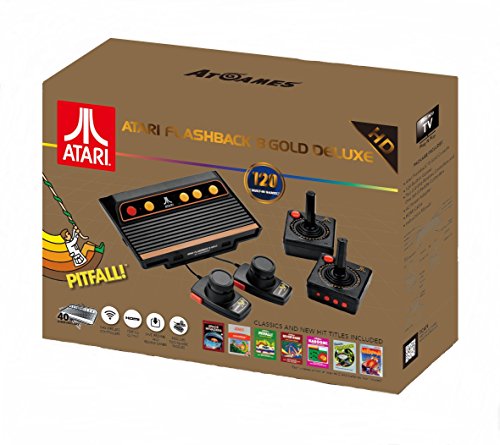
If you love all things Atari then you have to check out this awesome Atari Flashback console.
The Atari Flashback 8 comes with two wireless controllers (YES, WIRELESS!) two paddle controllers, and 120 authentic Atari games.
What happened to Atari?
It is difficult to say what caused Atari to fold. There is a combination of factors that lead to the subsequent dormant period Atari is not a failure as the company is set to make a comeback. According to a statement that was released by the company’s website. In this article, we will explore these factors and dissect the details associated with the 2013 declaration of bankruptcy.
The leading factors
Atari was released in the 1970s and by the end of the decade their numbers reached a staggering 1 million consoles sold they had the full monopoly of the market and they made sure that you were aware that they were the king of the industry. So the conceptual idea of the console was not Atari’s first contribution to the gaming world. The first machines ever released from Atari Inc were, of course, the Arcade games that co-founders Nolan Bushnell And Ted Dameby came up with. It is a widely known fact that the famous Chuck-E cheese franchise was birthed and funded by Bushnell. His first dream had always been to own and run a Pizza Parlour with his arcade machines lining the halls and as everyone is now full on franchise and a beloved venue for children’s parties.
A few blunders
While the franchise was booming and numbers were soaring for the owner and co-founder Nolan Bushnell. He was looking for ways to capitalize in the ever-expanding world of gaming. With his Arcade games being a massive success he was looking for new avenues of distribution introducing the Atari 2600 but how did this nifty little device come to be? It was his neighbour at the time’s brainchild to bring gaming home. The Fair child -F was Ataris only real competitor at the time but with limited resources, the small company had no way of competing. When it was released Fair child’s version was fairly simplistic in design and function. Offering only one or two simple games. This is where Bushnell found his opening to set the stage and bring forth console gaming.
Introducing the Atari 2600
This little package packed a punch for its time. What you can expect in the package. Well, a standard package came with 9 games built into the console which for the period was unheard of. How the console functioned was with two joysticks and a pair paddle controllers you could also buy additional cartridges for newer releases like donkey kong but if you did not buy them a second hand they were extremely costly with some of these games costing upwards from $89.99. This is why going second-hand was highly recommended. This console was at the top of the list of the home console but alas all great things have an end. From 1977-1983 more consoles were released but in 1983 something unexpected happened that all but wiped out Atari.
The great game crash of 1983
As I previously stated, The great game crash of 83 came swiftly and with little to no warning as back then, we didn’t have the analytics we do now so it worked on just wing it and hope for the best. I am not saying that there were no ways to track data there were but it involved a lot of arduous grunt work, a lot of customer feedback and consensus so not nearly as sophisticated as today. To add, It also cost a lot of money to run these campaigns so most of the time companies just paid for the advertising and not for the analytics. Now that you have the thorough and brief history of how things worked back then, Let us dive into the great crash that began the end of the Atari console reign. The beginning of the end started with the great flop of the 1983 model Atari 5200 t while the Atari 2600 held the console market captivated for years the release of the newer model failed to make the same impact and thus began the downfall of the gaming giant. The public never warmed to this more complicated model and when the company decided to develop the E.T game it was not well received either so two major projects failing in a space of a few years, It proved to be too much for the gaming company to handle and so they tried for the next 10 years to recover but as the market started becoming flooded with new companies with faster techs and better graphics Atari couldn’t compete. Nintendo has brought out Mario and come on who wants to play space invaders above Mario?
What is the Atari Arcade 1Up machine?
The Arcade 1Up machines are ¾ scale arcade machines that are produced by Atari. They have many different models available, and different games. Even though they are ¾ scale, you can purchase a riser to make them the official height of the original arcade machines. These have been a big hit as many people want to own their own arcade machine.
The best thing about these arcade machines is that they are only a couple hundred dollars each rather than a couple thousand dollars each like a regular arcade game is. They also are brand new, and come with 2-4 games on them rather than just one game on each machine. If you are interested in purchasing one of these machines, you will want to go here to get one. Many people have even built their very own arcade in their home with these machines. This is just one more way that Atari is still around and producing items today.
Conclusion
There is always someone bigger and more innovative to knock you off your podium. This is why you need to stay humble. Although the company did split up and also declared bankruptcy, a statement made by the company on their website has got fans a bit nostalgic and fired up. There is a new product line in the works but it will not be consoled. The company is restructuring and redesigning to relaunch its new ventures.
These are in the home and pet owners fields which are polarized from what the public expected from them. The nature of the new product line is still hush-hush as there have been no leaks yet. But there is the rumour that the giants will be on the cutting edge of technology. Using the most state of the art techs to bring the company racing into the 21st century.
Atari has been biding its time and recouping from its losses but they are back and ready to bring their voice into the tech world. So, the answer to your question is they did not fail as they have continued to try and will be victorious in today’s market like they were in 1977!