
*This post may contain affiliate links. As an Amazon Associate we earn from qualifying purchases.
If you own a PlayStation then you know just how many games PlayStation has released that are extremely popular. Obviously with every gaming company releasing so many games there are bound to be some that fail.
PlayStation has released so many great games and many people do not realize that sometimes some of their games fail. This is because most of them do not have any problems and are extremely popular from the moment they are released.
This is not true though when it came to the PlayStation All-Stars game. This game from the moment it was announced only had moderate enthusiasm revolving around it.
The PlayStation all stars game is a fighting game where you can battle all of the top characters from your favorite PlayStation games against each other to see who would win. Although that sounds extremely cool and many other gaming companies have done this for some reason it did not work for PlayStation.
The main reason Playstation All Stars didn’t work for PlayStation and failed miserably is because the game did not have many known characters. Instead of using popular characters that were known and loved they used characters from games that were not even created yet as well as characters such as Fat Princess.
Because people did not know the characters it made the game less fun, which made people not want to play and ultimately the game ended up failing.
Although some people really enjoyed the game because they knew the characters there was not really this amazing lineup like you would expect for this game. When other companies such as Nintendo released their Super Smash Brothers game they had the best characters from all of their top games.
The two main characters that people said should have been included in the game are Crash and Spyro. For some reason PlayStation did not put them in the game and instead used various other characters.
It was not just the characters that caused the problems. This game was released after Sega and Nintendo’s fighting games, and everyone could easily see that they were simply copying them.
This game was four characters with their own powers fighting to the death on a 2D platform. This was the exact same as the Nintendo and Sega battle games, but with no name characters instead of popular ones.
This game when it was released really wasn’t anything special and although it was meant to be a celebration of all of their popular characters, overall it just wasn’t that good. Since there are a few people that liked the game the majority of gamers either did not ever play it or only played it once or twice.
If you love PlayStation you need to check out this amazing game room light decor. It looks just like the buttons on the PlayStation controller and the light reacts to the music that you are playing as well! You can check it out by clicking here.
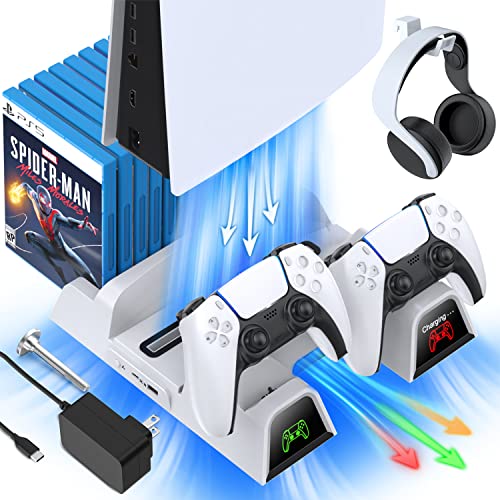
If you have a PlayStation console you should also have one of these stands. It makes it incredibly easy to organize your console and games as well as charge your controllers at the same time.
Plus it has a cooling fan to make sure your console doesn’t overheat when you have your weekend gaming marathons!
Can You Play PlayStation All Stars On The PS4?
Because there are some people that like to play the PlayStation All-Stars game, they want to play it on the newest console. The problem with this is the All-Stars game was originally released for the PlayStation 3.
So is there any way to play Playstation All Stars on the PS4?
If you own the PlayStation 4, and you like the All-Stars game you will be happy to know that they did remaster it so you could play it on the PS4. This remastered edition includes additional stages but keeps the same roster.
Because the main issue with the game was that it did not have any popular characters included, this did not make the remastered version more popular than the original. because it just added a few extra levels as well as clothing changes for the characters it was not any better when played on the PS4 than the PS3.
If you liked playing the original All-Stars game because you were not a fan of Nintendo and you thought that PlayStation did it better, you definitely should purchase the remastered game for the PS4.
Is The PlayStation 4 Backwards Compatible?
If you own a PlayStation 3 and are considering upgrading to the PlayStation 4 there are a few things you need to know before you do so. One of the first things you should look at is if the new console is compatible with all of your game.
Unfortunately the PlayStation 4 is not backwards compatible with the PlayStation 3 games or controllers. This means that you cannot use any of your PlayStation 3 games that you own on the PlayStation 4!
Because many people do not want to not buy all new games for their new system, many people will simply not purchase the new gaming system when it first releases, or at all. Although PlayStation does lose out on some sales this way, they make up for it by forcing the people that do upgrade to purchase all new games.
There are many people who think this is not fair to the gamers who upgrade, which is why they normally stick with their older console and do not upgrade. There are some that will change what system they play on as other systems are backwards compatible.
How Many Copies Did The PlayStation All-Stars Sell?
Although the game failed, and is rarely talked about anymore, it still had sales when it first released. Many people wonder how it stacks up to current games even though it is considered a failure.
The PlayStation All-Stars game sold nearly 400,000 games worldwide before it was discontinued. Even though this sounds like a lot, in comparison, Halo has sold over 65 million copies alone!
You can clearly see that the PlayStation All-Stars game really wasn’t that popular, and compared to other games it didn’t sell that well. Even the Super Smash Brothers game (which is basically the same as this game but with Nintendo characters) sold over 5 million copies.
With other games selling more than 10x the amount of games as All-Stars, it is easy to see that this game was not that popular. If it were, it would have at least sold as many copies as the Super Smash Brothers sold.
Conclusion
Now that you know about the PlayStation All-Stars game, you can see why some people liked the game, but ultimately it failed. Although PlayStation did not plan on the game failing, it definitely was not successful.
Now that you know all the reasons that it failed, you can see that it really wasn’t PlayStations idea in the first place. They really stole it from Nintendo when they released the Smash Brothers series.
The games are basically the exact same but with different characters. They are basically the same game, only one is popular while the other failed.
Although this game failed, it was actually remastered so you could play it on the PlayStation 4. There were actually enough people that liked the game that Sony thought that it would be a good idea to remake the game.
One of the reasons that they remade the game was because the PlayStation 4 was not backwards compatible and people could not play the game on the new console. Because it was not backwards compatible you also could not use the PlayStation 3 controllers on the PS4.
Even though the All-Stars game was a major failure, it still managed to sell almost 400,000 copies. Even though this seems like a lot, when you look at other similar games, these sales are minuscule.
No matter if you love the PlayStation and all of its games or not, there is no denying that the All-Stars game was definitely a flop.