
*This post may contain affiliate links. As an Amazon Associate we earn from qualifying purchases.
Have you ever wondered why the Atari company buried their games? In this article we will be giving you the reasons for why this company, once the gaming giant of the new console world, was dumping their consoles and games. Why did this occur, who did it affect, and how did the company survive? We will answer all of your questions in this article.
So why did the Atari company bury their games?
The Atari company made one of the biggest blunders in the gaming world which resulted in the game dump of 1993. The company decided to throw hundreds of thousands of dollars into full copyrights, which developed into the biggest flop project ever.
The game E.T. got the companies thinking that since the movie was such a success, the natural next step would be the video game. Unfortunately, it was not what the customers wanted and the game tanked. Resulting in the games being dumped and then cemented in a landfill in New Mexico.
If you want to know more about the game flop of 1993 you will want to keep reading. You can also watch this short video to learn about it.
If you are an old-school Atari lover then you have to get a classic Atari T-Shirt to show it! To see the most popular Atari T-Shirt retro designs that will stay classics for years just click here.
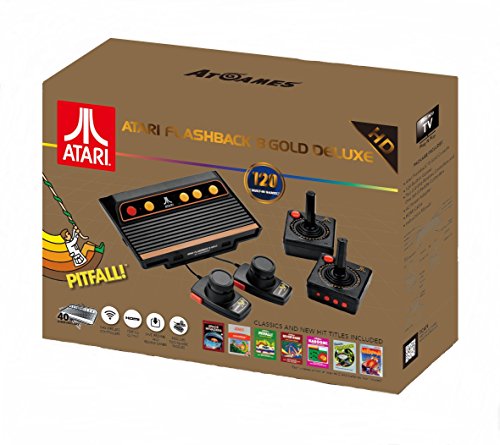
If you love all things Atari then you have to check out this awesome Atari Flashback console.
The Atari Flashback 8 comes with two wireless controllers (YES, WIRELESS!) two paddle controllers, and 120 authentic Atari games.
Why did all of this happen?
All of this happened because of the E.T. game flop. It caused the company to fold and its partners to drop out and sell their shares. It seemed as though this company went out of business almost overnight. The E.T game is considered the biggest and most epic fail the company had ever produced. Because of the large amount of games that the company had that they needed to get rid of, 13 trucks ended up driving out to a landfill in New Mexico. When they got there, they proceeded to dump their contents in the middle of the night. The contents that were disposed of by the landfill trucks were dumped and concreted on September 22, 1993.This was a notable date as it was almost exactly a decade since the release of the popular console the Atari 2600.
The decision to do the dump at night was purely used to not draw attention to the mass dump. Well, as you have already read, it didn’t work. The next day scavengers who frequent visitors to these landfills came across hundreds of copies of the E.T game and decided that the discovery was newsworthy. The game’s release was only that previous December, but it was not received well.
There were reported to be millions of copies of that game that were unsold and unwanted and just dumped. What else could Atari do? The customers were not interested in the game, and there was no way for them to re-purpose the funds. It is still unclear why exactly the mass dumping of the game made the game a legend and known all over the world.
Is that where the E.T. game died?
You would think that the scandal would end there, but unfortunately it does not. There was more humiliation for the former great Atari franchise to face. Back in 2014, 11 years after the mass dump, documentary enthusiast and legendary filmmaker Zak Penn got a film crew together and decided to document the rise and subsequent fall of the Atari company.
This documentary took a peek under the curtain and went to the source of what led to the legendary mass dumping of the E.T game. Well as stated in the film it wasn’t an on the cuff decision, the company had tried for almost a full year to capture their audience and have them engaged in the project. But their efforts were in vain. The project just simply wasn’t good. The graphics never held up, and E.T. for its time was a cinematography masterpiece. The movie actually ended up touching so many hearts and minds.
Because of this, there were very high expectations from the game. Unfortunately despite the company’s best efforts, the final product failed to reach those expectations. This resulted in a mass boycott of th4 E.T. game. If you are going to take on a masterpiece and repurpose it, you need to make sure you know what you are doing. Unfortunately, Atari missed the mark. Sadly not to oolong after missing the mark, then made a few bad investments and the company was quickly on the decline. This goes to show you that even big companies don’t always win.
History of Atari
Atari has certainly had a very colourful history. From being the top dogs, to falling to the bottom of the barrel. The reason the company chose to bury its greatest failure, was because it was simply just too difficult to face. From leading the industry in the late 70’s to the early 80’s, to going under by the middle of the 90’s, was just too depressing.only to tank in the 90s. That was simply just a bitter pill to swallow for the company. The good thing is that Atari is still a legend in their own way, and has been for decades.
Even with this major failure, you cannot count them out just yet. This is because they released a statement saying they have a new product line coming soon. The Atari company has in all rights paved the way for the gaming empires of the modern age to exist. Without them, who knows what the industry might have been like and what would have been achieved. Atari is, and will remain the pioneers of their era.
The company has stood its ground for nearly 4 decades. Even though they may have made a few errors and the damage has been done, their legacy was not irreparable. To be in business again after declaring bankruptcy takes stamina.
Our markets have changed, the way we communicate has changed, everything around us has changed. Yet, they choose to come back and fight the good fight and show the world that they are still relevant. They still have so much of themselves to give to the new and emerging technologies of today’s day and age. It takes guts to come back. Atari will once again be a household name, and even today they are already starting with the personal arcade 1 Up machines!
If you are looking for them, this is the best place to get them!
Even though they have gotten out of the gaming console world, they are still a name that most everyone knows today! Atari has learned from their mistakes and from their past, and knows that they cannot rush things, or make something big just because it was big in the movie world. Atari will make an impact again, and in many places already is with their 1 Up Machine.
Conclusion
Now that you know why Atari dumped their games, and where they dumped them, you can clearly see that they are not a company to give us. You also now know the facts as to who it affected, and what this meant for the company. Atari is not a company that is going to give us, and even today is making their name known in every household once again!