
*This post may contain affiliate links. As an Amazon Associate we earn from qualifying purchases.
When it comes to video gaming, there are a few names that are ruling the world right now. They are PlayStation, Xbox, and Nintendo. Each has released a variety of consoles over the years and almost every one of them was welcomed by the video gaming community with open arms.
Although Nintendo is popular in its own right, nothing can quite match the hype and fame surrounding the first two consoles. And this is enough to justify their prices.
Sometimes Xbox is more expensive than PlayStation, but most of the time, it is the other way round. So, why would Playstation be more expensive than Xbox?
The price difference between these two consoles is very slim but it likely comes down to the popularity of the two consoles. The Playstation is currently TWICE as popular as the Xbox so it can command a little bit of a premium price. There are also many features that Playstation has that are better than what the Xbox offers.
Since Playstation is twice as popular (based on sales of their most recent consoles) then a slightly more expensive console is to be expected. In many different industries the “top dog” always sells for a premium price as their competitors often undercut them to try and gain some of the market share back.
The competition between these two consoles is quite severe and goes back more than two decades! Sometimes Xbox seemed to have the upper hand but in recent years Playstation appears to be pulling further and further ahead.
We will dive a little bit deeper into this competition between the Xbox and Playstation as well as try to give some more explanation on why the Playstation is more expensive than the Xbox currently is.
If you love PlayStation you need to check out this amazing game room light decor. It looks just like the buttons on the PlayStation controller and the light reacts to the music that you are playing as well! You can check it out by clicking here.
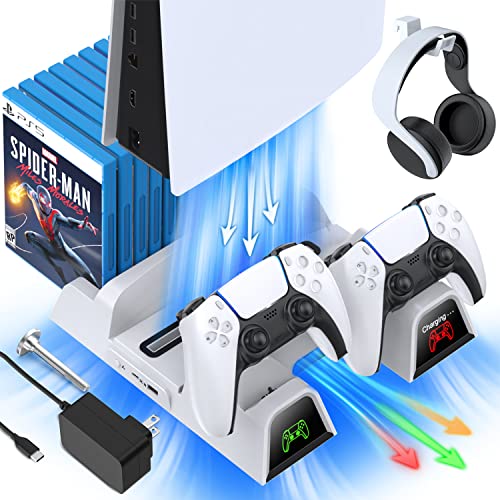
If you have a PlayStation console you should also have one of these stands. It makes it incredibly easy to organize your console and games as well as charge your controllers at the same time.
Plus it has a cooling fan to make sure your console doesn’t overheat when you have your weekend gaming marathons!
Where did the competition start?
First of all, let us get some background on each of these video gaming console brands.
The first gaming console from PlayStation was released by the popular company Sony in 1994. From then until now it has launched three more consoles (with many sub-versions), and very soon, it is going to release the Playstation 5 which will be its 5th generation console.
The first gaming console from Xbox was released by the tech-giant Microsoft in 2001. Yes, Xbox came into the market almost a decade after PlayStation which of course allowed Playstation to get a strong hold on the gaming world.
Both of these companies are trying to bring about better features in their consoles and woo the people from the opposing side to join them. The competition has now reached a point where their latest devices (PS5 and Xbox Series X) are locking horns in the tech market and if the last two decades are any indication Xbox and Playstation are likely to be strong competitors for a long time to come.
How does PlayStation have an edge on Xbox?
To answer the question about why Playstation charges a premium, we need to find out how PlayStation has managed to have accumulated better features than Xbox. Though both of these companies have often managed to have a neck-to-neck competition, there are a few remarkable ways in which Sony has managed to surpass Microsoft.
Let us discuss them one by one.
The overall gaming console
The PlayStation gaming console is slimmer compared to Xbox. Hence, it takes up much less space and looks sleeker in appearance as well.
The PlayStation controller also has some notable perks and add-ons that Xbox does not. First of all, it has a very ergonomic design. So, it has a stable grip which reduces the fatigue caused by holding the controller for a long period of time (this will help if you like long gaming sessions). The Playstation controller also boasts a light bar which can locate where the player is seated using the PlayStation camera (supports a maximum of 4 players). This feature is used by various games like Killzone: Shadow Fall to display the stats of the player with the help of color changes.
The controller has a 3.5 mm headphone jack for standard headphones and also features an built in speaker. The clickable touchpad helps in web browsing and for selecting weapons in games.
If you like sending screenshots of the game you are playing to your friends, you will like the Share button a lot. And, the controller has a dedicated “Options” button for browsing through the menus.
The PlayStation Store is also a great place to shop for games because there are constant sales, lots of free-to-play games, and other features that enhance the PlayStation experience.
For those who still buy discs for watching movies instead of digital ones, the PlayStation comes with a Blu-Ray player. So, not only can you play games, but you can also watch the latest movies in the latest format all from your gaming console.
Availability of kid-friendly games
If the games on the console are family-friendly, it will be preferred more. And, both Xbox and PlayStation have a wide variety of child-friendly games. But, the latter has a wider choice of games (rated for age 3 and above) as compared to the former. The younger children have a lot of games to play on the Playstation console.
And if there are kids (tweens or teens) who want to play more advanced games, they can choose from FIFA 19, Minecraft, Ratchet & Clank, Singstar Celebration, etc.
So, Sony has planned every little aspect deliberately.
Exclusives
The PlayStation has a long list of exclusive games that have received unparalleled popularity over time, for example, God Of War, Bloodborne, The Last Of Us, Infamous, etc. Though there are some famous games on the Xbox, they are not enough to match those exclusive ones on the PlayStation.
Also, PlayStation enjoys being the preferred platform of most of the games developed in Japan (the hub of AAA games). This is something Microsoft has failed to achieve for the Xbox.
The Sony brainchild is also known for the multitude of indie games available on its platform. These games pack powerful content and are a breath of fresh air compared to the typical fantasy games.
Virtual reality
For those who are interested in the VR aspect of video games, PlayStation is the only choice because Xbox does not support virtual reality at all. So, in this criterion, PlayStation has managed to nail it.
Nostalgia and trust factor
Because PlayStation has been around for a longer time (almost a decade longer), the people who are not interested in the specs of the consoles have a higher chance of choosing a Playstation. And this trust factor has really helped to increase the customers for Sony.
Since Xbox came later, it does not enjoy the nostalgia benefits of those gamers who remember using the console when they were kids in the early 90s.
Conclusion
All of these things does not at all mean that Xbox has far worse features. Admittedly, it has some really good ones out of which some are even better than those of PlayStation. But looking at everything as a whole, the Playstation has a slight edge on the Xbox.
Many people claim that the cheaper price of the Xbox gaming consoles is a marketing tactic. That is, if both of the consoles had comparable prices, there is a higher chance that people would go for the Playstation so Xbox lowers its price a little to draw in those price conscious games.
Since Playstation has twice as many sales as the Xbox they can afford to have prices be a little bit higher and lose a few people to Xbox and still have a commanding lead in the console war.
So, these reasons should be more than enough to justify why the PlayStation is more expensive than the Xbox.
Whether you are a Playstation or Xbox lover it is unlikely that fans of either console will accept anything but victory in this battle over which is the best. No matter which side you come down on both Playstation and Xbox have their pros and cons and one of those pros that the Xbox has is that it is cheaper to purchase than the Playstation is!