
*This post may contain affiliate links. As an Amazon Associate we earn from qualifying purchases.
Whether you are looking to buy a new video game console or are simply curious about the Xbox One and Playstation 4 and why they are priced differently we will try to answer your questions in this article.
The Xbox One is cheaper than the PS4 for a variety of reasons but the largest reason is that Microsoft is trying to gain some market share and catch Playstation in console sales. Since the PS4 has significantly outsold the Xbox One Microsoft is trying to win over those gamers that are on the fence by having a cheaper price for their console.
Some other possible reasons for the cheaper prices for the Xbox One are:
- The Xbox is not as popular
- The Xbox was not as well received as the Playstation
- Many more people have owned a Playstation in the past so they can charge higher prices
- Playstation has been around much longer so it is the preferred console of many people
- Many more
There will be hundreds of different things that go into the pricing of the Xbox console but since they are a long way from matching the sales of Playstation a good way to try and catch up is to sway those that are on the fence with having a cheaper console.
This is especially true for first time console buyers as if they have never owned either console before they are more likely to be swayed by a lower price. If Microsoft can gain new users through a cheaper console price then those users are MUCH more likely to buy another Xbox in the future as they are used to the platform and controls.
If you want to compare some other things about the consoles besides just the prices you will want to check out the video below.
If you love PlayStation you need to check out this amazing game room light decor. It looks just like the buttons on the PlayStation controller and the light reacts to the music that you are playing as well! You can check it out by clicking here.
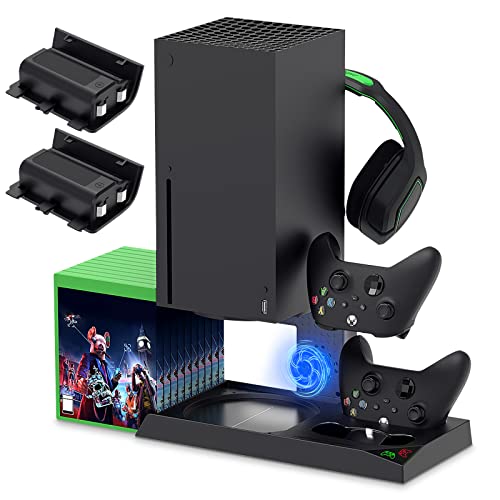
If you have an Xbox you need to get this cooling/charging stand for your console/controllers.
There is nothing worse than being ready for a long night of gaming only to realize your controllers are dead. With this stand that never has to happen again!
Gaming
Gaming has grown to be a heavy hitter in the home entertainment industry, with games being released and consumed at similar levels to blockbuster movies. Games such as Grand Theft Auto are such massive successes that they out compete even movies and television shows when it comes to profitability.
While the number of game releases has grown, the platforms that these games are available on has remained consistent over the last few years. Personal computers still reign as the kings of the gaming community, with the highest graphical fidelity and the greatest number of games released each year.
However, a close second is gaming consoles. Gaming consoles are dedicated gaming devices that consist of a processor, a graphical processing unit (GPU), display drivers and wireless communications cards. They lack the versatility of PCs but are often better for gaming since they are specifically built for it. Consoles rank high in terms of convenience as they are cheaper to buy than gaming PCs and easier to operate.
Consoles also offer a more immersive gaming experience. They are meant to connect to your TV at home and enable you to play games on a large TV screen rather than a puny monitor. Modern consoles also come with additional features like the ability to play Blu-Ray discs, access the internet, stream TV shows and act like full-fledged home entertainment systems rather than just a gaming device.
In today’s day and age, consoles are more popular than ever. But in this popularity contest, two players inevitably came out on top. Sony’s PlayStation 4 and Microsoft’s Xbox One. Both consoles are highly capable machines and compete on the highest echelons of gaming.
The Variants Of The PlayStation 4 Available on The Market
Upon its launch in 2013, Sony only offered one variant of the PlayStation 4 console. This was the original model that was released at the unveiling. As time went on and competition became more fierce and technology components got more advanced, Sony slowly began upgrading the PS4.
Let us explore some of these variants and their pros and cons.
- The Original Launch Variant PS4: When the PS4 was launched, it caused a lot of furor in the gaming community. The console had highly rated specs but had an expensive price tag. The console came with 8 GBs of fast DDR5 RAM, reducing load times and making gaming seamless. The console was powered by a CPU manufactured by AMD that consisted of eight separate cores, 7 of which could be utilized for gaming. The graphical processing unit utilized 18 different computing units to pump out almost PC grade graphical performance.
These features made the PS4 an attractive purchase for those looking to get into gaming, those looking to upgrade from the PS3 or those looking for a console with longevity in mind.
- PlayStation 4 Slim: In September 2016, Sony announced the launch of the PlayStation 4 Slim, a hardware revision of the original PS4 that was 40% smaller than the original. The PS4 Slim edition did away with a lot of components that were not needed or could be reduced in size without affecting the gaming performance, they also updated the interfacing options by adding newer USB ports. The PS4 Slim is by far the cheapest variant of the PlayStation 4 family.
- PlayStation 4 Pro: In November of 2016, shortly after the launch of the PS4 Slim, Sony announced the entry of the PS4 Pro into the market. The console had higher performance stats with its updated GPU and was capable of 4K gameplay and even supported Virtual Reality gameplay. While the PS4 Pro brought some high-grade features to the PS4, it increased its price drastically. The PS4 Pro is, by far, the most expensive PlayStation 4 model there is.
Variants of the Xbox One Available on the Market
The Xbox One was announced for launch in 2013 as Microsoft’s direct competitor to the PlayStation 4. Both the consoles had similar initial internals, with the PS4 having a slight edge in terms of RAM. The Xbox One retained an advantage over the PS4 as it had backwards compatibility with its games. Meaning you could play some older Xbox games on this console without having to buy a new copy.
- The Original Xbox One: This was the variant that was announced in 2013. It uses the same 8 core AMD processor that the PS4 uses, however, out of these 3 cores are required to run the operating system, leaving only 5 cores for gaming. The Xbox One had 8 GB of DDR3 RAM. It was not very well received upon launch since all games had to be linked to an Xbox Live account and the console itself had to be connected to the internet every 24 hours to play the games.
- Xbox One S (All Digital Edition): The Xbox One S was the budget variant of the Xbox One. It still came with the game processor and GPU, but to reduce the cost price, it excluded the Blu-Ray Disc Drive. This meant that games could not be installed via physical disks anymore, but rather, directly be downloaded from the Microsoft store. This helped reduce prices significantly.
- Xbox One X: This variant was the high-performance answer that Xbox One had to the PS4 Pro. The Xbox One X is arguably the most powerful 8th generation console, being more powerful than the PS4 Pro. It boasts a 31% increase in performance compared to the original Xbox One and could support PC level features like 4K rendering, 120 Hertz gameplay and 4K streaming. The Xbox One had more powerful specs than any other console on the market. However, it came at a significantly higher price tag than the original Xbox One.
Conclusion
Like we mentioned before, the Xbox One was not well received upon launch. This was due a variety of reasons such as a slightly lower performance than the PS4, a lack of exclusive game titles upon launch and having to connect to the internet every day in order to play games. This caused lower sales numbers for the initial few years of competition with the PS4.
However, as Microsoft released the Xbox One X, which was the most powerful console on the market, it started out performing the PS4 Pro, its direct competitor, in sales.
This allowed Microsoft to price the original Xbox One more competitively, at lower prices than the original PS4. However even with this lower pricing on the Xbox One there is no way that all of the Xbox One variants will ever be able to outsell the PS4 variants overall as the PS4 has sold almost DOUBLE what the Xbox One has when looking at all of the variants of the consoles.
At this point in time, even with significant discounts, the Xbox One is almost always more competitively priced than the PS4. This makes it a great purchase as the two consoles use the same processing unit and are not very far apart when it comes to gaming performance.
Despite the Xbox One being cheaper many people still prefer the Playstation over the Xbox simply because they have been using the Playstation for decades and since the first Playstation was released almost a full decade before the first Xbox Playstation has quite a large lead.