
*This post may contain affiliate links. As an Amazon Associate we earn from qualifying purchases.
Monopoly is a famous board game which was created around 85 years ago and is now played by a wide spectrum of people belonging to different groups in society.
The game of Monopoly, more precisely Monopoly board games, was started with the aim to entertain as well as educate people. To entertain, anybody could understand. It was a game played by a group of people, the main players being family members. To educate, the game was created to prove the Economic theory of Tax as proposed by and to educate about company monopolization of products. Hence the name Monopoly.
So will Monopoly tear apart a family?
Of course whether Monopoly is good for a family or not varies as it depends on how competitive the players are and how much arguing happens. In the end, a game should never come between family. If it becomes too competitive, then the suggestion would be to not play Monopoly with your family.
If you would like to know more about if Monopoly will tear a family apart, please keep reading! You can also watch this short video to learn the official rules for Monopoly.
If you love board or card games then you have to check out the game called Throw Throw Burrito! It is a fun fast-paced game where you throw squishy burritos at other people you are playing with! You can learn more by clicking here.
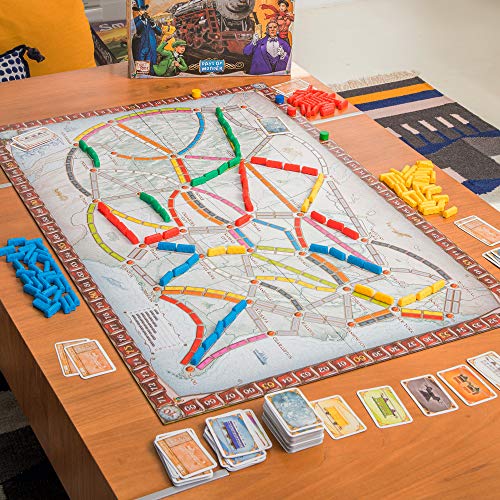
If you love games then you have to check out Ticket To Ride! This fast-paced board game will give you hours of fun with family and friends as you gather train cars and try to take over the board!
Ticket To Ride has many different variations as well so you can play across a variety of different maps.
Overview Of Monopoly
In short, in Monopoly, the players can buy, rent and mortgage properties with the sole aim to make money out of it. Here, players who are winning can go on buying properties from losing players who end up paying them the cost of those properties. Also, the winning player gathers money through charging rent which is paid by other players who are renting those properties.
The Monopoly board game has been devised to entertain families and everyone who plays the game. But there are some flaws in the game too, flaws which can put the families playing the game into great crisis. Crisis of loss of peace, loss of good time with family, lots of unintentional tension and strain in family ties. Flaws which could really lead to tearing apart of families.
Dangers Of Monopoly
A careful look into the game would show that a Monopoly game is a double-edged sword. It can be a great way to bond with family members, but it is easier to fall prey to the different plans in the game and end up being in a mad or irritated mood, ready to pick a fight at the slightest pretext. And therein lies the real beauty of the game.
Monopoly board games are based on outcomes of chances. Here players throw dice on the board and their outcome rules the game. So the fact that Monopoly is a game where players have to rely more on luck than skills, and hence have little control of the game on many occasions makes the game even more interesting and ruthless.
Families Of Monopoly
The persistent question which remains is whether Monopoly games can tear up a family. There is a mixed opinion on this from various observers, players and researchers of this game.
There are no two ways about the fact that this game could be very damaging, both mentally and physically, for players who lose in the game. But to know exactly why this game could be so mean and thankless, we need to do a little bit of analysis of the game and understand the way it is played.
Format Of Monopoly
In short, in Monopoly, the players can buy, rent and mortgage properties in the sole aim to make money out of it. Here, players who are winning can go on buying properties from losing players who end up paying them the cost of those properties. Also the winning player gathers assets through rents which are paid by other players who are renting those properties. by throwing dice and the outcome results in the actions that are taken in the board.
Also there are other concepts like getting mortgaged, taking loans from the bank, filing for bankruptcy and going to jail over improper activities.
Bankruptcy Of Monopoly
So from this structure of the game it is pretty sure that most of the game is dictated by the chances of the throw of dice and has little to do with the skills of the players in question. It is also clear that, if a player’s luck is shining, he will keep winning and making money and if someone’s luck has deserted him then he will become bankrupt.
The situation of bankruptcy occurs when the losing player doesn’t have money to pay for the rents and mortgages of the properties that he has used. He goes on paying money from his pocket and selling his properties at a much lower rate as dictated by the players to whom he is selling his property. Ultimately, he is declared bankrupt when he has no more money to support the game and he must then stop playing.
Effects Of Monopoly
The effect of Monopoly can be quite strained, both to the losing player and to the family as a whole. It is a direct effect of consequences on the mind and a great problem of Psychology. The problem arises because of a few factors –
- Almost everybody loves to win and nobody loves to lose.
- People take different routes to fulfill their realization of a win.
- Sometimes these routes are not taken with the most noblest of thoughts in mind and often bad politics are played over it.
- In life, everybody knows about the winner, but do not take note of the way the win is made. Even if they remember, such memory is short-lived.
Winning In Monopoly
In the only pursuit to win the game, players take the help of all cheap maneuvers. There is linkage among players over the board, players who are members of a family. These linkages can be ill intensional and could turn damaging for the losing players who also happen to be a part of the family. And as nobody likes to lose, all problems start from here. Politics played over the board in a game spills over in real life. Family members start taking sides of respective groups which end up making the situation worse.
Think about the Hollywood movie Game Night, where the situation over a similar game gets so horrible and dangerous that it ends up with the murder of someone in the movie? In real life such dramatic extremes are not heard of, but research has shown that games similar to Monopoly have turned brothers against brothers, mothers against their very daughters and friends against friends. This has sometimes left permanent scars on healthy relationships.
It can lead to unnecessary hatred between loved ones, leads to trust betrayal, leads into suspicions and gives encouragement to all negative traits in one’s character. And the person who is no longer in control over his character leads not only to his own destruction but also adds to misery and works of the people surrounding him, his very family.
Conclusion
According to TV host Danny Heifetz, Monopoly is about capitalism, and capitalism is all about deceiving and cheating ordinary people. Just like this is not how true capitalism works, this is now how Monopoly works. Capitalism and free enterprise work hand in hand to grow the economy and build the city.
If you cheat in life, you will not get rewarded, and you will not come out ahead. This is the same as if you cheat in Monopoly, you will not come out ahead either. As long as you know Monopoly is simply a game, and a game should never come between family, you and your family will never be torn apart.