
*This post may contain affiliate links. As an Amazon Associate we earn from qualifying purchases.
Do you own a bunch of Super Nintendo games, and want to know if they will go in value anytime soon? Maybe you are looking to start a collection and you want to know if Super Nintendo games will go up in value and make a good collectors item. Well, in this article we will go over everything you need to know about Super Nintendo games and their value.
So will Super Nintendo games go up in value?
Because there is such high demand and they are no longer producing these games, there are many that are extremely popular. Because they are not being produced, Super Nintendo games should continue to increase in value as time goes on.
If you want to know more about the Super Nintendo and the most expensive games, you will want to keep reading this article. You can also check out this video to learn about the top 10 most expensive games for the Super Nintendo.
Are you a huge Nintendo fan? Then you have to check out the Mario and Nintendo gear that you can get. Whether you want a Mario wallet, a Nintendo sweatshirt, or a classic NES hat there are plenty of choices to choose from. You can find them all by clicking here.
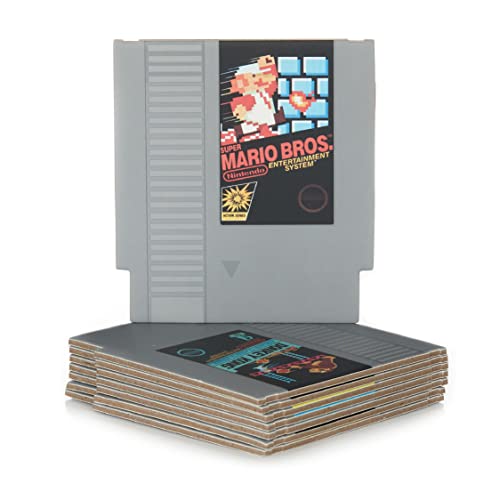
Do you love Nintendo? Then you have to check out this amazon NES cartridge drink coaster set!
This set includes 8 double sides drink coasters that look just like the classic NES cartridges.
This set is a perfect gift for the gamer in your life!
What SNES Games should I invest in?
When people talk about investing in things some very particular things come to mind. This includes gold, land, stocks and such, but some people tend to invest in video games or to be more specific, in Super Nintendo games.
While this decision can raise a lot of eyebrows, retro games like the ones which were available on Super Nintendo are very valuable today. Of course not any Super Nintendo game which was available back then is valuable today, but some of the rare ones can fetch the seller thousands easily.
Why do Super Nintendo games sell for so much?
First of all, as stated above, it should be remembered that not all of the games released by Super Nintendo games go for high prices. It is only those games that were released for a certain competition or were released in a limited area and have very few copies produced are the ones that fetch the most prices. Moreover, the games have to be in good condition or be in the box. A played and broken game will not be bought by anyone and it has no value.
The value of the good copies keeps on increasing in price the longer it gets from the initial day of release. After all, the original copy of Super Mario Bros sold for $100,150 during an action. This is an example of what people are willing to get their hands on some famous retro games. This fascination is because video game enthusiasts always want to have a piece of history to showcase. Moreover, collectors who love to collect rare items love to have these little trinkets to add to their collection.
Super Nintendo Games Which Cost A Lot
There are a lot of Super Nintendo games which go for great prices, but here are the top five.
- Starfox Super Weekend Competition Cartridge
Selling at over a thousand dollars, this game was released on Super Nintendo in the year 1993. Starfox Super Weekend only allows you to play for four minutes and has just three levels. Of these three levels, two are the shortened forms of Asteroids and Corneria but the last one is made for the cartridge only. Once the competition was done and dusted, Nintendo sold it off to Nintendo Power subscribers. Back then it sold for $45, which doesn’t hold a candle to what it goes for nowadays. What makes the prices so high is the fact that Nintendo only made around 2000 copies of this.
- Aero Fighters
Aero Fighters is a side-scrolling, vertical shooting game. Your job is to take control of a superior fighter jet from the USA, Sweden, UK, and Japan (you will only get four options). From then on you will have to carve the path through a long seven stages. Once you beat these stages you will find on your playthrough that the difficulty gets much harder. Aero Fighters was released in November of the year 1994. Aero Fighters is a very rare game and is very difficult to find. This is why it often goes for prices of several thousand dollars.
- Final Fight Guy
You can sell a good copy of Final Fight Guy and get around two thousand dollars in return for it. Launched in 1991 at first, the game was re-released three years later in 1994 with some changes. In the change, Cody was replaced with a character called Guy. Along with this, Nintendo added four more difficulty levels to this. The reason its price is this high is that it was originally only available as a rental through the Blockbuster video. While it did get a limited release for sale but even with that the game is really hard to find.
- Hagane: The Final Conflict
This action game is the side-scrolling mode and is pretty similar to the Ninja Gaiden series. Hagane is a difficult game to play in. What makes it especially difficult is the fact that it doesn’t have any sort of save feature. When it was released, Hagane was available only in the Blockbuster stores so there are not many copies of it available. This adds to its rarity and that’s why Hagane nowadays goes for $500 and above.
- Metal Warriors
This is a side-scrolling platform game that was released in North America in the year 1995. In this game, you play as a human being who can take control of a mech and then fight other big mechs. The novelty of this game is that you will be able to exit your robot at some specific times and then switch to other mechs. Metal Warriors never did receive any form of PAL or Japanese release, which makes this game very rare. This is why these games go more than a couple thousand dollars in the market.
- Pocky & Rocky 2
Released in November 1994, this was a sequel to the Pocky & Rocky game for SNES. This action game has enemy bosses which you will have to shoot up. You will be able to shoot in a total of 8 directions. What was different about this one was that instead of assuming control of an aircraft, you controlled a human called Pocky. The game is harder to find than the original version itself. People who have this game can sell it for a very good price of a thousand dollars or such.
Conclusion
Nintendo has been one of the most beloved video game enterprises ever. Some of their games are rare gems and the prices for these rare games tend to increase the older it becomes. When it comes to older games Nintendo doesn’t have much of an idea regarding what Super Nintendo games are out in the market and what they will sell for. So the older the games get, the more it is going to sell for after. Super Nintendo games have become something of a customer novelty item and So as long as there is a demand for Super Nintendo games, the price will keep on increasing.
Many people think about buying these games, but as with anything investing in these items is a risk. Although the risk is low you would hold the physical items, there is still the risk that people would no longer like Nintendo and the games would drop in value. There is also the chance they go up as well. One thing that we can count on is that if gamers continue to buy these games as collectors items, the prices will continue to skyrocket.