
*This post may contain affiliate links. As an Amazon Associate we earn from qualifying purchases.
If you are looking to buy an Xbox one then you are probably trying to find it as cheap as possible. Buying video game consoles can be quite expensive and that is just the beginning of the money you will have to spend as you also have to buy games, accessories, and more!
Saving money when buying your Xbox console is a great way to help keep your total costs down without sacrificing the games or accessories that you want to buy.
So are Xboxes cheaper to buy in the United States?
In general it is almost always cheaper to buy an Xbox in the country that you live in as the shipping and import expenses will almost always eat up any savings that you might have had in buying an item in a different country. So if you are in the United States then the best place for you to buy an Xbox is in the USA.
If you are outside of the United States then it is probably going to be the same price or cheaper to simply buy it in the country where you live.
For example when the Xbox One X was released in Canada it cost $599 Canadian which is about $435 US. The price on release in the United States was $499 so saving $60 might sound great! However most of that $60 would be eaten up by the shipping cost and the small savings that you get would not be worthwhile if you have to send an item back because of damage or other reasons.
As evidenced by the real life example above prices for the exact same item can vary from country to country. We will dive into why that happens next.
Are you a huge Xbox fan? Then you have to check out this amazing Xbox gear and decor. Whether you want an Xbox-styled wallet, a sweatshirt, or a pair of Xbox socks there are plenty of choices to choose from. You can find them all by clicking here.
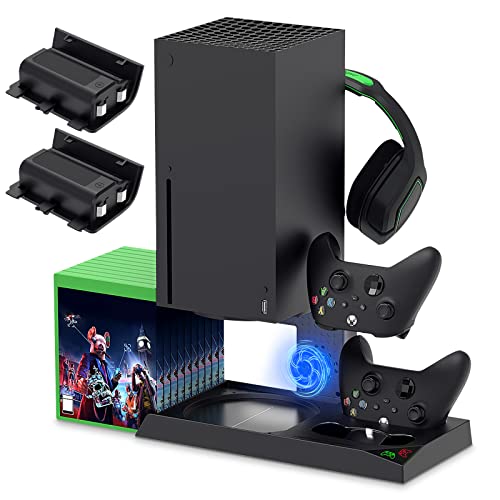
If you have an Xbox you need to get this cooling/charging stand for your console/controllers.
There is nothing worse than being ready for a long night of gaming only to realize your controllers are dead. With this stand that never has to happen again!
What makes an Xbox One cheaper in some countries?
Developed countries like the USA, Canada, Japan, etc. are often the major tech goods producers and are more likely to sell their products at affordable prices within their own countries. Since the USA is a primary hub of almost every tech giant’s organization then technology such as gaming is in far higher demand here than in some other countries.
Since the demand is higher than the prices are normally relatively cheap especially if you don’t buy a console when it is first released and wait until the prices come down a little bit.
As in the example mentioned earlier the Xbox One X was cheaper on release in Canada than in the United States but that was only because of the exchange rate difference. Even then the pricing wasn’t too far apart and the difference is easily explained by the fact that Microsoft wanted the console to be sold ending in a 99 so it was $499 US and $599 CAD.
The USA has a large number of people interested in gaming, thus, the Xbox One, PS4 and other gaming consoles are produced with this giant number of consumers in mind. Microsoft doesn’t want the gamers to feel like they are getting the short end of the stick on pricing so often the prices in each country will be virtually identical. Because of exchange rates the prices can never be exactly the same from country to country and exchange rates change all of the time so prices might have been the same when they were set but they change because of exchange rate changes prior to release.
The prices of these gaming devices, especially the Xbox One are approximately the same in the USA as they are in other countries.
Factors behind affordable prices of the Xbox One
On comparing the disparity in the prices of Xbox One between two developed countries like the USA and the UK, it is often known that the Britishers have to pay a little more for Xbox consoles than the Americans. Since the value of a pound is different from the value of a dollar, it is likely that is the only reason for the disparity in prices.
Again the price in the U.K. was only $50 more than the United States which would not make the price difference big enough for those in England to buy from the United States and ship it there.
There are certainly other factors that contribute and affect the cost of these gaming consoles in different areas of the world. These factors are not only limited to tariffs, taxes, and exchange rates, but some business logistics are also involved that make selling an item in certain countries more expensive.
Following are some important factors that primarily affect the prices of an Xbox One in the markets of similar countries.
Taxes
Tax is an important aspect that influences the pricing of Xbox consoles quite a bit. A customer has to pay taxes on every product so that the company can gain profit for the work of producing, packaging, selling, exchanging and delivering the goods in that market. In the USA, every state has a certain value of the sales tax that differs with each state. The sales taxes differ according to each state and it is added on top of the advertised prices with each purchase.
The UK, on the other hand, charges 20% as a VAT on every product, thus, hiking the prices of the Xbox One and other gaming consoles comparatively to those sold in the USA market.
Exchange rates
As mentioned before the difference in the values of currencies of all of the countries that the Xbox is sold in requires companies to safeguard themselves from any decline in the rates of these foreign currencies. Thus, the products manufactured from foreign companies in different countries will often charge higher prices than the products of the native companies to account for possible changes in rates over time.
Business challenge
There will always be some technical issues selling items in a variety of countries and often the countries with the most demand will get the cheapest and more stable prices. This isn’t always the case but companies are trying to make money not lose money on each sale so any challenges that come up will ultimately be built into the price of the console.
North America accounted for almost ¾ of all of the Xbox One sales which means that the rest of the globe was a tiny fraction of sales by country! This basically means that Microsoft can afford to plan its business operations around North America and countries like the UK are thought of much further down the line if at all.
Microsoft faces many challenges in getting consoles to people in other areas with good enough prices where people will buy them and since the majority of the sales come from North America then countries outside that area will often have to pay more for their consoles.
Conclusion
The Xbox One is one of the most popular gaming devices which with its numerous games allows people to enjoy their down time immensely. Just as the demand for the Xbox consoles varies from country to country, so does the price. Often countries in North America such as the USA and Canada will have the cheapest prices for the Xbox and other countries will be slightly more expensive.
Despite the fact that prices in other areas are more expensive, rarely are these prices expensive enough that it will make buying from the USA and shipping it to your country worthwhile. You are normally better off to simply pay the slightly higher prices in whichever country that you are in rather than trying to buy and ship a console.
Exchange rates and many other factors can go into how expensive or cheap the Xbox is in a particular country but most of the time Microsoft tries to keep prices around the same for every country where they sell their consoles at.