
*This post may contain affiliate links. As an Amazon Associate we earn from qualifying purchases.
Have you been playing the Sega recently, and noticed they only had a few good games to play? Why would a company make so many games that the players don’t like? That just doesn’t seem very smart.
So why does Sega make bad games?
Although Sega does not try to make bad games, it seems to have been happening a lot recently. This is for a couple of reasons including bad graphics and bad storylines.
When the company began to lose money they started to try and produce games quickly. This led to bad storylines, rushed graphics, and altogether not good games. Although Sega still makes games, their popularity has decreased because of a lot of reasons which are described in this article.
Are you a huge Sega fan? Then you have to check out the amazing Sonic and Sega gear that you can get. Whether you want a Sonic wallet, a Sega sweatshirt, or a classic hat there are plenty of choices to choose from. You can find them all by clicking here.
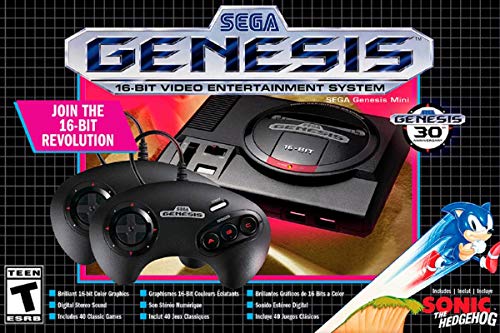
If you love Sega then you will want to check out this Sega Genesis Mini console. It comes with two controllers and even comes preloaded with 42 Games!
Enjoy these classic Sega Genesis games without having to purchase a single game cartridge!
Was Sega ever popular?
Sega is a Japanese game development company that also operates in multiple regions. Sega entered the video gaming industry with a bang when they released their first console. At that time, Nintendo consoles were the best thing around and no one was even coming close to the features and creative games they were producing. Sega changed this though when they began to release some spectacular games. Sadly, Sega did not stay on top long as Sony released its PlayStation which knocked Sega back down to the bottom.
Reasons for bad games
Since the evolution of the gaming industry, there are quite a few companies that have developed video games. It seems that the most popular ones always remain at the top of the list because of the features, characteristics, and qualities they offer. However, games are not developed so quickly, and the process is not that simple. Within these successful gaming periods, there are a lot of failed games as well. The same process goes for Sega.
Sega has produced a number of games over the years. Some of them became very popular, while a lot failed miserably. Sadly these bad games far outnumbered the good ones, and even ruined the company’s reputation. This is why Sega is not ranked as one of the top gaming companies anymore.
After the development of mobile phones and other exceptional consoles, Sega was nowhere to be found in the realm of game consoles. Even though they were popular back when they came out with games like Mortal Kombat and Sonic: The Hedgehog, those games were not enough to keep sega on top of the gaming world.
Sega games were popular when they were first released, but as newer consoles and better games were released by competitors, it began to have a big impact on Sega. Sega began to lose their focus, to not be able to keep up with technology. The consoles like PlayStation, and XBOX offered higher quality, and better games, while Sega didn’t change anything about their systems and or games.
What was wrong with the Sega Games?
1. Bad Game Graphics:
In the era of PlayStation, Sega games were less in-demand because the games it offered had horrible graphics. The colors of the characters in the video games were not accurate, and the pixel density was bad compared to competitors games.
2. The wave of Bad Games
A lot of Sega’s bad games came after the creation of the Dreamcast console. Sega developed a series of poorly produced games right as they launched the Dreamcast. These games failed horribly because they were not liked by the people at all. All of the gamers liked the high-quality 3D and modern games that offer more creative and tactical scenarios than the usual on the go setup. The worst thing was that even the hit games that they had already created, became bad when they released sequels to them. These sequels of famous games lacked thought and modern scenarios that gamers wanted. Sega producing all these bad games, really hurt the company’s reputation.
Here is a video of the top 10 worst Sega Genesis games ever made!
Also we have a couple of our personal favorite worse games Sega ever made!
1. Sonic Fighters
After the huge success of Sonic: The Hedgehog, people expected that the sequel would be great. Although expectations were great for this, it was very disappointing for them when they played the game for the first time and found out just how bad the game actually was. Although this was supposed to be a fighting game, most people could not even tell because the characters were the wrong shapes and the graphics were just so bad!
2. Rise of the Robots
This game also had basically the same problem. It lagged a lot and had poor quality. Another major disaster was that if the key to make the character kick was pressed by holding the right button, then the player would win every time. Because of this was a hack, people eventually started to hate the company because of what they expected versus what they actually got.
3. Jurassic Park
Sega tried to convert the world-famous movie named Jurassic Park into a game that depicted the story of the film. This process resulted in a big problem because of the bad graphics, poor sound leveling, and delayed movement of the characters.
3. Sega followed the process of milking
Rather than building quality content, Sega was all for the profit. That is why they developed games in bulk. It seemed all they cared about was to generate a massive amount of revenue. Ultimately, that did not turn out as they expected it to be. When Sega realized this problem, the developers started to reconsider their decision. They also tried to rehire the game developers, who initially provided them with success, but it was too late.
4. Bad Communication between different Headquarters
Initially, when the company started, Sega was a Japanese company. Although with the passage of time, people began to demand more of its popular consoles. Sega then decided to develop another headquarters in the USA. The bad communication and problems between these two headquarters were part of the problem with their bad games.
5. Bad Console Quality
Another reason for their bad games is that they also developed weak quality consoles. Since these consoles only supported the essential quality of games, Sega only created simple games. The problem became that the competition in the market began producing better quality games and better consoles.
6. Uncreative Games
After getting a few successful games in the market, Sega focused mainly on nostalgia as they did not make anything new. They kept redeveloping classic successful games, which turned out to be not such a good plan for them. Their games were predictable, short, and focused more on the simpler terms rather than creating a complete story or outline of the game.
7. 2D modeling instead of 3D working
The competitor console development companies were targeting 3D games as their primary focus. They developed 3D processes that targeted the games industry like sports, arcade, racing, general, and lifestyle. As people began to fall in love with these types of games, they played them more often. When people went to play Sega’s games, they were just barely kept awake because these were only 2d games.
Conclusion
No matter how much you love Sega as a whole, you have to remember that most of their games were not so good, and that they actually only had a few hits. Even the hits they had were not in tune with what the people wanted, and in the end it came back to bite them when people stopped playing the games. Today Sega is known as a retro gaming system that is few and far between. Although quite a few people are familiar with Sega, not very many even play the games anymore.