
*This post may contain affiliate links. As an Amazon Associate we earn from qualifying purchases.
Records have been around for decades. In recent years they have started to become more popular again. Whether you have been collecting records for decades or are brand new to records it is important to know what happens if they get cold before you decide where to store them.
So, how cold can records get? There is no specific temperature that records can’t handle. As records get colder they become more brittle and prone to crack or break entirely. Another issue with allowing your records to get cold is that they will condensate when warmed back up. This will cause a lot of issues with them.
Based on these and other reasons it is not a good idea to store a record or keep a record anywhere where they will experience extreme temperature swings.
The best place to keep your records is a place where you are comfortable. A temperature of 60-80 degrees Farenheit will keep your records from getting too hot or too cold and damaging them with either extreme.
Severe cold will cause your records to become brittle and extremely fragile. Any temperature fluctuation is not good for your records at all.
Do you love playing your vinyl records but your record player has seen better days? Well, you are in luck! There are tons of great record players that not only have great sound quality but also won’t break the bank. You can find them by clicking here.
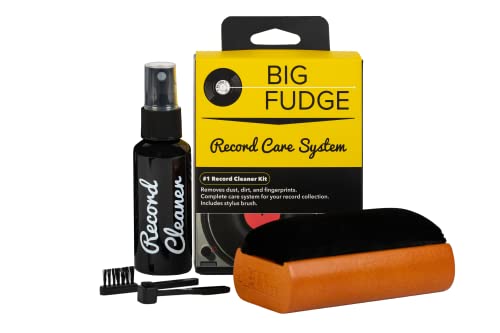
If you love records and record players, you must get a record-cleaning kit like this one. It is designed to ensure that your records stay in excellent condition to last you for decades.
Get this cleaning set and keep your vinyl records in perfect condition!
How does heat affect my records
Heat is in no way good for your records. Excessive heat will cause your records to warp or even melt entirely. So, don’t store your records in your car or in a garage or shed that gets extremely hot!
Vinyl records will start warping at 140 degrees Fahrenheit (60C) and they will start melting at 212 degrees Fahrenheit (100C).
I know those temperatures are excessive and you probably think that it is not likely to happen. However, those temperatures are much easier to reach than you might think. If you leave your records in a closed car that is parked in the hot sun the inside temperature can reach high enough that the records could begin warping.
After an hour the inside temperature of a vehicle will be 43 degrees hotter than the outside temp (source). This means that if the temp outside is 100 degrees within an hour the records left in your car will begin to warp!
Sunshine on my window
This one is also a big no-no. If you are going to store your records make sure it is not in direct sunlight or on the windowsill. The window glass will allow a lot of heat from the sun to come inside. If you store your records where they are in direct sunlight you can expect them to be warped very quickly.
When storing your records you want them to be in a goldilocks zone, that is to say not too hot and not too cold, but just right.
Dark damp and mysterious
This is again not a good condition or environment for your records. Water and vinyl do not mix very well so do not keep your records in a dark, damp place. The moisture in the air can cause your records to mold. That mold will destroy your sleeves and artwork and is a giant pain to clean off of the record itself.
If you want to ensure that your records are kept in mint condition then make sure you find the perfect spot in your home to store them.
Dampness doesn’t only affect the sound quality but also the packaging itself. To further protect the integrity of your records use poly sleeves while they are stored instead of the paper ones. These sleeves will further protect your records from dust, dampness, and scratches.
If you do wind up with moldy vinyl records you can watch the video below to see how to clean them.
Will cold hurt the record’s sound quality?
There is no real definitive proof that cold affects your records as heat does. The only thing that is known is that the records become brittle when they are cold and they are more likely to crack.
The main thing that hurts a record’s sound quality from the cold is that they often don’t stay cold. If you leave your record in a cold car overnight and then bring it inside the record will thaw quickly which will result in condensation and possible water damage.
The best way to avoid this is to keep them from getting that cold in the first place.
When your record gets too hot ot too cold it can easily cause problems for your collection.Of course you don’t want your records to get destroyed by the elements so the best course of action is to not let them get damaged at all.
What to do if your records get cold?
If you already have records that are cold because you forgot about them overnight or maybe you simply didn’t know the proper way to store them, don’t give up just yet!
You can bring your records inside and warm them up without damaging them if you follow these simple steps.
- Remove the record from the cardboard and paper sleeve. This will allow it to condensate without messing the sleeves up.
- Put your record on a flat surface on top of a towel or other soft surface. As your record warms up it will likely draw moisture and you want to be able to collect that moisture.
- Once your record is to a normal temperature give it a good cleaning. You will want to make sure that there is no lasting damage and that the record is clean before playing it or putting it into storage.
Don’t try and use a heat register or sunlight to warm up the records faster. This will do much more harm than good. Just let the record slowly get up to a normal temperature.
You can watch this video below on how to properly clean your records to learn the best way to do your cleaning.
Final thoughts
It is no secret that I love music. Honestly, if I had to choose to lose one of my senses I would rather lose my eyesight than my ability to hear.
Music has had a massive impact on my life and being able to put on a record and hear the amazing sounds of past legends is an incredible thing.
If we really stopped and thought about how much work and effort went in to making a record album all of those years ago we would all probably be a bit more careful in how we took care of our record collection.
To keep your records in as good of quality as possible just follow our suggestions in this article as well as some of the other articles here on our site. It is important to know the ins and outs of how to properly care for and store your records. Of course no one wants to damage their collection so knowledge is the key to making sure that you don’t do that.
Its important to know not only where and how to store your records but also to take care of them and fix them when and if a mistake is made. That is why we wrote this article. We know that mistakes will happen and sometimes your records might accidentally get cold.
Hopefully this article has put your mind at ease as well as given you the necessary steps to fix that without damaging your collection. If you are careful with the way you handle and store your collection, you should be able to enjoy it for many decades to come!